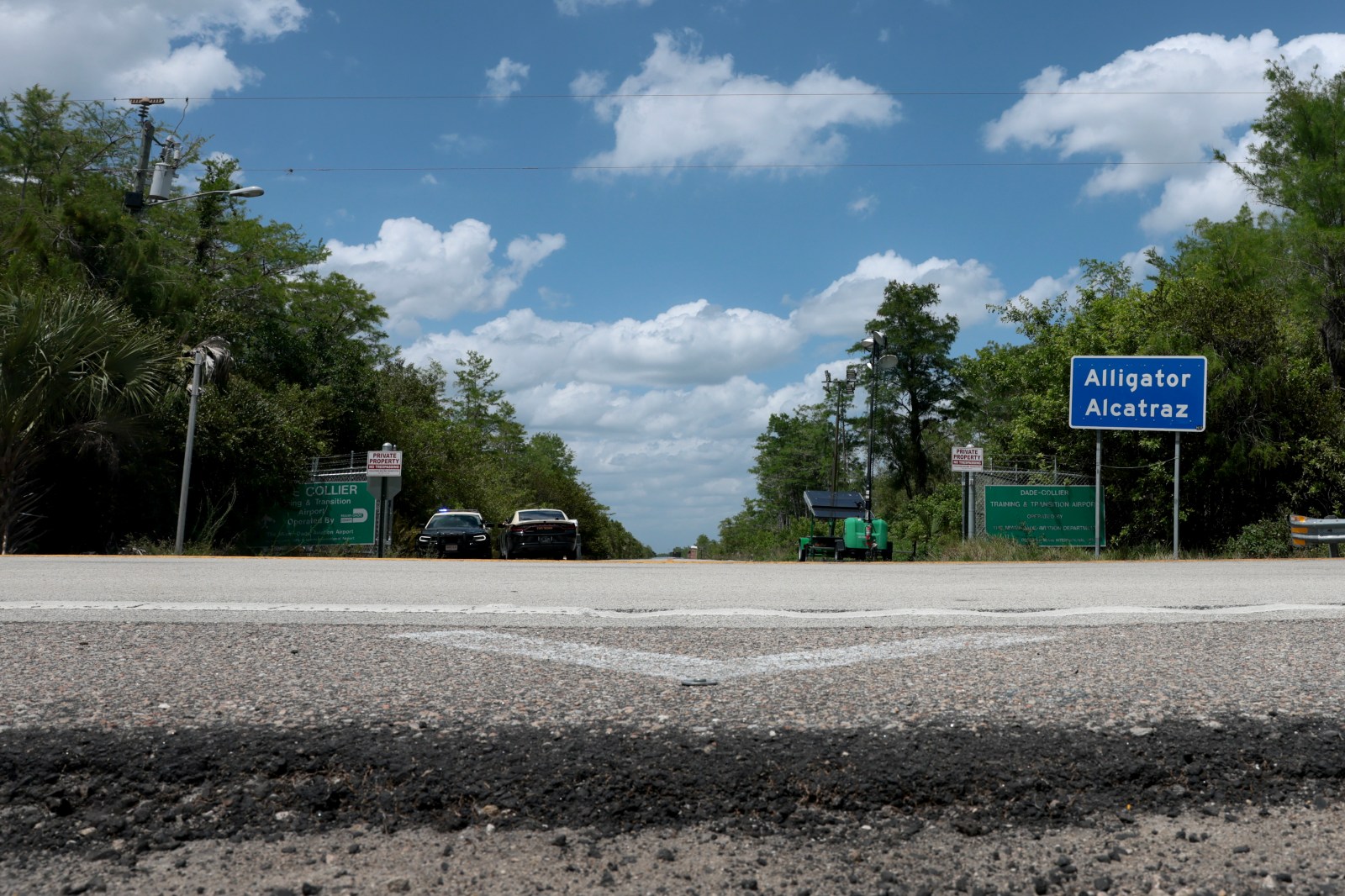
The Department of Homeland Security’s (DHS) Office of Inspector General (OIG) has expressed serious concerns regarding the conditions at a now-closed immigrant detention facility in Florida, known as ‘Alligator Alcatraz.’ There is a risk that these issues could occur at another major ICE site in the state.
Details from the OIG Report
The report released by the OIG on Friday highlights the severe conditions that some immigrants faced at the temporary site. Detainees were confined in small boxes resembling phone booths for up to two hours. Overcrowding was a significant problem, and there was confusion over responsibility between federal and state agencies.
The treatment of detainees was described as “torture” due to the harsh outdoor conditions in Florida.
Though Alligator Alcatraz closed earlier this summer, issues may continue at another site, Deportation Depot, run in collaboration between ICE and Florida authorities.
Federal Detention Standards
An unnamed DHS spokesperson stated the conditions at the facility met the federal detention standards used by previous administrations. They refuted any claims of inhumane conditions or excessive force.
Inspection Findings
The OIG’s unexpected inspection in January 2026 revealed that at least 1,800 individuals were held in the soft-sided facility managed by the state for U.S. Immigration and Customs Enforcement (ICE). The site was overcrowded, with each detainee allotted approximately 28 square feet compared to the standard 75 square feet.
Photos showed detainees in metal cages with bunk beds inside white tents, designed to hold fewer people than actual numbers.
Between July 2025 and January 2026, 79 individuals were placed in 18-square-foot enclosures resembling phone booths, which inspectors labeled as “unprecedented.” These were primarily used for detainees not following officer commands.
Thomas Kennedy from the Florida Immigration Coalition condemned the practice, stating it constituted solitary confinement in inhospitable conditions.
Responsibility and Oversight
There was confusion over which standards to apply—federal or state. DHS claimed it was not responsible for site standards since the facility was Florida-run. However, the OIG insisted that ICE should still ensure certain standards because its staff was present at the site, tours were conducted, and ICE handbooks were provided to detainees.
Kennedy mentioned a lawsuit related to the state’s use of 287(g) agreements, which allows state and local authorities to partner with DHS for immigration services. This lawsuit questioned the state’s authority over immigration detainees.
Ongoing Concerns with 287(g) Program
Florida, under Governor Ron DeSantis, has actively participated in the 287(g) program, involving multiple law enforcement agencies. The Deportation Depot, also known as Baker Correctional Institution in northern Florida, remains operational. The OIG pointed out that unresolved concerns persist, as Baker’s compliance and inspections remain unaddressed.
Thomas Kennedy expressed skepticism about whether the report would lead to any accountability for ICE and Florida officials, predicting no consequences for those involved in the management or funding of the facility.
Leave a Reply