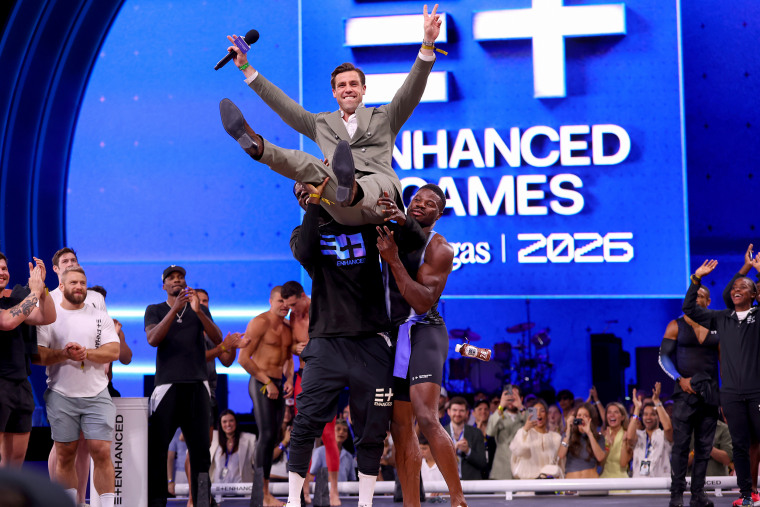
In Las Vegas, Shania Collins faced a pivotal decision when approached about performance-enhancing drugs. The former sprinter, who previously signed with contracts from Puma and Adidas, had retired by 2024 to pursue a career with the Drug Enforcement Administration (DEA) like her parents. Yet, an offer from the Enhanced Games, a sports startup encouraging doping, presented an opportunity she couldn’t ignore. It promised significant financial incentives, including six-figure salaries and prizes reaching up to $250,000, with $1 million for world records.
Initially hesitant due to health and career implications, Collins consulted her DEA-parent advisors. Upon confirming the legality and prescription basis of the drugs, Collins received their support. Under professional supervision, she began a two-month regimen, experiencing some side effects like acne but no regrets.
On Sunday, Collins was among 42 athletes participating in the inaugural Enhanced Games, a highly controversial event. Organizers claimed it showcased human potential by allowing drugs. Max Martin, the CEO, argued for the ethical necessity of permitting performance-enhancing drugs (PEDs). However, groups like the World Anti-Doping Agency (WADA) condemned the event as reckless and immoral.
The games should be viewed as a turning point in sports, with both legal and moral implications.
Key participants included notable names such as Ben Proud and Hunter Armstrong. Proud, a swimmer, expressed initial fear and emotional conflict when transitioning from clean sport. Others like Australian swimmer James Magnussen and sprinter Mike Bryan spoke about adapting to their newly enhanced capabilities.
The trial involved 34 of the 42 athletes, with a vast majority opting for testosterone, growth hormones, and other stimulants. While many athletes noticed enhanced performance, apprehensions remained about long-term health impacts. Colombian swimmer Isabella Arcila took a precautionary measure by freezing her eggs due to fertility concerns.
Financial incentives drove many to participate. U.S. sprinter Marvin Bracy-Williams and Greek swimmer Kristian Gkolomeev admitted the lucrative offers were hard to resist. Despite facing potential bans from other sports governing bodies, many saw it as a financial windfall. Gkolomeev earned $1 million by breaking a record, though it wasn’t recognized for lack of official sanction.
The event’s scale stretched beyond athlete participation. Funded initially by venture capital, including stakeholders like Peter Thiel and Donald Trump Jr., Enhanced Games capitalized on selling drugs used by athletes. These were made available to the public in less potent forms, raising ethical concerns about imitation without proper medical oversight.
Sunday’s event at a $50 million Las Vegas stadium was exclusive, with attendance by invitation only. Despite logistical issues like false starts, non-enhanced athletes triumphed in key races, challenging the need for doping. Fred Kerley and Tristan Evelyn, competing clean, underscored this by winning their races.
The games were also seen as a platform for not just athletic but commercial success. Organizers aim to continue showcasing such performances to broaden reach and influence. Enhanced’s inaugural event has provoked widespread debate about the future of sports, ethics of doping, and its implications on the athletes’ and spectators’ views.
Leave a Reply