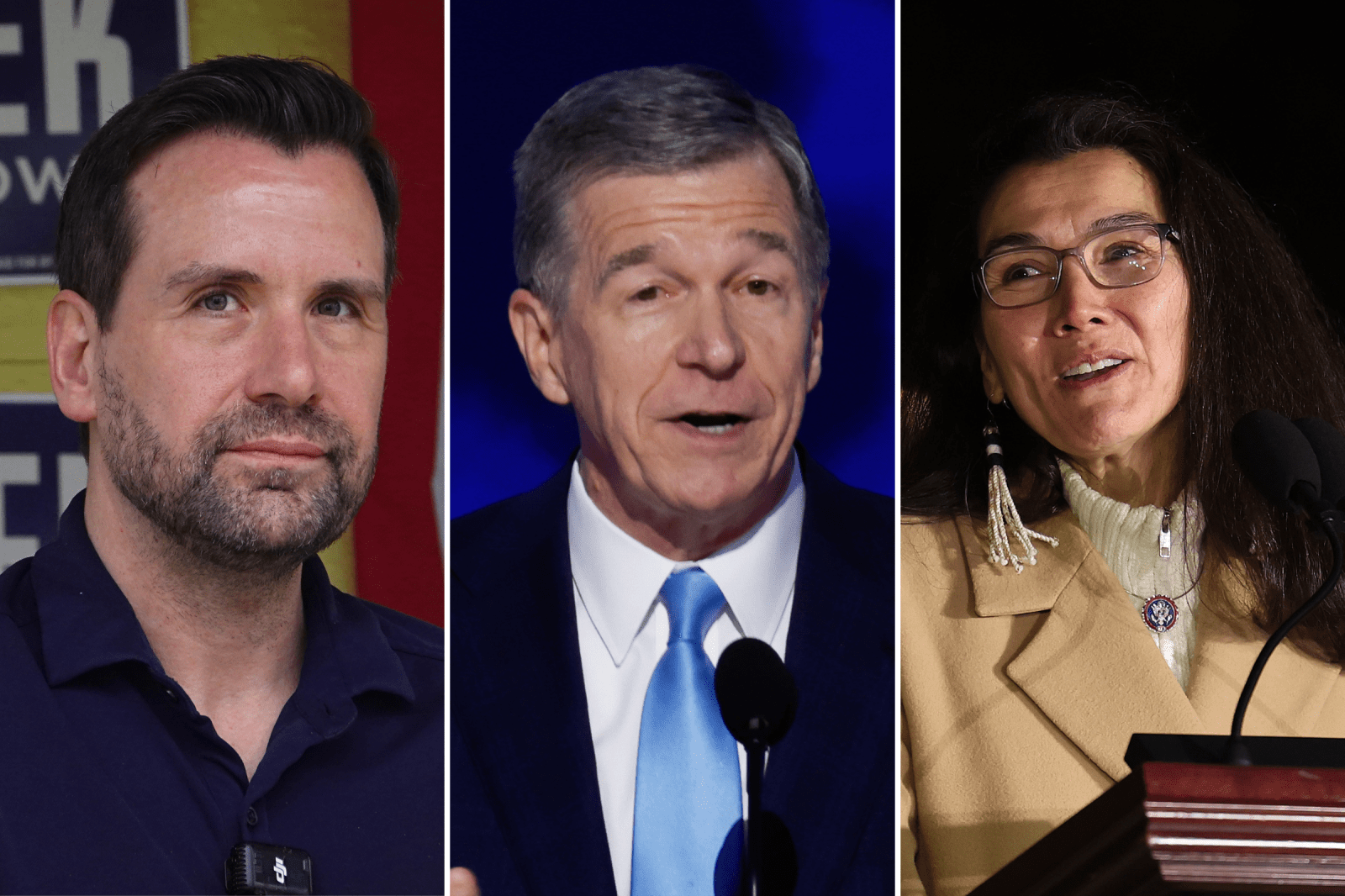
As the 2026 midterm elections approach, Democrats are closing the gap in voter registration against Republicans in several states with competitive Senate races. Despite this, Republicans maintain advantages in some traditionally conservative states that are now more contested. Senate control is fiercely contested ahead of the November elections, with Democrats leading in some conservative states like Alaska, Iowa, Ohio, and Texas, all of which supported President Donald Trump by significant margins in 2024.
Democrats are hopeful about expanding their electoral reach into these historically challenging states due to Trump’s low approval ratings. Recent frustration over economic issues, rising living costs, and gas prices amid the Iran conflict has contributed to this trend.
Voter Registration Trends
Voter registration data can highlight shifts in the partisan composition of states. However, it doesn’t always indicate how a state will vote, especially during years with a strong national advantage for one party. Factors like population changes, migration, and the removal of inactive voters can affect these numbers. In states without party registration, such as Georgia, Michigan, Minnesota, Ohio, and Texas, voter trends are less clear-cut.
Stephen Farnsworth, a political science professor at the University of Mary Washington, notes that voters often penalize the president’s party in midterms. He added that Trump’s low approval rating exacerbates Republican challenges. Young voters, concerned about job prospects in an AI-driven economy, are more engaged, revealing another area where Trump may not align with the electorate.
Key States Where Democrats are Gaining
Alaska: The voter registration gap in Alaska has narrowed, with Republican Senator Dan Sullivan facing former Representative Mary Peltola. By September 2026, the GOP advantage had decreased to 72,290 from 73,829 at the end of 2025. Polls indicate a competitive race, with Peltola leading in some surveys. The Cook Political Report labels this race as a toss-up.
Iowa: Iowa, a former battleground, shows Democratic gains as Republicans’ lead decreased from 196,755 in December 2025 to 182,715 in September 2026. Though Trump had a strong showing here, suburban areas haven’t entirely offset rural Republican gains. The Senate race between Ashley Hinson and Josh Turek is close, with varying poll results suggesting a competitive environment.
Kansas: Kansas shows a reduced Republican registration lead, down to 394,642 voters from 401,710 in November 2025. The Senate race is tight, with Roger Marshall and Adam Hamilton polling close. The race is seen as leaning Republican.
Nebraska: In Nebraska, the Republican advantage decreased, with independent Dan Osborn challenging Republican Pete Ricketts. Polls suggest a competitive race, though forecasters give Ricketts the edge.
New Hampshire: Though Republicans hold an advantage, the Senate race between Chris Pappas and John Sununu is considered a toss-up. Polls suggest a tight contest, with both candidates garnering significant support.
States Where Republicans Are Gaining
Maine: Republicans have gained ground in Maine, where Democrat Troy Jackson challenges Senator Susan Collins. Despite gains, Democrats still hold the voter registration edge. Polling indicates a close race.
North Carolina: Republicans overtook Democrats in North Carolina voter registration. Former Governor Roy Cooper, a Democrat, is favored against Republican Michael Whatley. Despite this, the race is classified as leaning Democratic, with polls showing Cooper ahead.
Democrats’ Chances of Senate Control
Stephen Farnsworth believes Democrats have better-than-even odds of taking the Senate. Economic struggles are a critical issue, with voters desiring presidential focus on such matters. Current prediction markets favor Democrats, a shift from earlier in the year when Republicans had stronger odds.
What Lies Ahead
As the election nears, candidates are addressing voters’ concerns through their campaigns. Key issues include the economy and foreign policy. Voter engagement will determine the outcome as polling continues to reflect the close Senate race.
Newsweek used Martyn, an AI assistant, for this report. For more details, contact editors Jenni Fink and Anthony Murray.
Leave a Reply