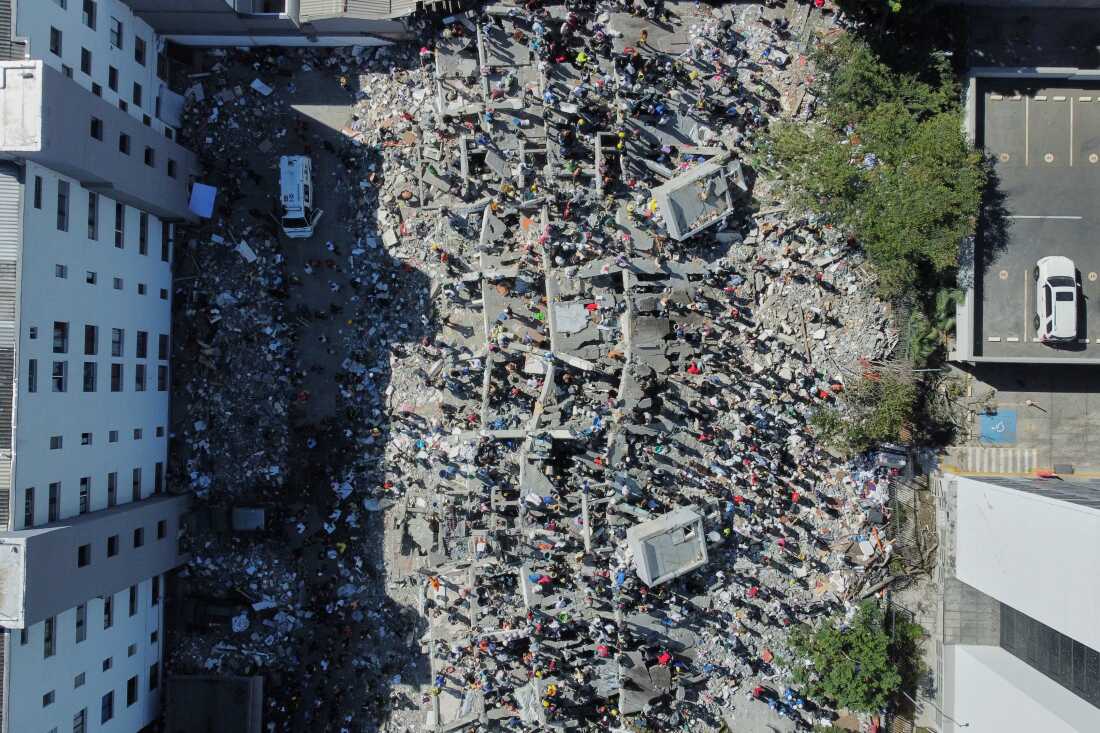
CALI, Colombia — On Monday, August 10, 2026, a devastating 7.4 magnitude earthquake struck western Colombia, resulting in significant loss of life and destruction. At least 111 people have died, hundreds of buildings have been damaged, and many individuals remain trapped under debris. Rescue teams and civilians are actively searching through the ruins in Cali, Colombia’s third-largest city, passing rubble down lines of volunteers.
Álvaro López, a local resident, expressed the devastating impact: Our building has basically been left in ruins, and the building next to ours? Completely collapsed,
he said, while holding his dog. The situation in Colombia is reminiscent of recent earthquakes in Venezuela.
In addition to Cali, cities such as Pereira, Quibdo, and Manizales have been severely impacted. The earthquake was felt across borders in Ecuador and Panama as well. According to the U.S. Geological Survey, the epicenter was located in San Jose del Palmar within the Choco region, about 250 miles west of Bogota.
Colombia’s President Abelardo de la Espriella declared a state of emergency, noting that at least 87 people have been injured and approximately 1,600 buildings have sustained damage. He assured the public: We aren’t going to leave people alone. They are in our hearts and we are going to tend to people with our full determination.
Authorities reported specific death tolls across regions, including 40 in Risaralda, 27 in Valle del Cauca, 9 in Choco, and more scattered fatalities. The aftermath of quakes in Venezuela caused anxiety in Colombia, leading residents to report missing loved ones in digital databases. More than 2,000 names have been listed.
Photos of those missing include vulnerable individuals such as a young mother and her baby in Pereira, alongside an elderly woman in Cali whose family seeks news after her building’s collapse.
Cities Left in Ruins
Jorge Moncayo, a taxi driver in Cali, described seeing dust clouds from collapsing buildings across the city, with locals and rescue crews digging through debris for survivors. The local government reported numerous people trapped within 380 damaged structures. Moncayo expressed relief in survival, saying: My entire house shook. I’ve never lived through such a powerful earthquake. We’re thanking God we’re alive.
The situation remains unclear in more isolated areas like Choco due to communication outages, while in towns like San Jose del Palmar, aid and assessment are hampered by lack of infrastructure.
In Pereira, ceiling debris rained down in the airport, and the city showcased extensive destruction in local media clips. Reports from Manizales reveal damage to a significant cathedral, leading Mayor Jorge Eduardo Rojas to advise residents against re-entering buildings during aftershocks.
Flights were halted across several cities for damage assessment, including Manizales, Quibdo, Armenia, Cartago, Buenaventura, and Pereira.
International Aid Response
While smaller quakes are common in Colombia, those above 6.0 magnitude are rare. President de la Espriella, recently sworn in, faces his first major challenge, claiming direct involvement in the emergency response. The U.S. State Department announced $15.5 million in aid, with offers from various Latin American countries following suit.
El Salvador’s President Nayib Bukele and Mexican President Claudia Sheinbaum offered prompt assistance, while Chilean President José Antonio Kast emphasized understanding the hardships earthquakes impose, promising support. Aid efforts are coordinated to provide urgent rescue operations and relief supplies.
Leave a Reply