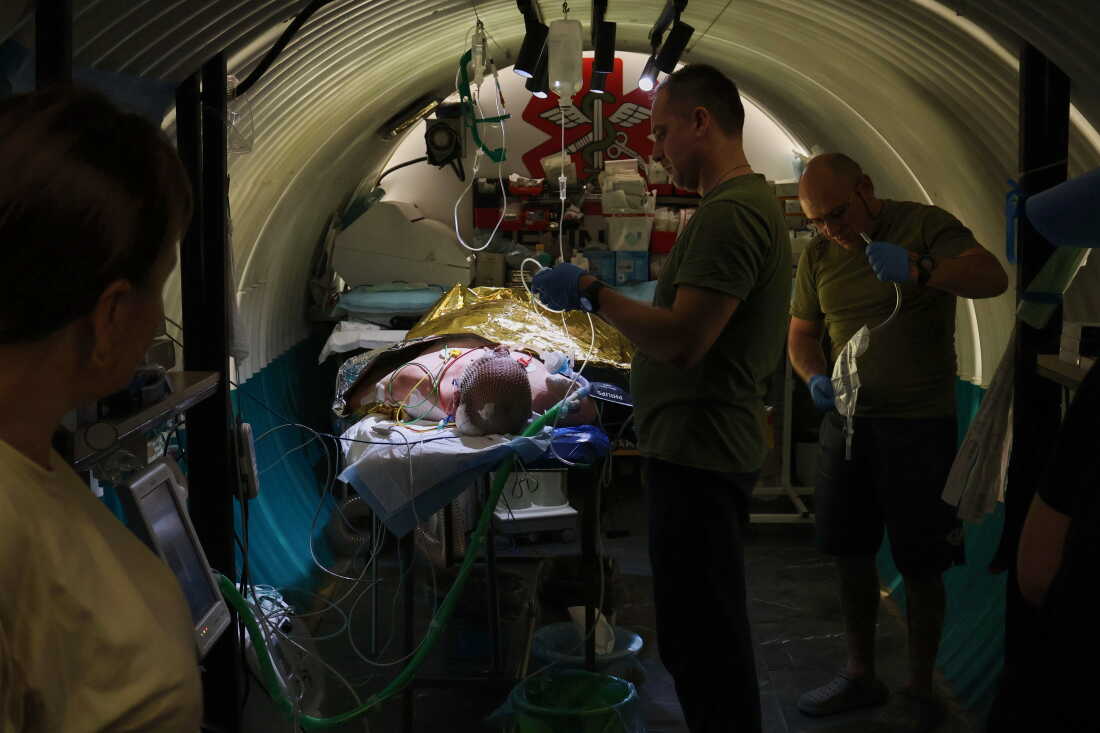
Ukrainian military medics administer care to injured soldiers on the battlefield in the southeastern Zaporizhzhia region. This scene unfolds near the front line, which spans over 700 miles from north to south. The intense battle region known as the ‘kill zone’ stretches 10 to 20 miles wide on either side of this line. This conflict area is characterized by the extensive use of drones and artillery.
Lt. Taras Myshak, spokesman for Ukraine’s 59th Separate Assault Brigade, describes this zone as perennially monitored by Russian surveillance technology, including drones and mines. Movement here is perilous; even minor actions such as lifting one’s head above a foxhole can lead to detection and drone strikes. Myshak shares that shifting troops within this area is challenging. For example, a group moving through the kill zone might need four hours to cover just one kilometer, constantly evading drone surveillance.
Darkness offers little cover as drones equipped with thermal cameras detect body heat easily. Ukrainian soldiers, like their Russian counterparts, navigate carefully often under protective netting. They frequently resort to bicycles or walking across the terrain to avoid detection by drones that readily spot larger military vehicles.
A Static Front Line
The invasion that began in February 2022 saw swift Russian advances. However, subsequent Ukrainian counteroffensives have since led to more static fighting positions. This frontline situation has evolved with drone technology dominating tactics. According to U.S. Marine veteran Rob Lee, who observes the conflict from Ukraine, the kill zone persists, mainly driven by drone warfare innovations.
Lee notes that Ukraine’s forces along the front are sparse, often organized in small groups per mile to evade detection. These soldiers primarily act as spotters relaying movement details to drone operators who then coordinate attacks from behind the front lines. The dense presence of drones limits assembling large ground forces or deploying vehicles.
The introduction of ground drones has transformed battlefield logistics, facilitating tasks originally carried out by human soldiers. These drones deliver ammunition and medical supplies and assist in evacuating the wounded under dangerous conditions. Some are even armed for offensive operations.
Adjusting to New Warfare
Initially lacking a robust drone industry, Ukraine anticipated producing millions of drones during the conflict to match escalating Russian production. Dima Putiata, a former Ukrainian soldier, was initially skeptical about drones but eventually commanded multiple drone crews when he served. Learning on the fly, Ukrainian forces have rapidly embraced and adapted to this evolving technology.
With the tactical deployment of drones, Ukraine established an independent military branch dedicated to such operations. These drones perform numerous roles on the battlefield, once deemed unsuitable for human soldiers due to the risks involved.
Acknowledging these changes, Ukraine pushes for training programs to enhance both drone operation and medical evacuation skills. Lyuba Shipovich leads such initiatives, emphasizing combined expertise to improve mission success in evacuations from the kill zone.
Conflicts worldwide are likely to adopt similar drone technologies, fundamentally altering warfare strategies. As drones account for a significant portion of casualties in this conflict, they represent a cost-effective means of conducting military operations. Unfortunately, this trend indicates a shift toward conflicts increasingly reliant on such technology.
Leave a Reply