The Sendai Nuclear Power Plant in Japan emerged undamaged following a significant earthquake in southern Japan. The International Atomic Energy Agency (IAEA) was informed by Japan’s nuclear authority about the plant’s status.
The IAEA, a U.N. watchdog, confirmed they would continue observing developments. Since the catastrophic 2011 earthquake, which caused meltdowns at Fukushima Daiichi plant, nuclear facilities in Japan gain increased scrutiny during seismic events.
Disaster Response Efforts
Prime Minister Sanae Takaichi announced the deployment of 300 members from the Japan Self-Defense Forces to the affected southern regions for disaster relief operations.
Trapped Individuals and Damages Reported
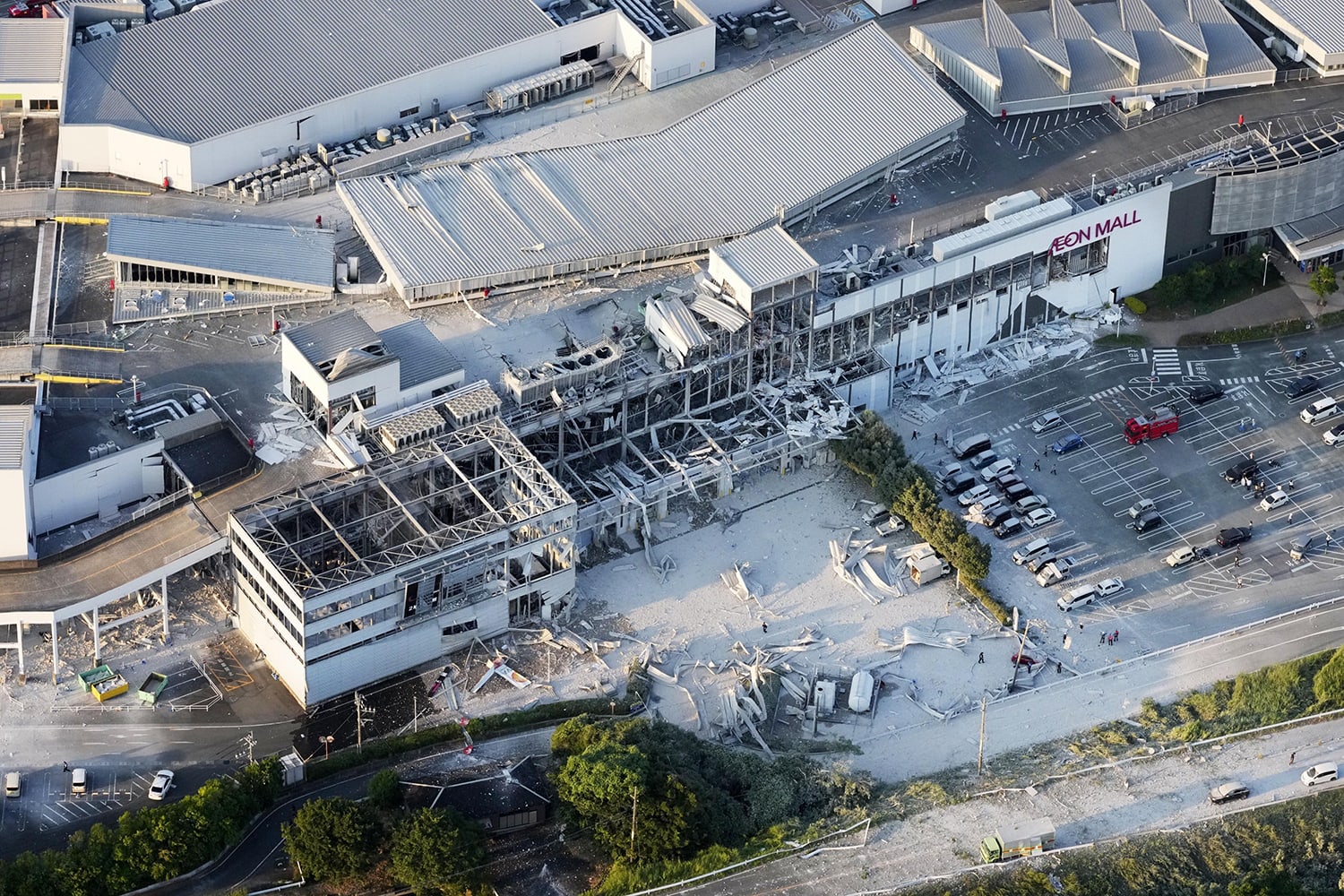
Several individuals are reportedly trapped in a mall following the earthquake. Local fire officials noted explosions were heard on the mall’s second floor. State broadcaster NHK showed images of fire trucks responding, with structural damage evident, including collapsed ceilings and debris-covered areas.
Impact on Infrastructure
The 7.1-magnitude earthquake disrupted transport services. At JR Hakata Station in Fukuoka, passengers were stranded as bullet train operations halted. Visuals from the Kumamoto Prefecture highlighted fallen shelves, office equipment, and a collapsed store exterior in Kumamoto City.
Building Collapses and Fires
Japanese state broadcaster NHK reported the collapse of at least 12 buildings, with trapped individuals in four instances. Most incidents were in Yatsushiro, Kumamoto Prefecture. Aerial footage showed significant damage in commercial facilities, including a collapsed supermarket ceiling.
Structural damages extended to cultural sites, with shrine pillars fallen and multiple fires reported across Kumamoto Prefecture.
Earthquake Overview
A seismic tremor hit Southern Japan, categorized as 7.1-magnitude, triggering a regional tsunami warning. According to the Japan Meteorological Agency, the quake was at the highest end of the seismic intensity scale. It occurred at approximately 4:27 p.m. local time, with a subsequent tsunami advisory later withdrawn.
Seismic Patterns in Japan
Japan frequently experiences both minor and significant tremors, attributed to its geographical placement on the “Ring of Fire.” This zone converges multiple tectonic plates, leading to numerous earthquakes and volcanic eruptions. Nearly 20% of global quakes measuring 6.0 or higher occur in Japan.
Post-2011 disaster, the country enhanced its earthquake response mechanisms, strengthening warning systems and evacuation protocols.
Leave a Reply