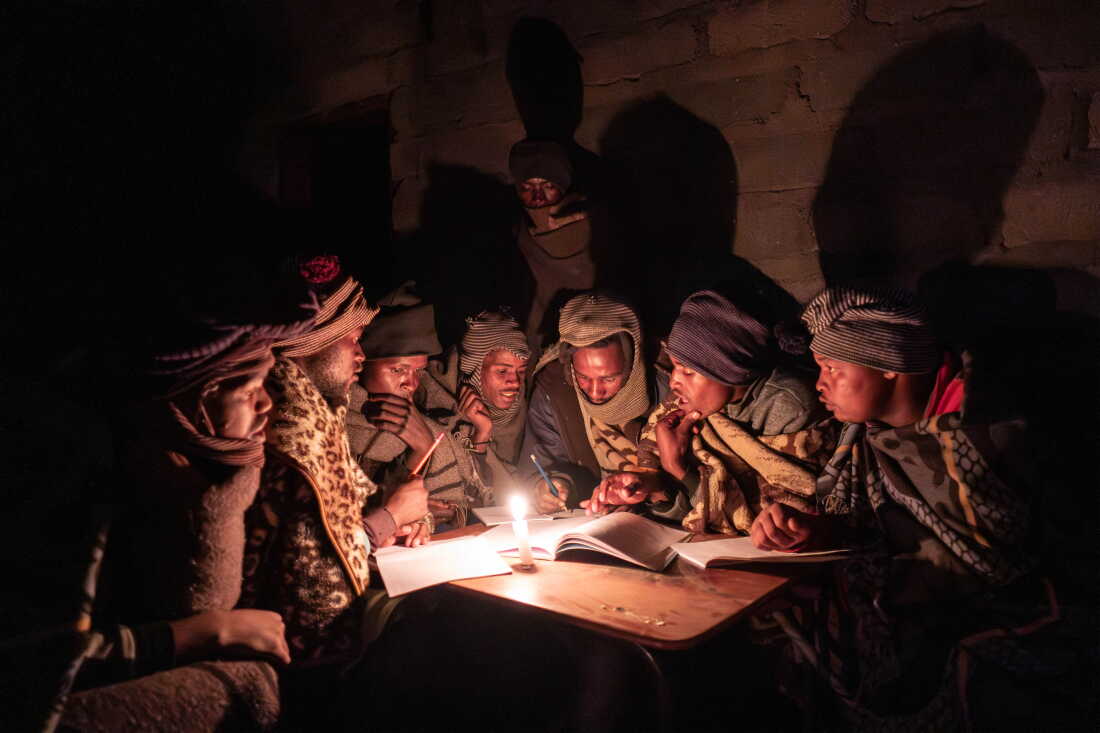
In the highlands of Lesotho, shepherds like Kabelo Mohai and Lepeli Maapesa make a nightly journey to attend school. These night classes are often their only means of education. Wrapped in wool blankets, they navigate rocky paths to reach the Good Shepherd School in Semonkong, a beacon of hope in the remote mountains.
Livestock is integral to Lesotho’s economy, with wool and mohair accounting for a significant portion of agricultural exports. However, this tradition often pulls young boys into herding at the expense of formal education. A World Bank study shows that nearly half of Lesotho’s boys are herders. This work often isolates them in mountain huts, miles away from traditional schooling.
I started working with animals when I was 9. I only finished primary school,shares Mohai, now 20, as he attends night classes after herding all day. These classes provide not only education but a social environment, a rarity for those isolated by their work.
Many such educational opportunities have sprouted across the country. These schools, mostly volunteer-run, face financial challenges but remain vital. In Semonkong, the Good Shepherd Night School, founded in 2003, serves over 40 students aged 15 to 55 every weeknight. Sister Rosemary Mokebe leads the initiative, emphasizing the importance of education to the community.
Lesotho’s government attempts to support these schools, yet bureaucratic challenges persist. The effort to formalize these night classes moves slowly, delaying contracts and funding.
At a rudimentary night school in Ha Ntsokoane, teacher Mampho Makha continues her volunteer work. Inspired by teaching her illiterate father, she educates shepherds and villagers on basic literacy. These efforts allow community members to conduct daily transactions and plan independently.
Despite the obstacles, these schools provide valuable lessons and socialization for shepherds, who otherwise remain isolated. For many, like student Ketso Mokoena, this education provides hope and the potential for a different future.
Julie Bourdin, a freelance journalist in South Africa, highlights these stories, focusing on human rights and educational challenges. Her collaborator, Tommy Trenchard, captures the challenging yet hopeful experiences in Lesotho’s mountainous landscape.
Leave a Reply