Veracruz, a historic city by the Gulf of Mexico, holds its musical heritage in high esteem. Every hour, the bells in the central plaza’s clock tower play the traditional song “La Bamba.” This isn’t the rock ‘n’ roll version from 1958 by Ritchie Valens; the original has graced this city for centuries. A local musician describes it as their hymn. “La Bamba” is part of son jarocho, a regional music genre linked deeply with Veracruz’s cultural fabric.
Son jarocho thrives at community gatherings known as fandangos. These events have roots in the diverse mix of cultures that emerged along the Gulf Coast following the establishment of Veracruz by Hernán Cortés in the early 1500s. This buoyant folk music blends European, Caribbean, and Indigenous influences. Although fandangos date back over 300 years, their appeal is spreading globally. However, to experience its authentic form, one must visit Veracruz.
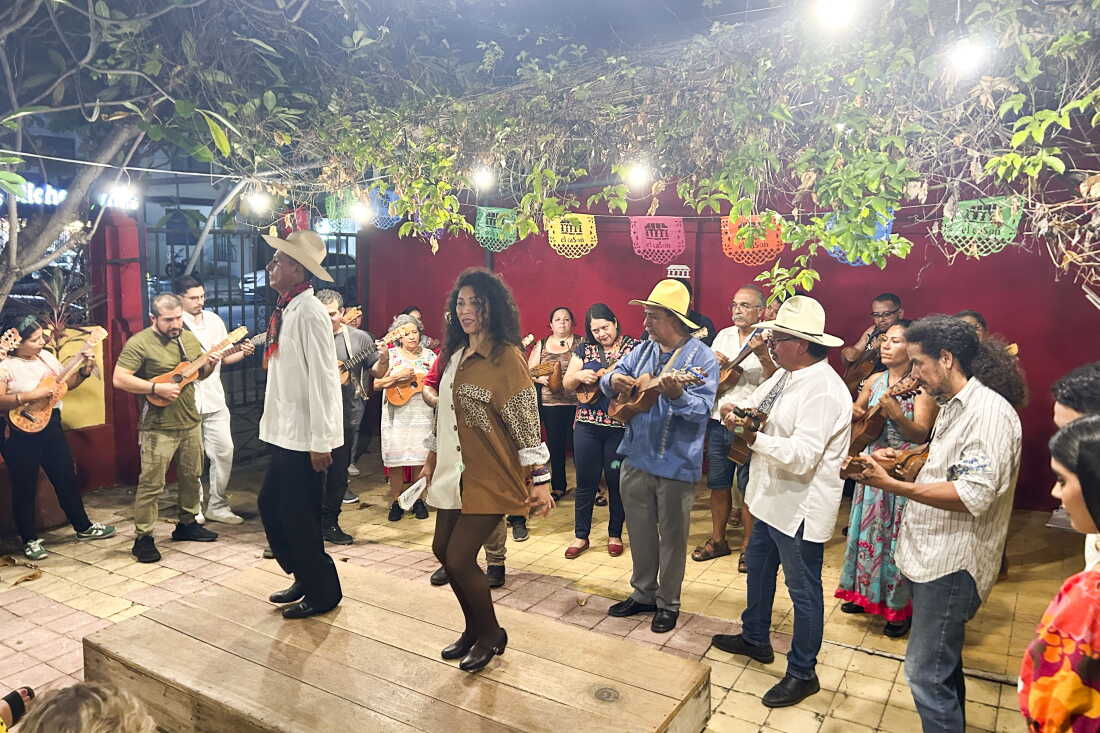
On a Saturday night in August, the coastal heat persists as a couple dances on a wooden platform. The woman twirls in a floral dress while her partner sports a traditional straw hat drenched in sweat. Nearby, a man in a black T-shirt and shades plays a quijada, the jawbone of a donkey, creating rhythm by scraping the teeth and slapping the mandible. Attendees enjoy ice-cold Mexican beer and tamales wrapped in banana leaves. As the night unfolds, many join the musicians, transforming into a massive jam session. They play the jarana, an eight-string guitar native to the region, sustaining “La Bamba” for 15 entrancing minutes.
Tacho Utrera, a Grammy-winning jarocho musician and instrument maker, shares, “Fifteen minutes is nothing. In Tlacotalpan, where huge fandangos occur, 80 musicians play ‘La Bamba’ and dance for hours, constantly changing performers.”
In past decades, particularly the 60s and 70s, fandangos and son jarocho were seen as lower-class music similar to Mississippi’s delta blues. Gilberto Gutierrez, a prominent figure in son jarocho and founding member of Mono Blanco, recalls, “Fandangos were small family events. The music was associated with drunks.” Today, son jarocho is flourishing as cities strive for cultural authenticity. Fandangos celebrate baptisms, birthdays, wakes, and various events. In Veracruz, the caSon Cultural Center hosts a fandango monthly, marking 25 years of promoting this culture under Gutierrez’s leadership.
Gilberto Gutierrez asserts, “Fandangos thrive due to community. Musicians, dancers, singers, and cooks create a shared experience. Humanity craves connection, which propels fandangos globally.” Son jarocho is now heard in places like Mexico City, Argentina, Europe, and U.S. cities with significant Latino populations.
An integral part of the music is el zapateo, the percussive tap dancing that ensures rhythm. The dance occurs on a wooden platform called a taríma. According to Ada Veronica, a teacher from Puebla who has danced for two decades, “Stepping onto a taríma shows respect and skill. It’s not for amateurs.” Classes in jarocho music at El caSon are popular among young Mexicans, including those embracing new genres.
Paloma Rizo, a 28-year-old jarana player and teacher, speaks about the experience, “You feel it and live it. Even those unfamiliar with fandangos feel the invitation.” In Veracruz, the term convivencia represents the spirit of a fandango, meaning “alive together.”
Leave a Reply