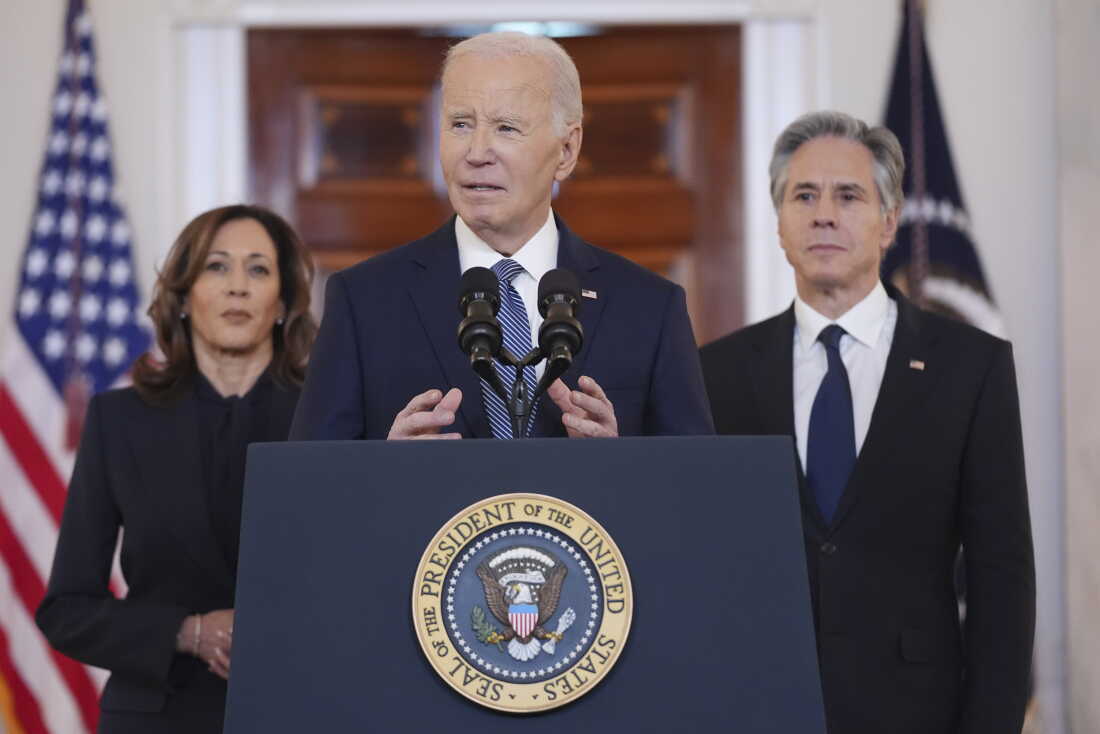
January 15, 2025: President Joe Biden, alongside Vice President Kamala Harris and Secretary of State Antony Blinken, addressed the nation from the White House, announcing a ceasefire deal in Gaza. Notably, Akbar Shahid Ahmed, a seasoned journalist, took the influence of Washington’s promises on global events and explored them in depth.
Ahmed spent years covering international commitments made by the American government, analyzing how they translated into action. His tenure at HuffPost saw him critique Biden’s stance on Saudi Arabia, while his experiences in Israel and Gaza in 2019 enriched his insights.
The violent outbreak in Gaza in 2023, led by Hamas, prompted Ahmed to trace decision-making back to Washington. He highlighted objections from experts within the administration, which often became memos that shaped final decisions. These revelations motivated him to turn the story into a book, depicting the insular nature of the administration’s decision-making process.
Akbar Shahid Ahmed, now with The Washington Sun as a diplomatic correspondent, shared his findings on Morning Edition. Interviewing more than 150 officials and stakeholders, his book, Crossing the Red Line: Biden, His Advisors, and Israel’s War in Gaza, scrutinizes the choices behind U.S. support for Israel and the consequent influence on the war.
One poignant example was post-2024 election discussions involving senior officials like Brett McGurk and Jack Lew, debating U.S. complicity in potential war crimes. Ahmed observed that despite public pronouncements of restraint, the U.S. policy facilitated Israeli aggression.
Decisions extending to the highest White House levels often delayed action, missing chances to apply pressure on Israel to ease its campaign.
A striking term Ahmed encountered was ‘herd impunity’, signifying a culture where avoiding concrete findings on Israeli actions granted perceived clearance among senior officials, stalling decisive measures.
After Biden’s presidential term, scrutiny continued. By September 2025, an independent U.N. commission labeled Israel’s actions as genocide, which Israel rebuffed, maintaining it addressed misconduct allegations diligently.
When approached by NPR, figures like Biden, Lew, and McGurk declined to comment on Ahmed’s argument regarding the administration’s hazardous Gaza policy. Ahmed stressed the need to understand behind-closed-doors deliberations, questioning senior officials’ expressed doubts and considered alternatives.
The continuity of U.S. military aid to Israel remains, with a notable $3.8 billion annually, supplemented by $8.7 billion during 2023’s conflict. Even after this intense period, officials involved in crafting Biden’s policy are writing their own accounts.
Ahmed insists more insights are needed on private administration deliberations, including doubts voiced, alternate options reviewed, and accountability concerning Middle Eastern U.S. policy effects.
President Biden identified Rafah as a red line, stating actions there would curtail American weapon supply. However, following Israeli violations, the administration began supporting a narrative that this line remained uncrossed.
Careerism in Washington, as described by a State Department lawyer, is a major factor inhibiting bold policy shifts, with officials avoiding disruption due to longstanding professional bonds.
Hamas’s culpability is acknowledged in the book. Notably, allegations include war crimes and hostage-taking events dated October 7, 2023. However, Ahmed underscores the pivotal role U.S. arms played in enabling Israel’s military campaign.
Throughout Ahmed’s interviews, a perception emerged that Palestinian suffering received inadequate attention from the administration compared to Israeli experiences.
Ahmed disclosed new information, claiming national security adviser Jake Sullivan questioned Palestinian starvation reports, while a State Department officer indicated limited U.S. official contacts with Palestinians.
In final reflections, Ahmed asserts Biden’s Gaza policy has permanently shifted America’s foreign affairs stance, influencing warfare standards and underlining democratic accountability.
Conclusion: Despite consequences, involved officials remain positioned for future roles, many expressing retrospection. Ahmed urges accountability for decisions potentially averting increased casualties in Gaza, Lebanon, and amidst broader Middle Eastern tensions.
This adaptation originates from Ahmed’s dialogue with Leila Fadel, edited by Adriana Gallardo, and adapted for web presentation by Majd Al-Waheidi.
Leave a Reply