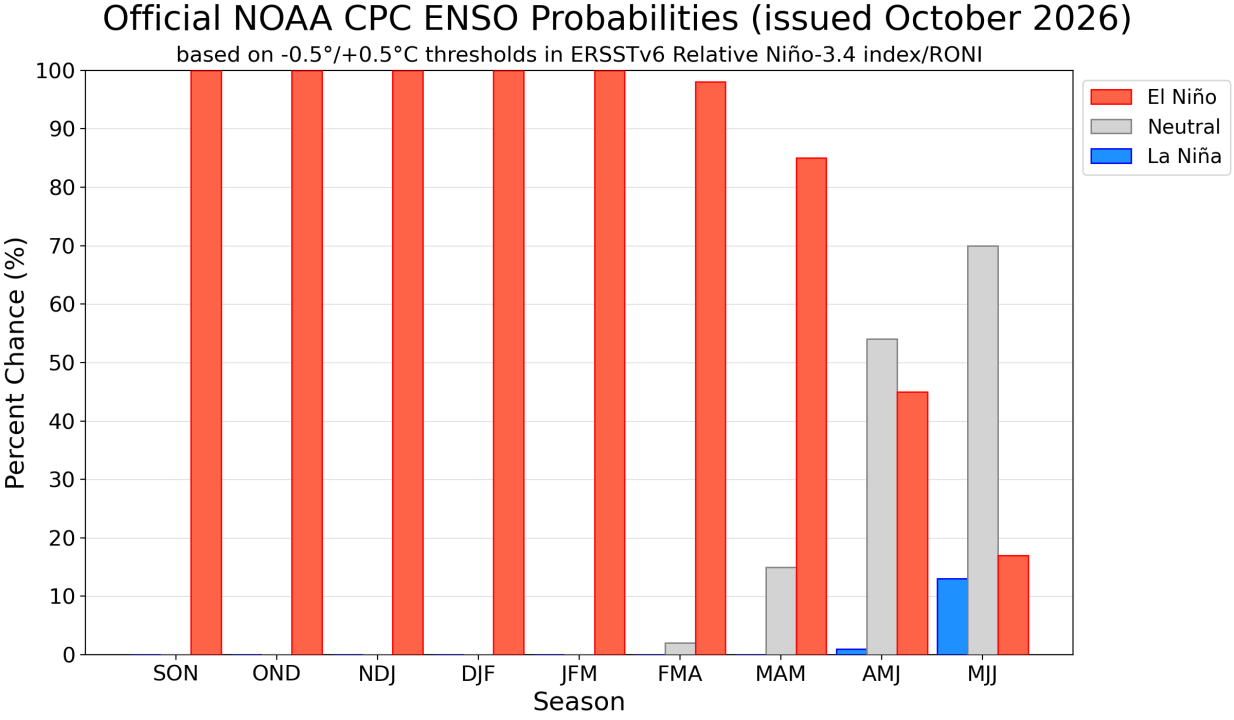
Forecasters are observing the development of a potentially historic El Niño, which is gaining strength according to the Climate Prediction Center of NOAA. The center notes that El Niño has intensified and is likely to remain strong to very strong through the first quarter of the upcoming year.
Several models predict that El Niño will continue to strengthen until the year’s conclusion. These models indicate a high probability of the event surpassing previous records that have stood since 1950. While impacts consistent with El Niño remain likely, they are not guaranteed.
Columbia University climate scientist Azhar Ehsan recently highlighted El Niño’s persistence until spring with a near certainty. The Climate Prediction Center corroborates this, suggesting a 100% probability of El Niño conditions persisting for six months, though a La Niña pattern could follow soon after.
A report from the World Meteorological Organization forecasts El Niño reaching its peak in December with sea-surface temperatures potentially achieving record highs. WMO Secretary-General Celeste Saulo explains that El Niño does not introduce new heat, but rather releases stored oceanic heat, often making events exceedingly warm, as expected in 2024.
Nexstar chief meteorologist Brian James anticipates that this enduring El Niño will significantly affect upcoming weather patterns. Northern regions may experience drier, warmer conditions, whereas southern areas might see cooler, wetter weather.
Daniel Swain from the California Institute for Water Resources expressed concern on social media, noting unprecedented events within a warming climate context. California has preemptively declared a state of emergency in response to the expected impacts, as seen in Los Angeles preparations.
Ehsan compares this year’s atmospheric conditions to those of 1997, another strong El Niño year characterized by extreme weather patterns. Historical records show that winter was notably warm and wet, prompting significant climate disruptions.
Temperature and precipitation forecasts for the rest of the year conform to classical El Niño patterns, suggesting that similar conditions might prevail.
Leave a Reply