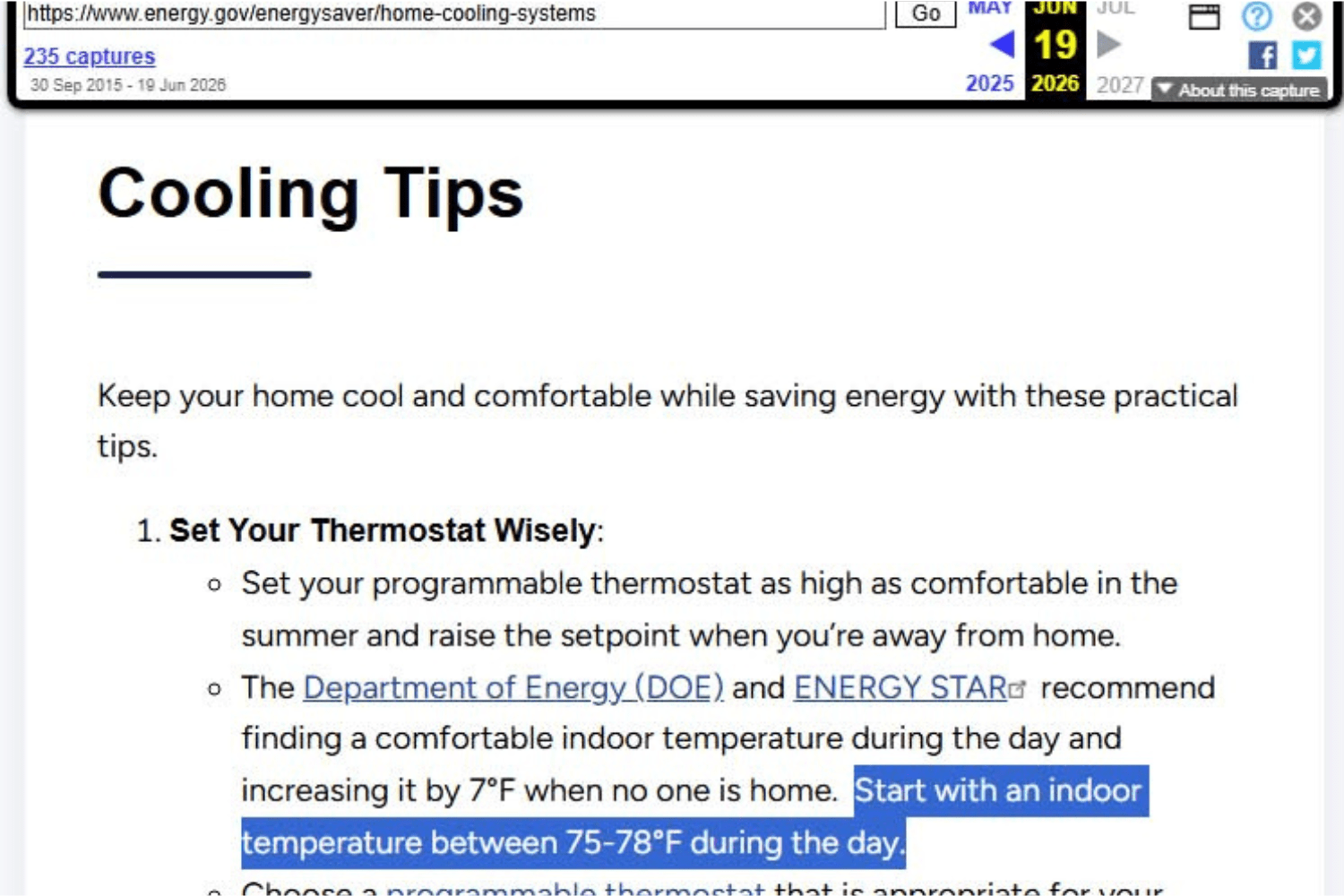
The U.S. Department of Energy (DOE) webpage that advised maintaining indoor temperatures between 75 and 78 degrees Fahrenheit during summer seems to have been taken down. This follows remarks from New York City Mayor Zohran Mamdani urging residents toward similar thermostat settings to ease pressure on the city’s power grid.
Archived Energy-Saving Advice
Archived versions of the DOE’s “Home Cooling Systems” page reveal recommendations for setting indoor temperatures between 75-78°F as part of energy-saving strategies. The page was accessible through late June and early July but now shows a “Page not found” error. Newsweek has sought clarification from the DOE about whether the removal was intentional, part of a website update, or related to any broader review.
The Department of Energy (DOE) and ENERGY STAR recommend finding a comfortable indoor temperature during the day and increasing it by 7°F when no one is home. Start with an indoor temperature between 75-78°F during the day.
The webpage formed a portion of the Energy Saver guidance, offering tips for energy reduction without compromising indoor comfort during warm weather. Recommendations included setting thermostats as high as comfortable during summers and increasing the temperature further when the house is unoccupied. Other suggested measures covered weatherization, window coverings, air conditioner maintenance, and programmable thermostat use.
Timing and Public Reaction
The disappearance of the page coincides with Mamdani’s encouragement for New Yorkers to set their air conditioners to 78 degrees. This advice came amid warnings of a “significant and dangerous heat wave” affecting large parts of the country. Mamdani stressed the importance of easing grid demand, stating, “Our City is maintaining the 78 degrees rule in our buildings, dimming and turning off lights during peak electricity demand, and asking private partners to do the same.” He emphasized the significance of a stable grid for AC operation and saving lives.
The recommendation ignited controversy as some conservative politicians criticized Mamdani’s stance. Kentucky Senator Rand Paul, Florida Senator Rick Scott, and South Carolina Senator Lindsey Graham took to social media platforms, referring to the guidance as “socialism” or “communism.” Florida Governor Ron DeSantis and Texas Senator Ted Cruz also commented, highlighting opposing views on thermostat settings.
Heat Wave Warnings Across the U.S.
The thermostat debate coincides with a severe heat wave across central and eastern United States before the July 4 holiday. The National Weather Service has issued Extreme Heat Warnings for 26 states and Washington, D.C., with heat indices potentially reaching 115 degrees in some regions. Major cities like New York, Philadelphia, Boston, and Washington have reported record-high temperatures, causing power outages and transportation delays.
The DOE has yet to explain the removal of their webpage. There is no evidence suggesting a direct link between the removal and Mamdani’s comments. The federal government had earlier recommended a temperature range that aligns with Mamdani’s advice. Key questions include whether the removal was deliberate, if the DOE still supports the 75-78°F recommendation, and whether new cooling guidelines will replace the now-missing page.
Leave a Reply