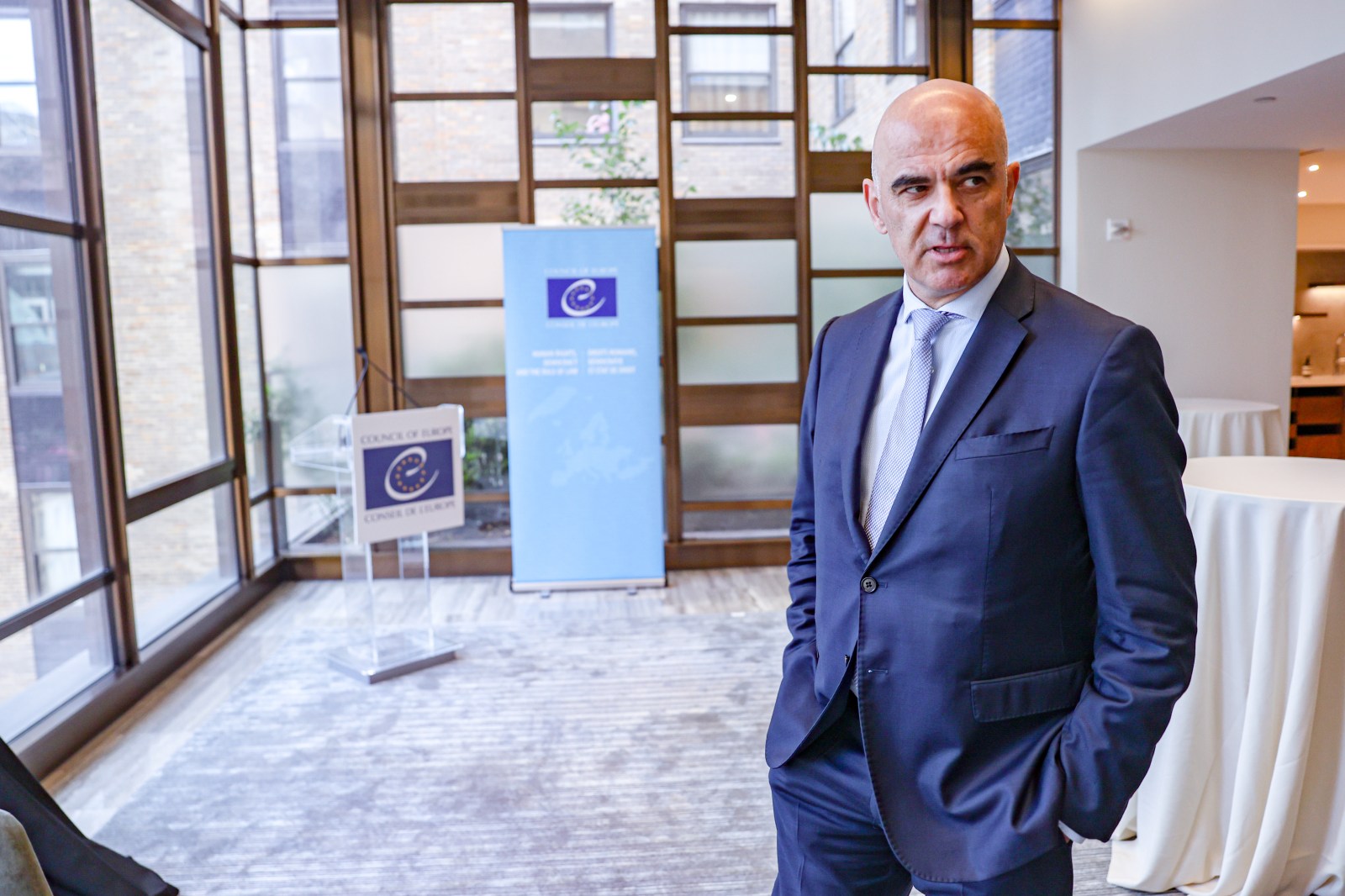
The Council of Europe Secretary-General, Alain Berset, shared concerns about Europe’s readiness for modern, hybrid warfare. Berset emphasized the need for European nations to adapt to the evolving landscape of threats, particularly those posed by Russia. He pointed out the changing nature of warfare, such as the increased use of drones and cyber warfare, which require different strategies than conventional military methods.
Berset, who assumed his role as chief of the 46-member council in September 2024, highlighted the transformations seen in the Russia-Ukraine conflict as an example. Drones and cyber campaigns have increasingly replaced traditional tactics, presenting a cheaper and more distant form of engagement with lower direct accountability.
Berset stated, “The main point about hybrid threats is not only the drones… It’s about information, infrastructure, and information manipulation.”
He noted weaknesses within Europe’s energy and security systems and called for improvements to handle hybrid threats more effectively.
Europe’s Strategic Response
Berset acknowledged developments within Europe aimed at addressing existing gaps. Significant increases in defense spending among EU member states and strategies like the EU’s Readiness 2030 campaign were promising signs. However, he urged that these efforts be complemented by investments in democratic institutions.
Maintaining European values such as human rights, democracy, and the rule of law is vital. Berset warned against nations becoming too militarized without sufficient democratic controls, arguing for a balanced approach that promotes “democratic security.”
Adapting to Political Shifts
Europe has seen a rise of nationalist movements, such as Germany’s AfD party, which reflect increasing political upheaval. Berset remarked this isn’t a new occurrence for Europe; past political disruptions have tested the robustness of European democracy, which he believes can absorb these shocks.
“We have experienced sequences of crisis… financial crisis, inequalities, the Ukraine war,” Berset said, emphasizing democracy’s resilience.
Social media, AI, and misinformation contribute to public disillusionment. Berset advocates for adapting European approaches to modern challenges rather than returning to outdated solutions.
Transatlantic Dynamics
Berset commented on shifting relations between the U.S. and Europe under President Trump’s administration. Despite differences in political views and attitudes toward security commitments, he sees the transatlantic relationship as essential and enduring.
Berset urges collaboration to create stability, crucial for economic development, by leveraging Europe’s significant influence. He remains optimistic about Europe’s ability to unite against external threats, taking geography, energy, health, education, defense, and demographic factors into account.
Berset concluded, “Maybe it’s too optimistic… History shows optimism is often the right choice.”
Leave a Reply