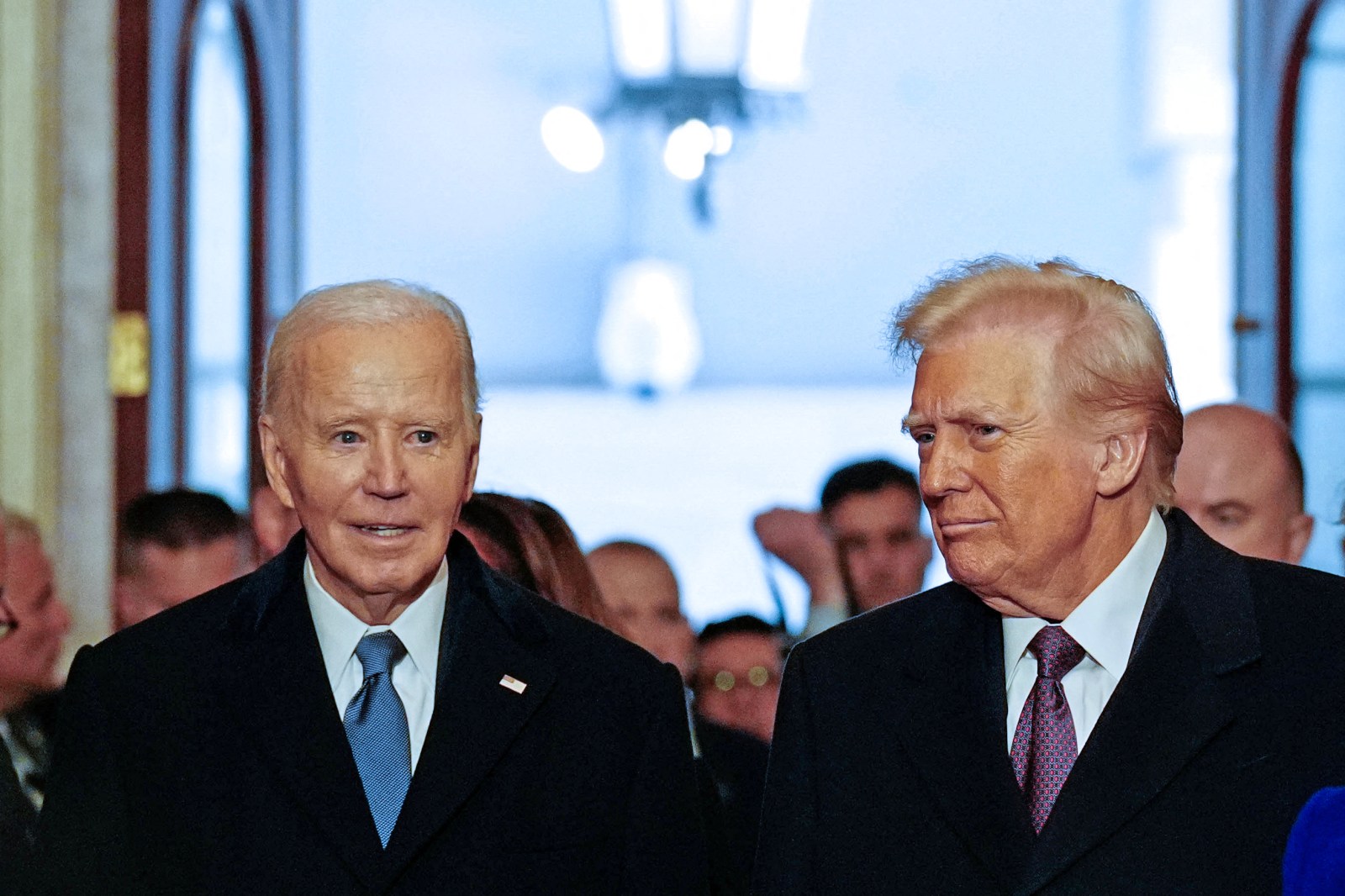
Layoffs have become a common headline, linked in part to automation and artificial intelligence. President Donald Trump, like former President Joe Biden, faces scrutiny over job losses. Despite promises to lower costs and bolster the economy, both leaders confront voter dissatisfaction over economic conditions. Inflation has surged, consumer confidence is shaky, and the economy tops Americans’ concerns. Trump’s approval rating is negatively impacted by economic challenges, with layoffs contributing to the debate.
Layoffs offer one view of the labor market, but are not the sole indicator. Economists caution that some unemployment data is skewed by workers exiting the workforce out of job search discouragement. Though current layoff rates align with trends from previous years, large-scale cuts by major companies raise concerns about broader job security issues.
Trump vs. Biden Layoffs
The Bureau of Labor Statistics data highlights differences in layoffs under Trump and Biden. Biden’s final 17 months saw average monthly layoffs of approximately 1.66 million. In comparison, Trump’s first 17 months of his second term averaged 1.75 million monthly layoffs. While the increase is notable, it does not indicate a drastic spike.
Wayne Hochwarter, a business professor at Florida State University, explains layoffs tend to garner attention due to their occurrence in visible sectors such as government, tech, media, and AI-focused companies.
During Trump’s term, monthly layoff counts were sometimes higher than those in Biden’s final months. For instance, Trump’s highest monthly layoffs reached 1.891 million in October, surpassing Biden’s high of 1.831 million in November 2024.
Focus on Efficiency and Automation
Businesses continue to prioritize efficiency initiatives and cost-cutting. The expansion during the pandemic recovery led many to reduce their payrolls over the last two years, despite low unemployment rates. Analysts note that layoffs can rise even in a healthy labor market when employers adjust staffing levels or invest in new technologies.
Layoff figures do not automatically mean widespread economic distress. Job openings remain high historically, and unemployment rates are healthy. However, finding new employment remains tough for those laid off.
2026 Layoff Highlights
Several prominent companies reduced their workforce in 2026. Industries from sports media to telecommunications faced cuts. Ideal US Talent Systems Worker OpCo LLC announced 10,000 layoffs, while Corizon Health noted 7,000 layoffs, per WarnTracker.
ESPN implemented layoffs amid a restructuring linked to Disney and NFL Network integration. Notable departures included Ryan Clark, whose exit attracted attention due to its timing during NFL Live. Other on-air personalities affected were Karl Ravech, David Lloyd, and NFL insiders.
Clark’s departure was linked to critiques of on-air conduct and disputes with colleagues, though he claimed layoffs were used as a cover.
Centene offered buyouts to its workforce amid losses from Obamacare and Medicaid memberships. Challenges include fluctuating Medicaid enrollment and government changes, prompting workforce reductions.
Amazon’s staff cuts followed its pandemic-era expansion. Active in streamlining operations, Amazon laid off at least 31,000 employees in 2025 and 2026, according to WarnTracker.
Verizon’s cuts were tied to a changing telecommunications landscape, intense competition, and infrastructure investment. Over 16,000 jobs were shed in 2025 and 2026, per WarnTracker.
Layoff trends may become political liabilities for Trump based on public perception of financial security. Economic anxieties tied to costs, automation, and job search difficulties persist, influencing voter opinions amid upcoming elections.
Although not on par with past recession layoffs, continued job cuts reflect economic uncertainties. As Trump campaigns on economic success, layoff visibility impacts voter sentiment regarding job security.
Leave a Reply