Wilting in the summer heat, tourists line up to climb Notre Dame Cathedral, eager to witness its gargoyles up close. Meanwhile, archaeologists delve into history beneath their feet, unearthing relics of Roman Paris from 2,000 years ago.
The devastating fire in 2019 that toppled Notre Dame’s spire has led to major reconstruction efforts. The cathedral reopened in late 2024. Paris now plans to enhance the square in front of the cathedral with trees and shade. However, thorough archaeological excavation is necessary before any ground disturbance.
“It’s a rare opportunity for us to work on something that impacts the history of Paris,” shared Lucie Altenburg, a conservator from the Paris archaeology unit.
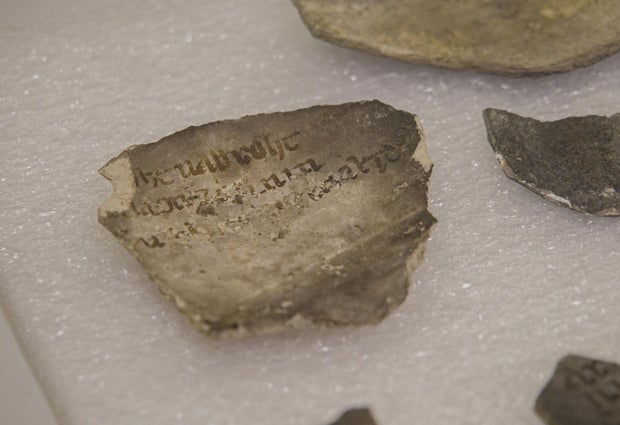
Recently, archaeologists have uncovered intriguing artifacts, including a fourth-century coin bearing the image of Emperor Constantine and medieval pottery shards marked with undecipherable symbols. These findings have captivated both historians and visitors.
Emily Carter, a Manchester tourist, expressed amazement. “You come to see the cathedral, then realize there’s another city beneath you. It’s even more moving.”
The site offers a glimpse into millennia of Parisian history. Archaeologists have found layers dating back to the Merovingian and Carolingian eras, nestled beneath medieval remnants and a dense Roman quarter.
“Here you can see the layers—medieval Paris, Roman Paris, and possibly earlier,” remarked Yasmine Benali, an archaeology student.
Discoveries from Ancient Layers
A rich haul of pottery, coins, and other artifacts has emerged from ancient latrine pits, which also served as rubbish dumps. Valentine Breloux, an archaeologist, highlighted the rarity of finding complete ceramics preserved in this way. The underlying waste kept them intact for centuries. Conservators have found mysterious reddish writing on medieval pottery, still awaiting decipherment.
Pure black discs of rusted coins have also been unearthed, revealing the face of Constantine when examined under X-ray. These coins are crucial for dating the layers of earth they are found in.
The Roman artifacts are particularly prized due to their antiquity and the depth at which they are found. These objects provide insights into Lutetia, the early name for Paris, and its historical significance.
The Ongoing Adventure
“Every find leaves for the city’s archaeology center, a treasure house for Paris,” explained Camille Colonna, who leads the excavation.
Such digs are rare, activated only when construction is planned. The impending renovation of Notre Dame’s square is the latest catalyst for archaeological exploration, with completion expected by 2028.
The revamped square promises a cooler summer experience for visitors, lined with new trees and water features. Plans include reopening the underground parking lot as a visitor center overlooking the Seine.
Archaeologists aim to reach deeper historical layers, searching for traces of the Gauls. Altenburg hopes they’ll reach further into the past than ever before.
Tomb Discoveries and Historical Insights
In 2022, archaeologists uncovered tombs and a human-shaped lead sarcophagus possibly dating to the 14th century. These discoveries might relate to a senior dignitary from the 1300s. Additionally, elements of painted sculptures were found near the cathedral’s original floor.
Research in 2023 revealed Notre Dame as the first Gothic cathedral using iron staples extensively in construction. These staples, brought to light by the 2019 fire, are integral to the structure’s resilience.
Leave a Reply