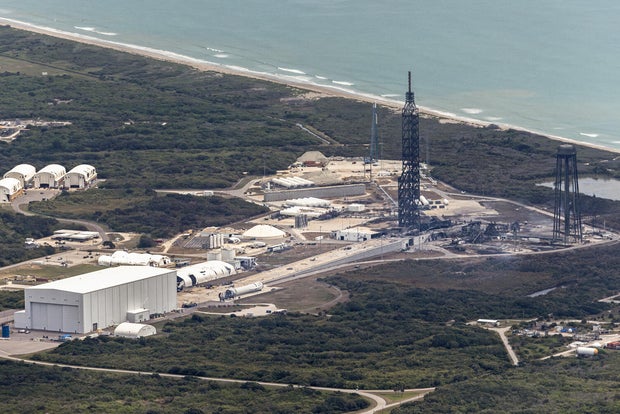
Following an explosion at the launch pad, Blue Origin shared that the damage was less severe than initially expected. The company aims to resume New Glenn rocket launches by year-end. CEO Dave Limp announced on social media that key structures like propellant tanks and processing hangars remained intact. Although the main support gantry sustained damage, repairs on-site are possible.
Limp expressed relief saying, “The propellant farm and tanks are all in good shape.” Such components often take considerable time to replace. Furthermore, the water tower is intact, and they can repair the main support tower on-site.
Limp assured, “We will fly again before the end of this year.”
Last week’s explosion destroyed the New Glenn rocket along with its transporter-erector. However, another booster and three upper stages are secure, housed in an integration facility at the pad’s base. The company is transitioning to an alternative vertical rocket assembly, negating the need for a new transporter-erector.
The cause of the explosion has not been officially identified. Before the mishap, Blue Origin had planned a New Glenn launch to deploy Amazon Leo satellites. During a routine engine test, a fire caused the rocket to explode spectacularly. Although this incident is a setback, Blue Origin is determined to proceed with launch plans this year.
Unlike SpaceX, which has multiple launch pads, Blue Origin relies on pad 36. This pad must be repaired before further New Glenn flights. This setback poses challenges for NASA’s Artemis program, which aims to send astronauts back to the moon.
NASA’s collaboration with SpaceX and Blue Origin is crucial for scheduled moon landings. Blue Origin’s lunar lander is designed to complement SpaceX’s Starship. Meanwhile, SpaceX faces its challenges with the Super Heavy-Starship rocket.
Recent contracts highlight Blue Origin’s role in delivering scientific equipment to the moon using an unpiloted cargo lander. NASA Administrator Jared Isaacman, however, remains hopeful about the Artemis mission timeline for 2028. Efforts will focus on landing astronauts using the best available technology.
The rapid response from Blue Origin reflects well on their dedication and capability. By year-end, flights might resume, suggesting the explosion’s cause isn’t a hardware flaw. This outcome is favorable for United Launch Alliance’s Vulcan rocket, powered by Blue Origin engines. The successful resolution of these issues will avert delays for ULA, as the BE-4 engines are not blamed for the explosion.
Leave a Reply