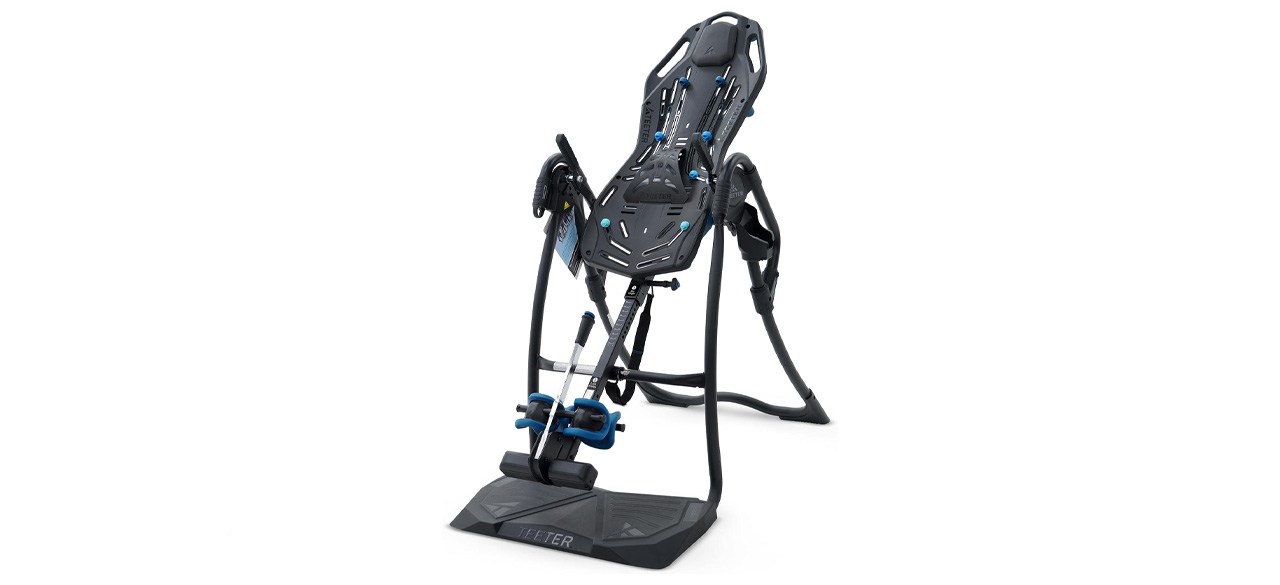
Understanding Inversion Tables
If you experience back discomfort and stiffness, inversion tables might have caught your attention as a potential relief option. These devices are gaining popularity for addressing sciatica and various chronic pain conditions.
Inversion tables are physical therapy tools allowing you to hang upside down comfortably. Secured by straps and buckles, your ankles are kept safe while handles enable you to stretch your back muscles at your preferred angle. You can easily return upright thanks to the smooth gliding motion of these tables.
How Inversion Tables Operate
Pressure on your spine can lead to soreness, pinched nerves, headaches, and body pain due to spinal compression. Inversion tables counteract gravity’s force on your body, letting your vertebrae expand while you hang upside down.
This process increases the spacing between your bones, relieving pressure and enhancing blood circulation in areas often constrained.
Benefits of Inversion Therapy
- Back Pain Relief: Some users find temporary relief from chronic back pain and soreness with regular inversion therapy.
- Muscle Spasms: Inversion tables allow you to stretch muscles and connective tissues in your lower back that are difficult to target otherwise, providing relief for muscle cramps and spasms.
- Kidney Stones: Research indicates that inversion therapy can ease the process of passing kidney stones, reducing pain.
- Improved Circulation: Using an inversion table can promote blood circulation to areas typically deprived.
- Inflammation Reduction: The boost in lymphatic fluid flow from inversion table usage can help alleviate inflammation.
Evaluating Effectiveness
The effectiveness of inversion therapy varies. While some individuals find it crucial for daily activities hindered by pain, others may achieve similar results through back stretchers or yoga.
Acknowledging Risks
Although relatively safe, inversion therapy poses risks for individuals with specific conditions or injuries. The therapy can be dangerous for those with an increased risk of retinal detachment or stroke due to spinal separation and elevated blood pressure on the head and eyes. Those with spinal injuries or on blood thinners should avoid inversion therapy.
Consulting your doctor is vital to confirm the safety of inversion therapy for your situation.
Top Inversion Table Options
- Teeter FitSpine LX9 Inversion Table: This deluxe model features handles to stretch hard-to-reach muscles, acupressure nodes, and a lumbar support attachment. Enhance your therapy with the company’s app.
- Innova ITM5900 Advanced Heat and Massage Inversion Therapy Table: Featuring therapeutic heat and a vibrating massage pad, it covers the full spinal area and offers heat and massage to the lower waist, with multiple modes for customization.
- Harison Inversion Table: This durable table has a sturdy steel frame and adjustable foam ankle rollers for comfortable inversion. It includes long handles for easy angle and position adjustment.
- Teeter EP-560 Ltd. Inversion Table: Foldable for storage, it includes optional acupressure nodes and a lumbar bridge for precise sore area targeting. The table can lock out until you’re comfortable with full inversion.
- Innova Inversion Table: With an adjustable headrest and multiple options, this table accommodates various users. It features generous padding and allows precise center-of-gravity adjustments for comfort.
Prices reflect the time and date of publication and may change. Explore our Daily Deals for quality products at competitive prices. Subscribe to the BestReviews newsletter for shopping ideas and sales updates. BestReviews invests substantial effort in researching, analyzing, and testing products to recommend top picks. Partners may earn commissions from purchases made through links.
Leave a Reply