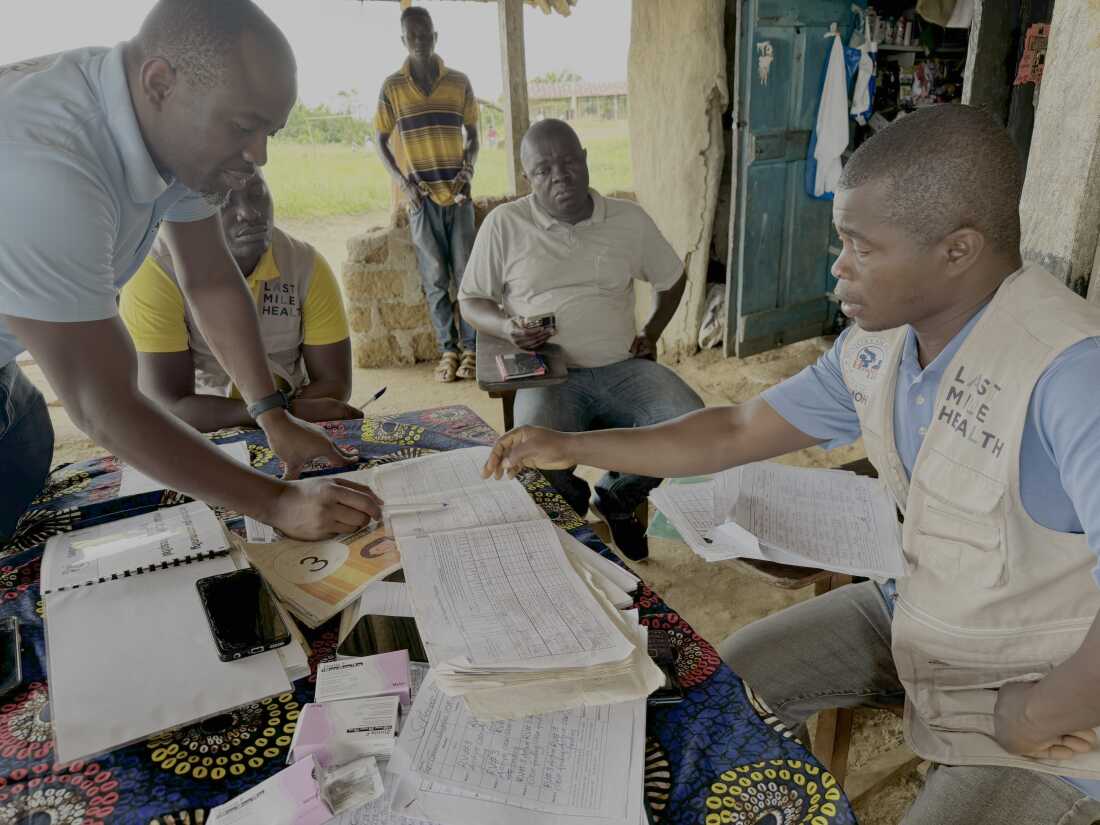
Genesis Whegelee has been a community health worker for Last Mile Health in Rivercess County, Liberia, since 2018. He regularly visits households to monitor sick children, pregnant women, and anyone requiring diagnosis. Last Mile Health operates under the belief that no one should be too distant from life-saving medical aid.
In 2007, Dr. Raj Panjabi, born in Liberia but a physician at Brigham and Women’s Hospital in Boston, took a transformative trip back to his birthplace. He brought $6,000, raised from wedding guests, to co-found an initiative aimed at delivering healthcare to Liberia’s most inaccessible regions, naming it Last Mile Health (LMH).
Today, LMH is recognized with the prestigious Conrad N. Hilton Humanitarian Prize, alongside a $3 million award. This acknowledgment highlights the significant impact a small initiative can have, as it has substantially contributed to reducing human suffering.
Dr. Panjabi began LMH with a simple goal: bridge the healthcare gap in Liberia, his home country.
LMH achieved its mission by employing community health workers, individuals who typically have completed primary school. Over eight weeks of training, these workers learn to diagnose and treat common diseases in children, assist pregnant mothers in developing birthing plans, and monitor disease outbreaks.
Initial funds covered wages for the first 17 workers. LMH has since received support from governments and various donors. By 2010, they expanded to provide HIV/AIDS care in 12 of Liberia’s counties, in partnership with the Government of Liberia and the Global Fund.
During the 2014-16 Ebola epidemic, LMH trained over 1,300 health workers to aid in containment. Amid the COVID-19 pandemic, LMH supplied 6.2 million PPE units and promoted vaccinations, leading Liberia to an 81% vaccination rate.
Currently, LMH trains 20,000 health workers serving 32 million individuals across Liberia, Ethiopia, Malawi, and Sierra Leone. Their reach underscores a fundamental challenge: millions lack basic healthcare services.
The need for LMH’s mission is significant, especially today, given the strain on health systems in remote locations.— Peter Laugharn, Hilton Foundation CEO
The global health field faces potential crises with funding cuts predicted to cause millions of additional deaths by 2030. A study in Lancet emphasized the seriousness of such cuts, estimating over 14 million additional deaths if reductions occur, including 4.5 million children under five.
Community health workers (CHWs) are vital in early disease detection and cost-effective care. Research, published on SSRN, involving 255 studies, concluded that CHWs offered care at $0.59 per person per year, proving both life-saving and economical.
Genesis Whegelee reflects this success in Rivercess County, where he visits 42 households in rotation. Equipped with medications and a medical reference, his regular checks and health education improve community health significantly. A case he handled involved treating a child with malaria and following up diligently to ensure recovery, illustrating the fundamental role of CHWs in bridging healthcare gaps.
Through advisement on severe cases and encouraging hospital deliveries where necessary, as seen in a case involving a skeptical father, Whegelee exemplifies the trust and reliance the community places on him.
The community health worker is often the first contact in the health system, a neighbor trained to provide essential care.— Dr. Raj Panjabi
The Hilton grant is earmarked for immediate impact, aiming to reach 50 million people in the existing areas by 2028. LMH continues to co-lead Africa Frontline First, expanding community health worker programs across new regions.
LMH professionalizes and compensates its health workers, pivotal to extending healthcare access universally. The core of their mission, as expressed by CEO Lisha McCormick, is to ensure no one is beyond healthcare’s reach.
Diane Cole, a contributor to various publications like The Wall Street Journal and The Washington Post, authored the memoir After Great Pain: A New Life Emerges. Visit her website at DianeJoyceCole.com.
Leave a Reply