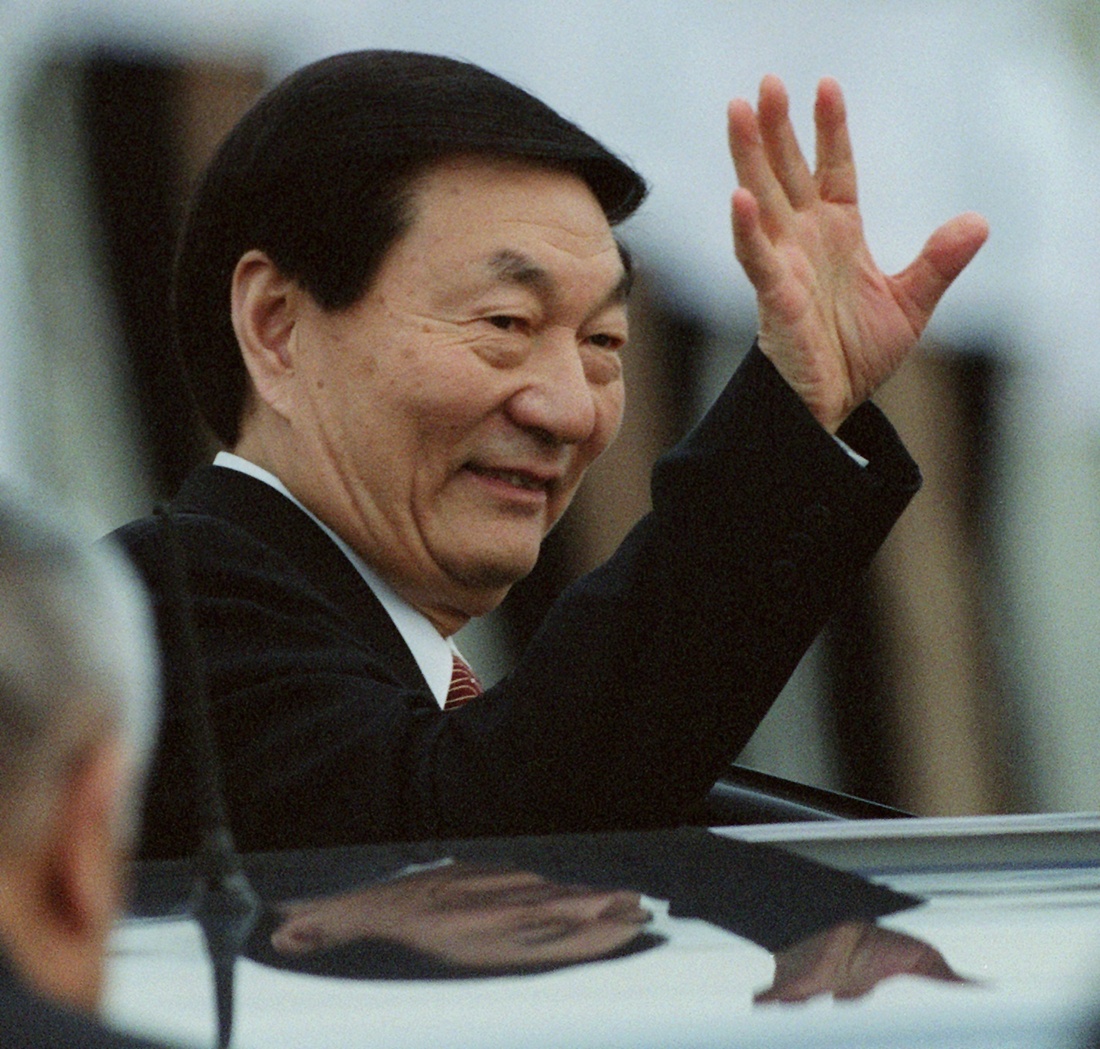
Zhu Rongji, the former Premier of China, has died at age 97. State media reports the cause of death as illness. Zhu, a trained engineer and a forceful technocrat, was known for implementing extensive economic reforms during the 1990s. These reforms aimed to shift China from a chaotic post-Maoist period to a more global, market-oriented financial system while maintaining the Communist Party’s control over the economy.
Even after retiring from the premiership in 2003, Zhu’s influence continued to shape China. His reform policies remain controversial. They freed up the country’s labor and financial resources, resulting in significant wealth creation over three decades but also introduced future vulnerabilities into institutions.
“From the point of view of a policymaker, [he] embraced the notion of a China whose economic system was more compatible with that of the West. And by compatible, I mean vastly reformed, more open, less state-dominated, very limited state intervention,” said Charlene Barshefsky, a former U.S. trade representative involved in WTO negotiations.
WTO Membership and Economic Transformation
To join the World Trade Organization (WTO), China needed preferential trading status with the United States. This required significant concessions and opening China’s economy to American businesses. Zhu was under intense pressure to negotiate such agreements.
In 2000, the U.S. Senate approved China’s preferential trading status. By 2001, China had joined the WTO. This pivotal agreement triggered rapid economic growth as China became a top export destination and attracted foreign investments. Kenneth Lieberthal, a China expert, noted Zhu’s flexibility and openness during negotiations, reflecting his inquiring nature.
The Early Years and Political Ascent
Zhu Rongji was born in Changsha, Hunan Province, in 1928. He graduated in electrical engineering from Tsinghua University, aligning with the Communist Party’s rise to power in 1949. His independent and direct communication style often stirred controversy.
Despite challenges, Zhu rose through the ranks, becoming Shanghai’s mayor and later premier. His candidness was evident when addressing the Tiananmen Square protests in 1989. Zhu openly acknowledged the incident, diverging from the usual propaganda.
A Career Marked by Pragmatic Reforms
Throughout his career, Zhu focused on pragmatic objectives. As central bank governor, he tackled inflation. As vice premier, he centralized the tax system, leading to economic growth and debt issues. Upon becoming premier in 1998, Zhu pledged to reform state banks and inefficient enterprises, earning both praise and criticism.
His restructuring of state-owned enterprises led to millions losing their jobs, igniting protests. Critics accused the government of neglecting laid-off workers. Dorothy Solinger, an expert on migrant labor, highlighted the lasting impacts on communities, particularly in the northeast industrial regions.
Enduring Influence and Legacy
Zhu attempted to address layoffs with basic social welfare and health care improvements, but challenges persisted. Despite critics, he maintained his approach, using humor to deflect opposition during campaigns against corruption.
Though some reform efforts failed due to lack of political support, Zhu’s leadership marked a time of openness and economic transition in China. As China grows more nationalistic under current leadership, memories of Zhu’s era evoke nostalgia.
In the final years, Zhu resided in Beijing, enjoying Peking Opera and advising younger leaders. His contributions remain a crucial part of China’s economic history.
Leave a Reply