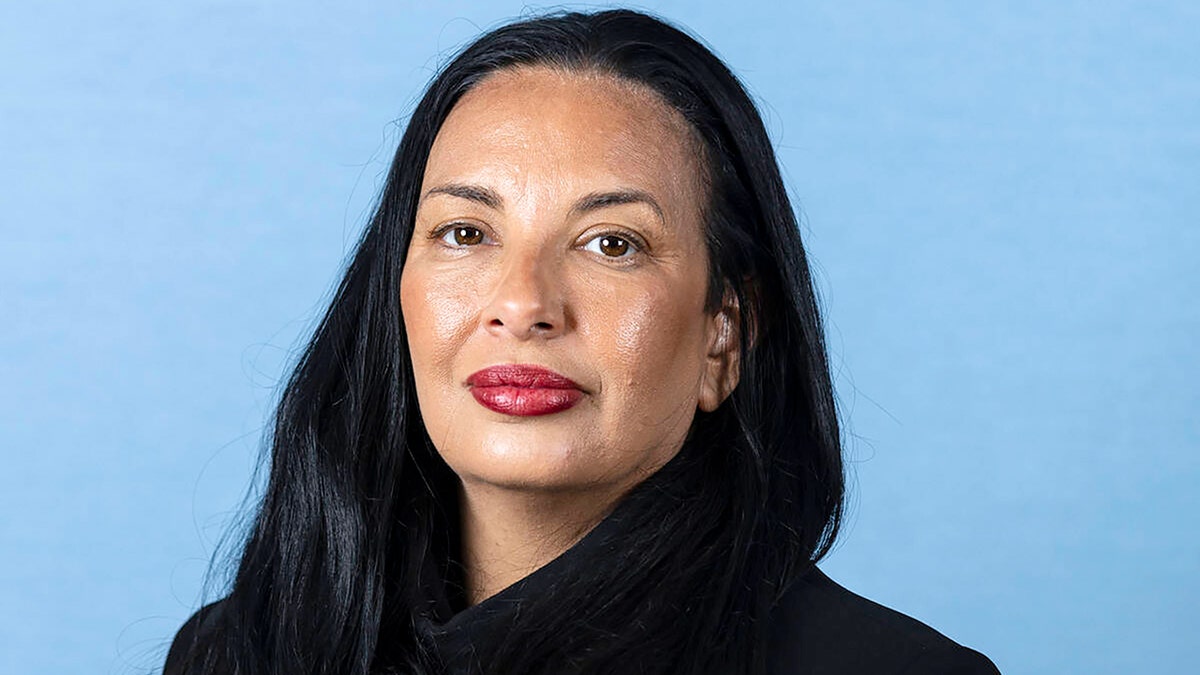
A federal appeals court panel recently upheld a decision that disqualified Sigal Chattah from serving as the leading federal prosecutor in Nevada. The ruling determined that the Justice Department could not continue her leadership through methods employed after her interim term had ended.
The Ninth U.S. Circuit Court of Appeals, consisting of three judges, affirmed the previous judgment, which found Chattah was not correctly appointed as the head of the U.S. Attorney’s Office for the District of Nevada. This decision prevents Chattah from overseeing prosecutions in three separate criminal cases.
Chattah, previously a Nevada Republican National Committee member, joined the U.S. Justice Department and was named interim U.S. attorney effective April 1, 2025, for a 120-day term.
As her interim role was nearing expiration in July, Attorney General Pam Bondi designated Chattah as the first assistant U.S. attorney after she resigned shortly before the end of the 120-day term. The Justice Department argued that this appointment allowed Chattah to act as the U.S. attorney under the Federal Vacancies Reform Act until a permanent official was confirmed.
Bondi also appointed Chattah as a special attorney, maintaining that her position as first assistant, the second-highest office role, enabled her acting U.S. attorney status according to the Federal Vacancies Reform Act of 1998.
Federal public defenders in Nevada challenged Chattah’s authority, claiming her appointment was unlawful and seeking the dismissal of the cases she supervised.
In September, U.S. District Judge David Campbell sided with the public defenders, prompting an appeal from the Trump administration.
On Monday, the appeals court concluded that the Justice Department’s reliance on the Federal Vacancies Reform Act was misplaced. According to the Act, a first assistant could only become acting U.S. attorney automatically if holding the position when the vacancy emerged.
U.S. Circuit Judge Eric Miller, appointed by President Donald Trump, stated that the Attorney General could not appoint someone as a de facto acting U.S. attorney by delegating functions to them. The panel, which included U.S. District Judge Stanley Blumenfeld Jr. and U.S. Circuit Judge Sidney Thomas, rejected the arguments presented by the Justice Department.
This court decision represents another setback for the administration, which sought to place presidential allies in prominent prosecutorial roles without Senate procedures. The issue is part of broader disputes involving Senate Judiciary Committee’s “blue slip” tradition, where home-state senators can veto nominations.
While Trump did not nominate Chattah for the permanent position, he nominated George Kelesis in February 2026.
In December, the Third U.S. Circuit Court of Appeals ruled that Alina Habba, a former personal lawyer for Trump, unlawfully served as acting U.S. attorney in New Jersey and removed her from supervising cases.
Leave a Reply