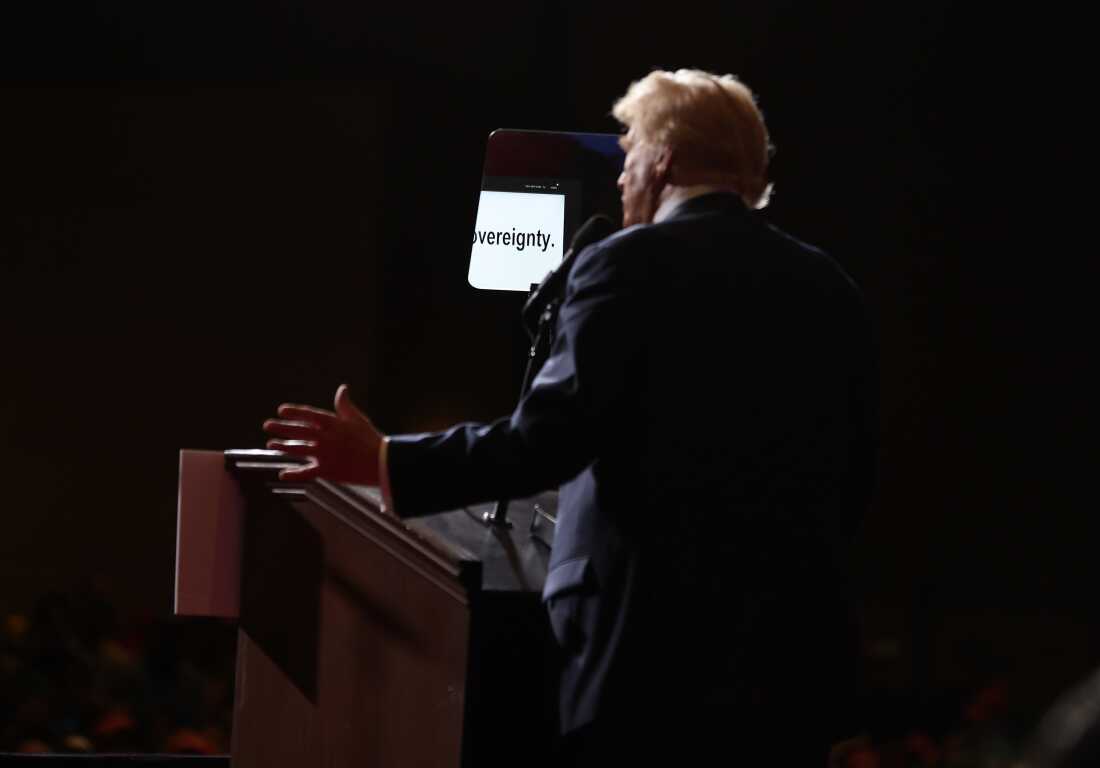
Federal regulators are in settlement discussions with Gabriel Perez, who has worked as President Trump’s teleprompter operator since 2016. Perez is accused of making nearly $100,000 by betting on the prediction market site Kalshi. Two individuals with knowledge of the investigation, who are not authorized to speak publicly, provided this information.
Perez allegedly profited by using his access to the president’s prepared speeches to wager in “mention markets.” In these markets, participants bet on specific words or phrases the president might say during public events. Prediction markets, like Kalshi, have experienced a surge in activity, allowing people to bet on various occurrences such as election outcomes or the color of the president’s tie.
This case marks the first known instance of someone within the White House being investigated for exploiting access to insider information in prediction markets. Perez is negotiating with the Commodity Futures Trading Commission (CFTC) over his alleged betting activities. As Trump prepares to address the nation, Kalshi traders have already placed over $800,000 in wagers on whether Trump will mention words such as “Hormuz,” “rigged election,” or “fake news.”
Kalshi’s surveillance system flagged irregular betting patterns surrounding the president, which led to further scrutiny. Upon examining the accounts, investigators discovered Perez was a federal employee. Robert DeNault, who leads enforcement at Kalshi, stated, “Our surveillance team promptly flagged and referred these trades to the CFTC after an exchange investigation. We have been assisting regulators on this matter and provided evidence we collected, as we do in any referral.”
Perez’s betting profits, totaling about $90,000, have been frozen, and he is banned from the platform. Perez has not responded to requests for comment. According to a source, Kalshi informed ABC News first about the investigation.
The unpredictable nature of Trump’s speeches often results in volatile trading conditions in “mention markets.” These markets cause the odds of particular words or phrases being mentioned to fluctuate significantly, as traders try to forecast what the president might discuss next. Some traders, who work full-time on these markets, install TV antennas to gain a slight edge during live events.
Using non-public information to manipulate Kalshi’s markets is against platform rules and might lead to criminal charges like wire fraud, commodities fraud, and money laundering. It is currently unclear if the Department of Justice is investigating Perez’s case.
In March, White House staff received a memo warning against using non-public government information for betting on Kalshi and its competitor, Polymarket. The memo, reviewed by NPR, stressed that it is a criminal offense for White House personnel to engage in such activities on these platforms. It warned that misusing government information “is a very serious offense and will not be tolerated.”
Other legal actions have been taken in similar cases. In April, federal prosecutors charged a U.S. Army special forces soldier for making $400,000 on Polymarket ahead of Venezuelan leader Nicolás Maduro’s capture. In another case, a Google software engineer used confidential information to earn $1.2 million on Polymarket by correctly predicting Google search trends. Additionally, former Republican congressman George Santos was investigated for manipulating a Kalshi market related to whether he would attend Trump’s 2026 State of the Union address.
Leave a Reply