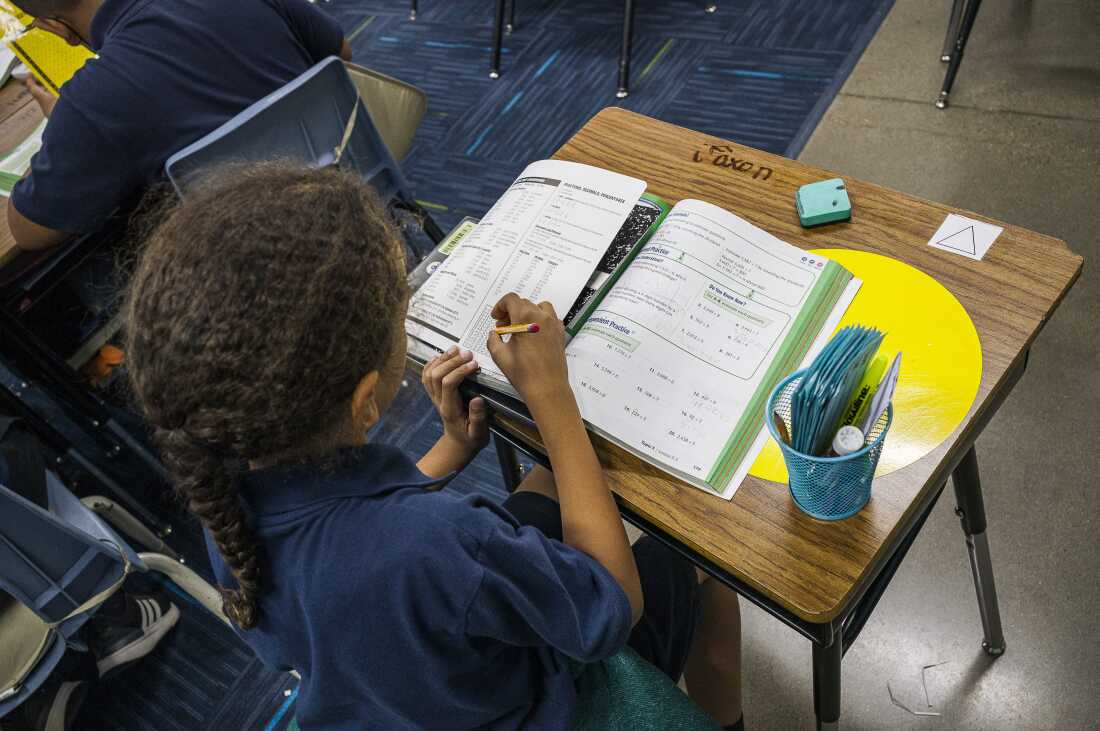
The National Assessment of Educational Progress (NAEP) has revealed that average reading and math scores for 9-year-old students have increased from 2022 to 2025. These results showcase progress in educational performance after years of decline.
Optimistic Outlook for Younger Students
Matthew Soldner, acting commissioner of the National Center for Education Statistics, shared an optimistic view on NPR regarding the latest results. The long-term trend (LTT) report provides insights into the development of reading and math skills among 9- and 13-year-old students nationwide.
These assessments have remained consistent since the 1970s, with tests conducted every few years using pencil and paper. Over 30,000 students participated in the exams from October 2024 to March 2025.
“What’s notable is that students across the board improved their scores, including lower-performing kids,” Soldner said.
The encouraging findings highlight solid gains among 9-year-olds in both reading and math. Students who were 4 years old when the pandemic began in 2020 did not miss foundational lessons in literacy and math due to the rapid return to full-time, in-person instruction.
This improvement suggests potential to recover from educational setbacks that predate the pandemic.
Challenges Faced by 13-Year-Old Students
Conversely, the report indicates stagnation among 13-year-olds, with no significant improvement in reading or math. Scores from the pandemic’s onset remain below average across various demographic groups, including Hispanic and white students, girls, economically disadvantaged students, and those in suburban areas.
The stagnant performance may stem from disruptions during critical literacy and math development years caused by school closures. For these students, the pandemic framed much of their elementary experience.
Lesley Muldoon, executive director of the National Assessment Governing Board, stated, “The lack of progress in 13-year-olds raises huge questions and ought to serve as a catalyst for change.”
Decline in Reading for Pleasure
The report also notes a significant decline in students reading for fun. Among 13-year-olds, reading for pleasure decreased from 35% in 1984 to just 14% in 2022 and 2025. Although 37% of 9-year-olds still read every day, it represents a sharp decline from previous decades.
Diminished Math Progress for Older Students
Historically, math scores for 13-year-olds improved steadily from 1978 to 2012 with a gain of 21 points. Most of these gains have now been erased, leaving the lowest-performing students with no progress since 1978.
“As a nation, we have to bring more focus to the middle school years,” Muldoon remarked. “It’ll take a lot of collective work, but we’ve seen progress before, and it’s possible to see it again.”
Temporary Pause on Long-Term Trend Reports
This report marks the last iteration for a while. Since cuts were made to the U.S. Education Department in 2025, including staffing reductions at the Institute of Education Sciences, several student assessments have been canceled until 2032, including the LTT report. These questions will not resurface until 2033.
Edited by Nirvi Shah
Visual design and development by LA Johnson
Leave a Reply