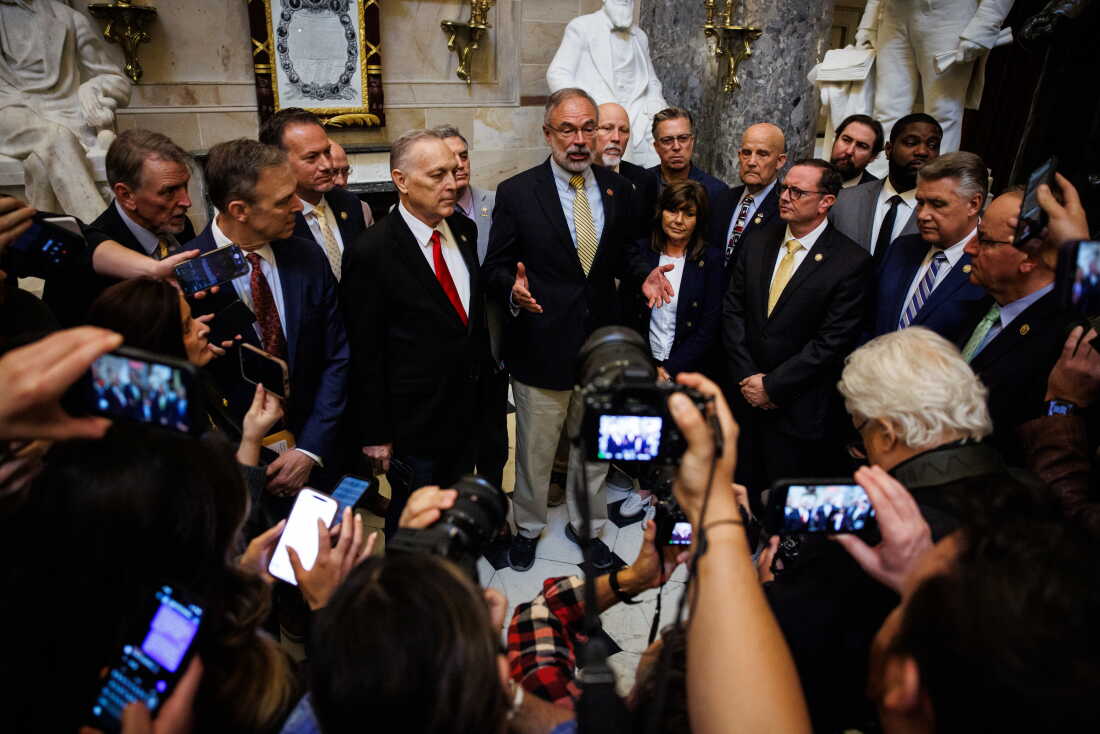
Rep. Andy Harris, R-MD, chair of the House Freedom Caucus, spoke with reporters in March during intense negotiations about government funding. This influential group of conservative lawmakers faces the departure of several members, which prompts questions about its future direction in shaping Republican ideology.
The House Freedom Caucus was formalized over a decade ago as Tea Party-aligned conservatives gained seats, pushing the party towards more conservative social and fiscal policies. Although the group’s priorities have evolved alongside the Republican party’s shifts, their influence continues. Prominent members, like former White House chiefs of staff Mick Mulvaney and Mark Meadows, elevated in rank within President Trump’s administration, demonstrate their impact.
However, uncertainties arise as at least ten members will not return next term, with potential further losses in November elections. Author and professor Matthew Green notes skepticism about the group’s longevity, yet they endure by maintaining influence. The caucus emphasizes that rank-and-file lawmakers, especially its members, should significantly shape policy-making. This stance has often frustrated Republican leaders.
Focusing on accountability, founding member John Fleming recalled concerns about congressional leadership working too closely with the Democratic administration under President Obama. During Trump’s presidency, the group’s similar beliefs led to a strong alliance. While they occasionally opposed the White House on issues like FISA 702, most supported key legislation.
Fleming described the Freedom Caucus as precursors to Trump’s political style, likening them to the ‘Make America Great Again’ movement. Former members, like Florida Gov. Ron DeSantis, have risen within the party, with the group’s confrontational approach greatly influencing Republican politics. Currently, three members, backed by Trump, are gubernatorial candidates in Arizona, Florida, and Wisconsin.
John Boehner, former Speaker of the House, once criticized the caucus for lacking a clear agenda. Fleming countered this view, explaining the group’s opposition to internal party dynamics that stifle individual lawmakers. Founders Matt Salmon and Fleming were frustrated by leadership’s control over processes, leading them to form the caucus to better represent conservative values.
Operating for over a decade, the caucus has used tactics to interrupt legislative processes, demanding policy concessions from leadership. Chip Roy, a departing member, highlighted the group’s commitment to fulfilling promises, emphasizing action over rhetoric.
The caucus balances between maintaining influence and pursuing institutional or policy goals. Some former members like Matt Salmon believe the group has strayed from its founding intentions by aligning closely with Trump’s agenda instead of advocating for traditional governance.
As turnover occurs naturally, the caucus enters a new phase. Departing members include vocal advocates like Roy and Ralph Norman. Norman expressed optimism about changes and the Caucus’s role in budget discussions. Fleming foresees potential shifts in the Republican party and caucus direction in the future, particularly with upcoming presidential transitions.
Roy mentioned the continued impact departing members could have from outside Congress, supporting the idea of ongoing influence despite internal changes.
Leave a Reply