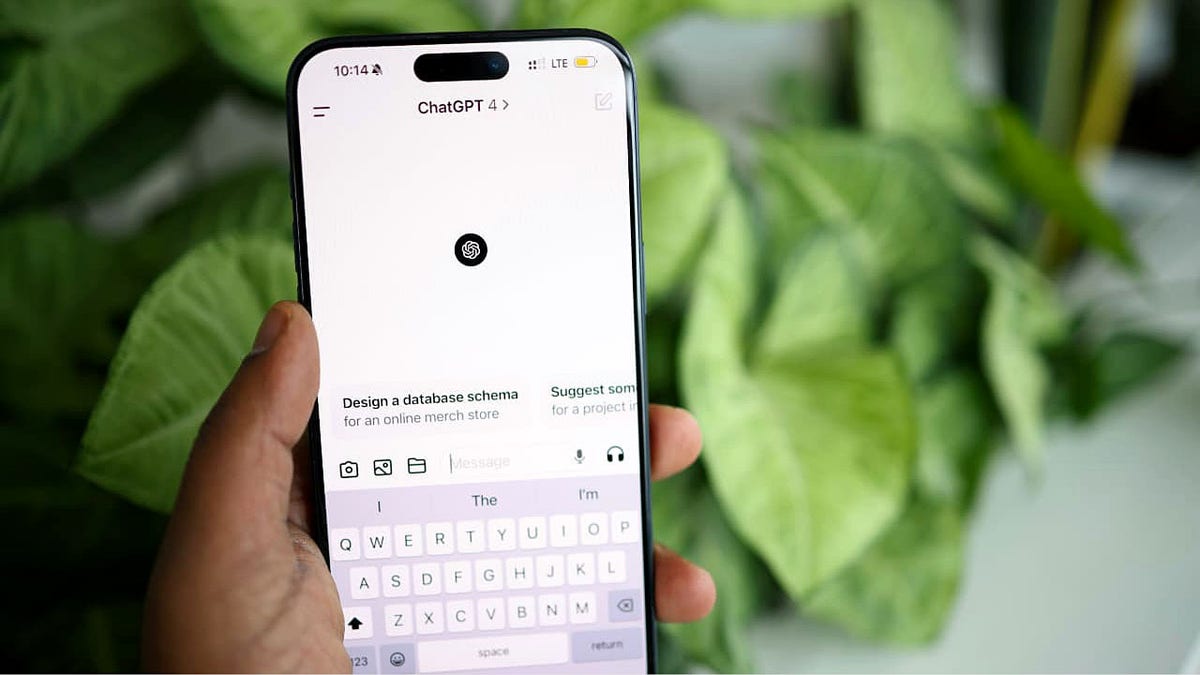
The White House has implemented new oversight measures for advanced AI models, gaining cooperation from leading tech firms such as OpenAI and Anthropic. This development, reported by Fox Business Correspondent Connor Hansen, signifies a change in the administration’s approach to AI policy. OpenAI CEO Sam Altman has expressed concerns over government control in determining customer access to AI tools, stressing the importance of national security.
OpenAI’s latest AI model, GPT-5.6 Sol, introduces a new level of safeguard, initially allowing access to a select group approved by the U.S. government. OpenAI has demonstrated the model’s capabilities to the government, agreeing to begin with a limited number of partners whose involvement has been pre-approved before a broader release. During the initial phase, access to this model is exclusive to customers sanctioned by the Trump administration.
Most prominent AI chatbots exhibit liberal bias, according to a recent study.
Traditionally, new AI models are anticipated for public use; however, the key question now revolves around who will have early access and the criteria guiding these decisions.
Sign up for the FREE CyberGuy Report for optimal tech tips, urgent security notifications, and special offers delivered to your inbox. Visit CyberGuy.com for practical methods to identify scams early and ensure protection, trusted by millions of CyberGuy viewers daily. Instantly access the Ultimate Scam Survival Guide upon joining.
The U.S. government is conducting thorough reviews of cybersecurity risks associated with GPT-5.6 Sol. OpenAI’s GPT-5.6 Sol belongs to the latest lineup, which includes Terra and Luna, distinguished by advancements in coding, biology, and cybersecurity applications. These models are initially available through an API and Codex to a limited group, with wider availability anticipated for ChatGPT and Codex soon. As of early July, GPT-5.6 remains unavailable in ChatGPT’s preview, with no official release date announced.
Washington is paying close attention due to the model’s cybersecurity implications. OpenAI claims Sol excels at identifying and resolving software vulnerabilities but is not capable of conducting full-scale cyberattacks. The company acknowledges Sol does not surpass its internal “Cyber Critical” thresholds, yet benchmarking cannot predict all usage scenarios when integrated with other technologies.
This raises concerns. While the AI model aids security teams in fixing software issues, it could also be leveraged by malicious individuals if protection measures fail.
Why Government Intervention is Necessary
The Trump administration has been proactively establishing a new AI cybersecurity framework. A recent executive order acknowledges that while AI can bolster national security, it also introduces risks necessitating federal and corporate collaboration.
The White House’s policy outlines a voluntary framework for crucial models, emphasizing security with secure early access for verified partners. The order refrains from mandating licensing, pre-clearance, or permits for AI releases.
This distinction is vital, focusing on security, amid critiques of potential government domination in deciding access to novel AI technologies.
Anthropic’s Involvement in the AI Dispute
OpenAI isn’t alone in governmental scrutiny over AI model access. Anthropic reported U.S. government instructions to halt foreign access to its Fable 5 and Mythos 5 models. Anthropic consequently disabled these models more widely to comply with directives.
CyberGuy previously reported on Anthropic’s Mythos AI and its cybersecurity implications, explaining why these models became focal points in discussions on AI and cyber risk.
Recently, the U.S. Commerce Department lifted restrictions on Anthropic’s Fable 5 and Mythos 5 models after consultation, allowing restored access. Anthropic committed to enhancing security protocols and collaborating with the government to report model-related threats.
This Anthropic episode serves as an informative comparison to OpenAI’s controlled rollout, where the discourse extends beyond AI functionality to considerations of access and governmental roles.
Impact Beyond Silicon Valley
A broader question arises: How should AI models with dual capabilities—protective versus exploitive—be released? Enhanced AI can aid security of crucial infrastructures like hospitals and banks, yet poses risks if mishandled.
Security teams, stretched thin, face the dilemma: Who receives priority access to AI defense solutions? What if a minor security firm competes with major contractors for the same AI tool?
Currently, these debates involve balancing security, availability, and accountability as AI tools progress towards daily applications.
Protective Measures Against AI-Driven Scams
As AI advances, scams will likely increase. Protect yourself by:
- Avoiding fake early-access offers: Distrust emails or messages promising early AI access. Visit official company websites directly.
- Using robust antivirus software: Guard against deceitful links or downloads with comprehensive security software. Find the top antivirus solutions at CyberGuy.com.
- Employing a password manager: Create and secure unique passwords for your accounts, preventing reuse across multiple sites.
- Activating two-factor authentication (2FA): Opt for authentication apps or security keys for enhanced protection.
- Keeping devices updated: Regularly update your software to resolve known vulnerabilities.
- Consider data privacy in AI tools: Be cautious with sensitive uploads, recognizing your data sharing implications.
- Removing personal data from websites: Limit exposure by employing data removal services offering privacy assessments.
- Exercising caution with urgent AI offers: Treat urgency claims as red flags and verify through official channels.
Kurt’s key takeaways highlight Washington’s scrutiny over AI model releases due to their dual potential in cybersecurity maintenance and exploitation. While AI tools can bolster data security, users must stay vigilant, question unexpected offers, and be mindful with sensitive data usage.
For an interactive gear-up on phone security and scam awareness, view the CyberGuy Live replay at CyberGuyLive.com, where informative sessions guide privacy upgrades and scam detection strategies.
Leave a Reply