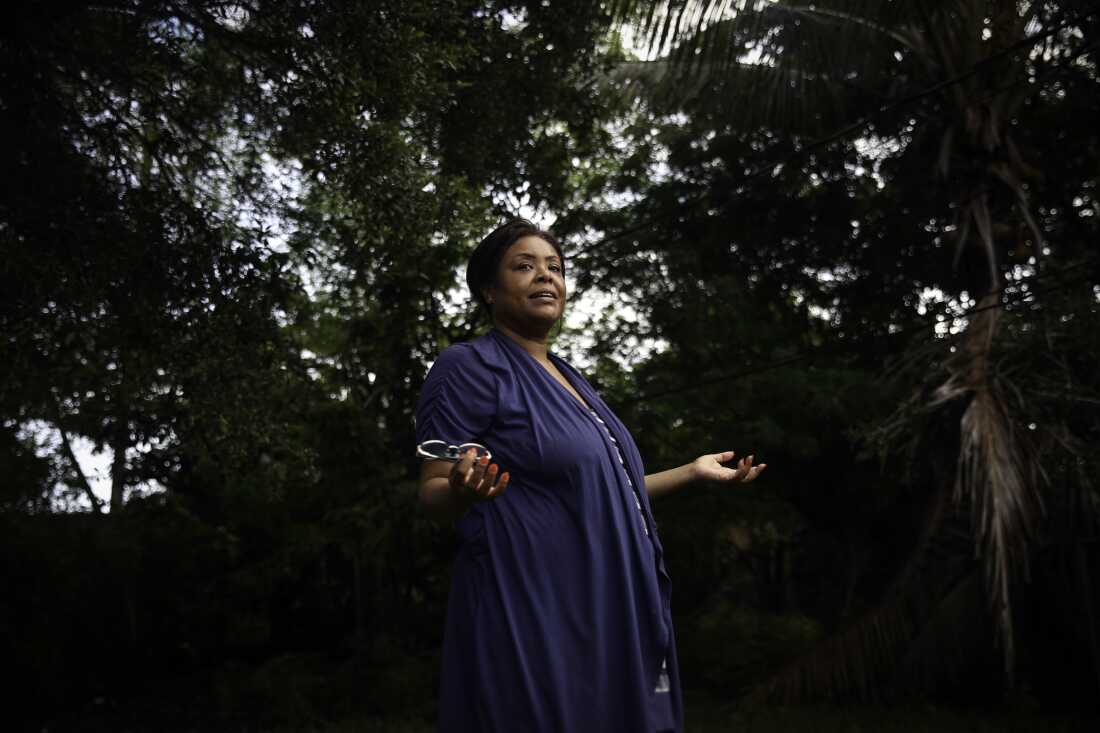
Farah Larrieux, living in South Florida, faces a challenging period as the sun rises on a typical morning. After finishing her overnight hotel shift, she drags her trash and recycling to the curb. Sleep eludes her, worsened by a constant headache. As a Haitian immigrant, she’s among the 300,000 Haitians losing temporary protected status (TPS) in the U.S.
TPS was granted to Haitians following the 2010 earthquake, offering refuge due to dangerous conditions in Haiti. Recently, the Supreme Court backed the Trump administration’s decision to end these protections. The decision has left Haitians bracing for an uncertain future, particularly in South Florida, where the community thrives in industries like healthcare and hospitality.
“Conditions in Haiti have improved sufficiently to support the return of Haitian nationals,” stated the Department of Homeland Security, defending the decision to end TPS.
Larrieux has resided in the U.S. for two decades. Sleepless nights plague her, as she sits in her living room surrounded by plaques of community service. Her stocked cupboards hint at her fear of leaving home, worried about ICE detention. A sheet of paper blocks the front door panel, a defense against potential ICE visits, and her attorney’s phone number is committed to memory.
Due to her criticism of Haiti’s government, Larrieux fears returning would be life-threatening. She paused her work to survive on savings while applying for asylum. Tearful, she expresses anguish, feeling undervalued and vulnerable. Her sentiment echoes across Florida’s Haitian community, which houses 158,000 Haitian TPS holders in South Florida alone.
Miami-Dade County Mayor Daniella Levine Cava highlighted the ripple effects of ending TPS, noting its role in family separations and economic impacts. Haitian TPS holders contribute significantly to sectors like healthcare. Paul Christian Namphy from the Family Action Network Movement estimates billions in contributions to metro economies like Miami.
“The termination of temporary protected status is heartbreaking and unnecessary,” Levine Cava remarked.
In Miami’s Little Haiti, Father Reginald Jean-Mary of Notre Dame D’Haiti Catholic Mission observes growing fear. Many Haitians stay home, and church attendance declines. He questions the decision, as the State Department advises against travel to Haiti due to its national emergency state.
A DHS spokesperson maintained standard enforcement activities but offered no details on specific operations following TPS expiration. General Counsel James Percival said, “It’s closing time, … you don’t have to go home, but you can’t stay here.”
Back home after her shift, Larrieux takes a moment in her backyard, where mangoes hang and roosters crow, recalling Haiti. Despite her love for the homeland, she acknowledges the dangers: armed gangs controlling regions, rampant kidnappings, and violence displacing millions. “For many Haitians, returning to Haiti is simply not a safe option,” she concludes.
Leave a Reply