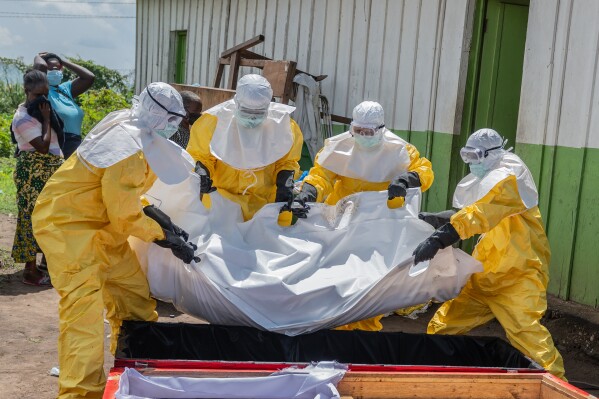
Healthcare professionals in eastern Congo face a challenging Ebola outbreak of a rare virus type. This region, plagued by violence from armed groups, complicates efforts to manage the crisis. Recent militant actions linked to the Islamic State have heightened concerns, with at least 17 casualties reported in Alima village, Ituri province. The outbreak’s impact is felt deeply as essential supplies are scarce, and prices for items like masks and disinfectants have spiked dramatically.
It’s truly sad and painful because we’ve already been through a security crisis, and now Ebola is here too,
said Justin Ndasi, a resident of Bunia. The World Health Organization (WHO) noted that although the global risk is low, finding the initial case remains critical.
A mother at a treatment center witnessed her son’s rapid decline from presumed malaria symptoms morphing into severe Ebola manifestations. Ebola is transmitted through bodily fluids, with symptoms including fever, vomiting, and bleeding. Protective burial practices are being conducted under WHO guidelines.
The WHO highlights the outbreak’s urgent nature, stating, the scale and speed
require declaration of a public health emergency. The Bundibugyo virus strain evaded detection initially as local health authorities tested for a more common variant. Current figures reveal 51 confirmed cases in Ituri and North Kivu provinces, and instances in Uganda, with suspected deaths rising significantly.
The true scope is still unknown, as estimates suggest underreporting exceeding 1,000 potential cases. This mark’s Congo’s 17th Ebola outbreak, with most past events involving more common strains. Despite Congo’s health system’s experience, a vaccine specifically targeting Bundibugyo remains months away.
Healthcare facilities face immense demand amidst conflict and systemic strain. Limited funds have weakened rapid responses, highlighting political impediments to aid such as Trump administration policy. Preventative measures in locales like Bunia are insufficient, as isolation capabilities falter and spaces for suspected cases are filled.
International agencies including Doctors Without Borders struggle alongside local teams. In Mongbwalu, normal life continues despite urgent health concerns. Reports indicate 30 patients at Mongbwalu General Hospital, with pressing needs for isolation facilities.
We hope for the proper triage and isolation facilities to be installed today, and if that doesn’t happen, we will be completely overwhelmed,
shared hospital director Dr. Richard Lokudu.
In Goma, tensions rise with the presence of Rwanda-backed M23 rebels complicating efforts to maintain public health initiatives. International coordination has led to U.S. citizens being relocated for treatment. A U.S. citizen linked to the outbreak is now under care in Germany, with institutions working to support affected individuals and families.
Efforts remain focused on managing personal exposures and ensuring treatment availability. Collaboration with international partners continues as healthcare pressures in affected areas escalate.
Leave a Reply