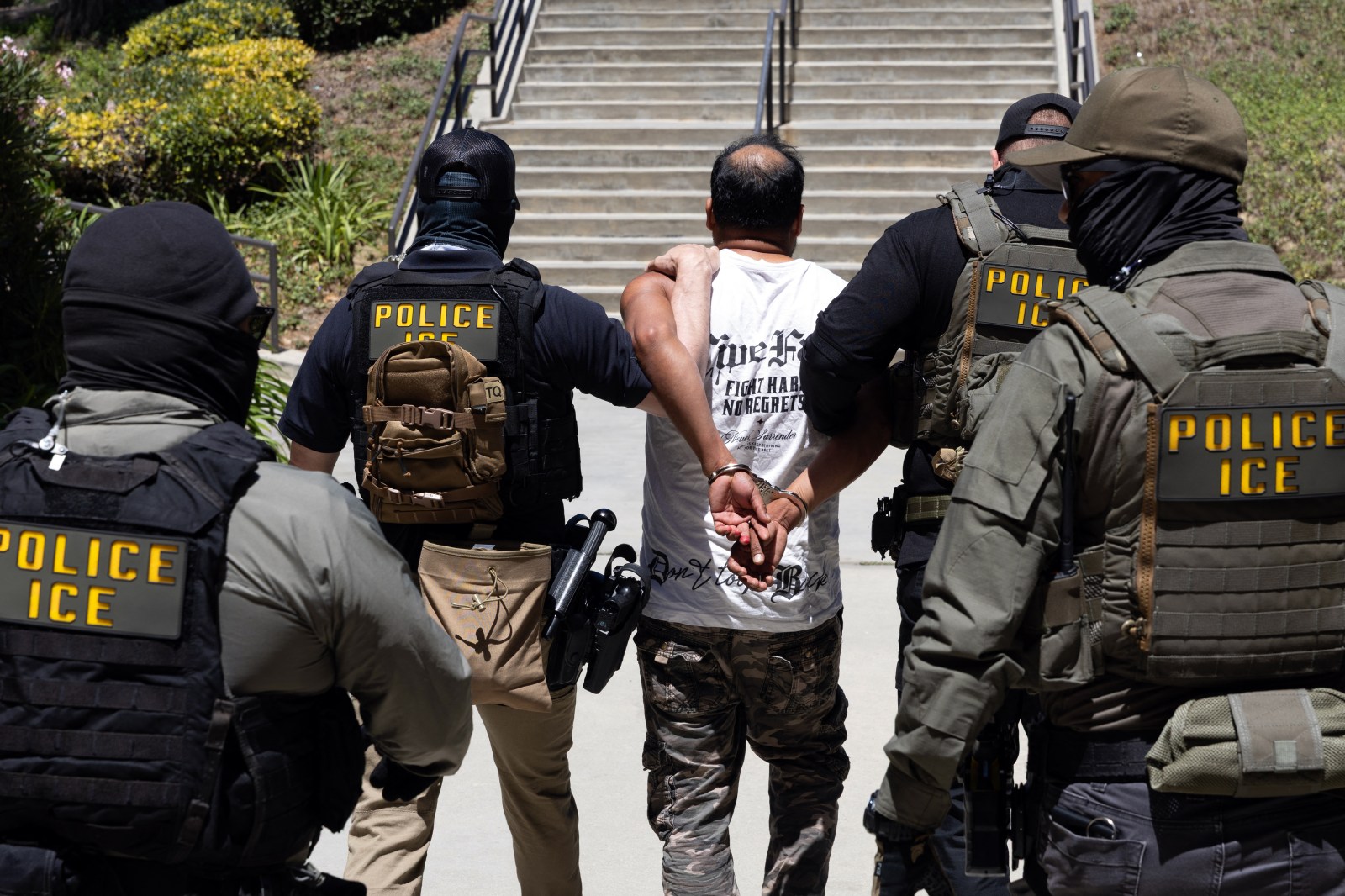
Recent study findings indicate a significant shift in the patterns of arrests conducted by U.S. Immigration and Customs Enforcement (ICE) during President Donald Trump’s second term. The study, featured in the Proceedings of the National Academy of Sciences, scrutinized ICE administrative data over more than a decade.
Key Findings
Research revealed that merely one-third of the individuals arrested by ICE had a previous criminal conviction at this time. This was a notable decrease from earlier periods, contrasting with claims from the Department of Homeland Security (DHS) about targeting serious offenders. The DHS has highlighted arrests for severe crimes like murder, sex offenses, and drug trafficking as priorities.
A DHS spokesperson commented on the study, suggesting that the data may include individuals classified as noncriminals who are wanted for serious offenses globally. They argued that unauthorized entry itself constitutes a crime, further complicating the interpretation of “noncriminal” classifications.
Data Analysis
The study is one of the most extensive examinations of U.S. immigration enforcement, analyzing records from around 1.6 million ICE arrests between October 2015 and March 2026. It noted that only 34% of those arrested during Trump’s second term had criminal convictions, a drop from previous administrations, including Obama’s last year in office (79%) and the start of Trump’s first term (70%).
Lead author Chloe East said these findings diverge significantly from the public narrative around ICE’s role in protecting public safety. During the early days of both Trump administrations, arrests surged. ICE averaged 436 arrests per day at the start of Trump’s first term and increased to 952 during the same period of the second term.
Shifts in Enforcement Practices
Researchers identified changes in ICE tactics that contributed to the decreased percentage of arrests with criminal convictions. Historically, many arrests were made when individuals were already in custody. However, the rescinding of guidance that restricted actions around sensitive locations led to more community arrests.
Community arrests, defined as those taking place in public settings outside of jails and prisons, rose from 19% in Biden’s final year to 44% after Trump’s re-election. Meanwhile, arrests through cooperation with local enforcement dropped.
Caitlin Patler, co-author of the study, commented on a nationwide decrease in convicted individuals among those arrested within the methods used, with variations in tactics by region. Notable increases in community arrests were observed in sanctuary jurisdictions like Boston, Chicago, and other areas.
Implications and Trends
The study argues that while enforcement tactics explain part of the trend, other factors remain unaccounted for. Despite rising arrest numbers, the ratio of those with criminal convictions declined.
The study does not delve into accusations of civil violations or pending charges among those arrested without previous convictions. Instead, it focuses on the absence of prior criminal records in administrative data.
ICE arrests reached an all-time high in July during Trump’s second term, with over 46,000 individuals detained for suspected immigration violations, according to DHS data.
Leave a Reply