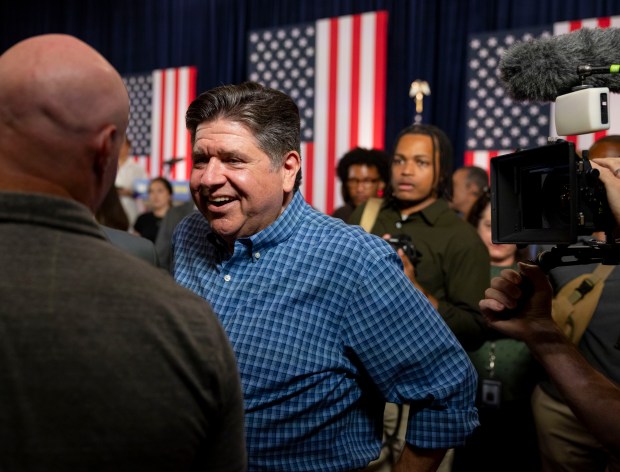
The start of the fall general election campaign coincides with Labor Day, marking a shift in political focus towards the Chicago area. This region often determines the outcome of statewide races. While candidates participated in parades and events across Illinois, the current campaigns for governor and U.S. Senate are clouded with distractions ranging from national politics to internal conflicts.
The attention of Chicago voters is also split due to an upcoming mayoral race that garners more interest than the state election on November 3. Ultimately, elections focus on the candidates themselves. For Democrat JB Pritzker, it concerns his tenure and a possible White House bid. His Republican rival, Darren Bailey, faces challenges related to former President Trump’s influence and past electoral losses.
The U.S. Senate race involves Lt. Gov. Juliana Stratton, a Democrat, and Don Tracy, a Republican business owner. Stratton has largely ignored Tracy, who lacks significant resources to counter her narrative and align her with the Democrats’ progressive wing.
The GOP’s top candidates come from downstate Illinois, highlighting the party’s regional shift as the Chicago area becomes increasingly Democratic. Both candidates lack substantial financial support. Bailey previously received significant funding from donor Richard Uihlein but now sees only minimal contributions. In contrast, Pritzker, an heir to the Hyatt fortune, has self-funded his campaigns with immense financial resources.
Bailey’s campaign focuses on ‘affordability’ and suggests major tax changes to reduce reliance on property taxes. However, he has not outlined how he would fund these initiatives given expected Democratic control in the legislature. His proposal to remove tolls on the Illinois Tollway also lacks a clear financial plan.
Bailey’s past positions on social issues, such as opposition to abortion rights and support for Trump tariffs, might be more significant obstacles than direct opposition from Pritzker. Although distancing himself from previous alignments with Trump, Bailey remains open to an endorsement from the former president.
In the GOP, there are internal conflicts and conspiracy theories affecting the campaign. Bailey calls for party unity, suggesting efforts to improve voter turnout.
Pritzker’s campaign continues to depict Bailey as too extreme. He uses campaign rhetoric that positions him against Trump and contemplates a 2028 presidential run, emphasizing opposition to Trump’s policies.
The Senate race remains low-profile. Stratton has not significantly campaigned beyond Democratic events, focusing less on agriculture despite her agricultural responsibilities. Tracy argues that ignoring rural areas reflects misplaced priorities.
Leave a Reply