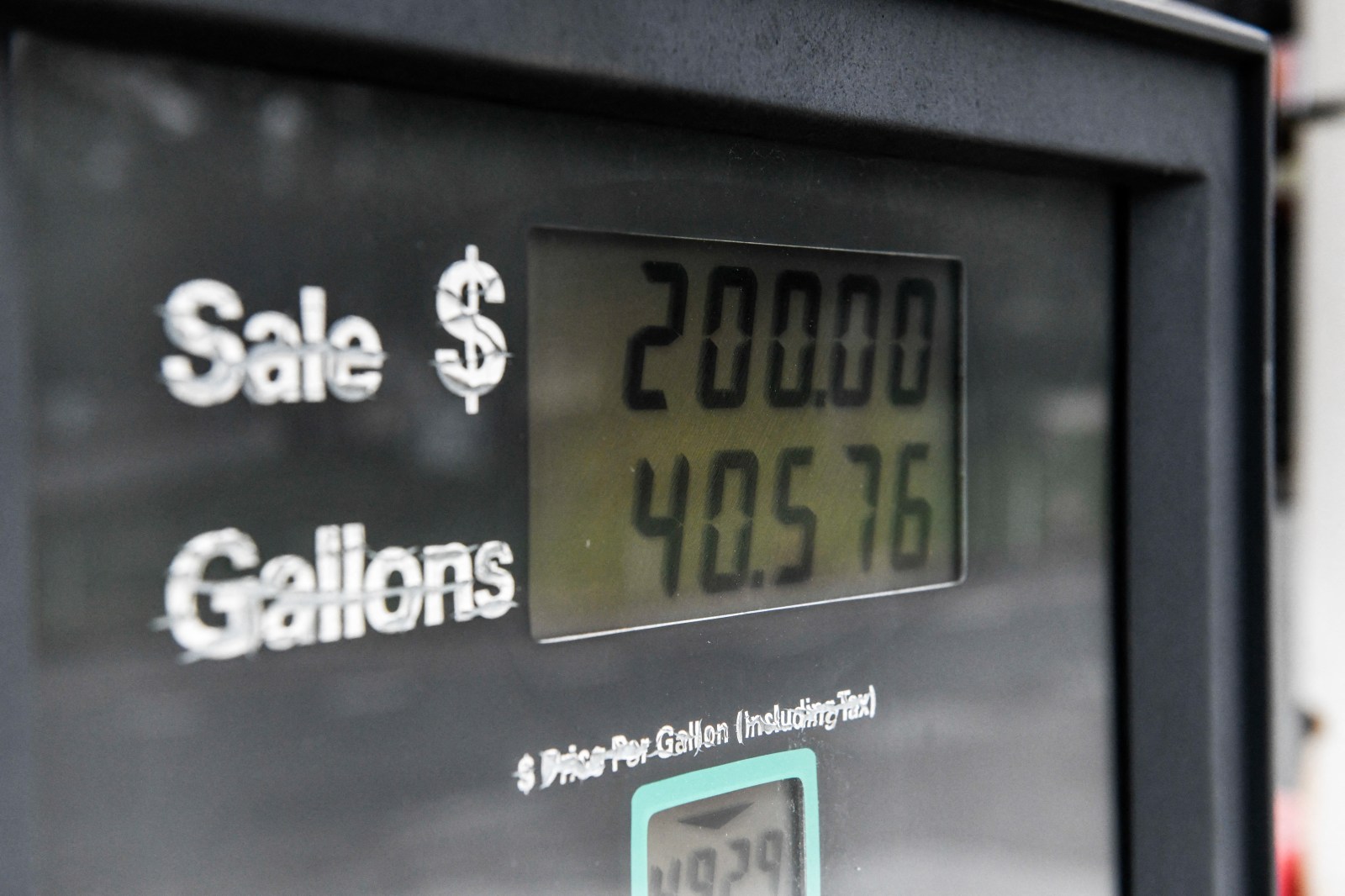
The price of gasoline has surpassed $4 per gallon in 28 states amid renewed hostilities between the U.S. and Iran. This development presents a challenge for President Donald Trump as the midterm elections approach, just 100 days away. According to AAA, 60 percent of American drivers will struggle to afford gas if it reaches this price at the pump. The $4 mark is considered a key psychological threshold, affecting consumer sentiment and posing issues for the Trump administration as voters head to the polls on November 3. Newsweek has reached out to the White House for comments.
Battleground State Gas Prices
A map created by Newsweek illustrates that prices in 28 states have exceeded the $4 benchmark. Among these, key battleground states for the midterms include Michigan, Maine, and New Hampshire, with prices recorded at $4.23, $4.10, and $4.06, respectively, according to AAA. The national average as of Sunday was $4.11. Michigan’s Senate race is competitive following the retirement of Democrat Gary Peters. In Maine, Democrats selected Troy Jackson, a former State Senate President, as their nominee. The retirement of Democratic Senator Jeanne Shaheen has opened up a Senate race in New Hampshire that Trump narrowly lost in the 2024 election. Prices in Georgia and Ohio have not yet surpassed $4, with current averages at $3.92 and $3.89, respectively. Georgia’s race involves Democratic Senator Jon Ossoff seeking reelection in a state Trump carried in 2024. Meanwhile, Democrats are targeting Ohio as a potentially competitive GOP-held seat. California reported the highest gas prices nationally at $5.64 per gallon, while Indiana had the lowest at $3.51.
Reasons Behind Rising Gas Prices
On February 28, the United States and Israel conducted airstrikes against Iran to diminish its military capability and thwart its nuclear ambitions. In response, Tehran blockaded the Strait of Hormuz. Before hostilities, one-fifth of the world’s oil and gas transited this route. The blockade disrupted energy markets and drove the price of Brent crude above $100 per barrel. Pump prices have risen from an average of $2.98 per gallon before the conflict. Gasoline crossed the $4 threshold for the first time on March 31, about a month after the onset of the Iran war, and reached a four-year peak at $4.56 in early May. Prices subsequently dipped after a memorandum of understanding was signed between the U.S. and Iran, which offered hope that trapped oil tankers might be freed and the Strait reopened. However, prices surged again following renewed Tehran attacks on ships in the Strait, leading to U.S. retaliation. Additionally, there is a mounting threat of Houthi attacks in the Bab el-Mandeb Strait, another vital route for maritime oil. Taylor Rogers, a White House spokesperson, expressed optimism that as the U.S. military continues efforts to inhibit Iran’s capabilities to disrupt energy flows, oil and gas prices might revert to pre-conflict levels.
Leave a Reply