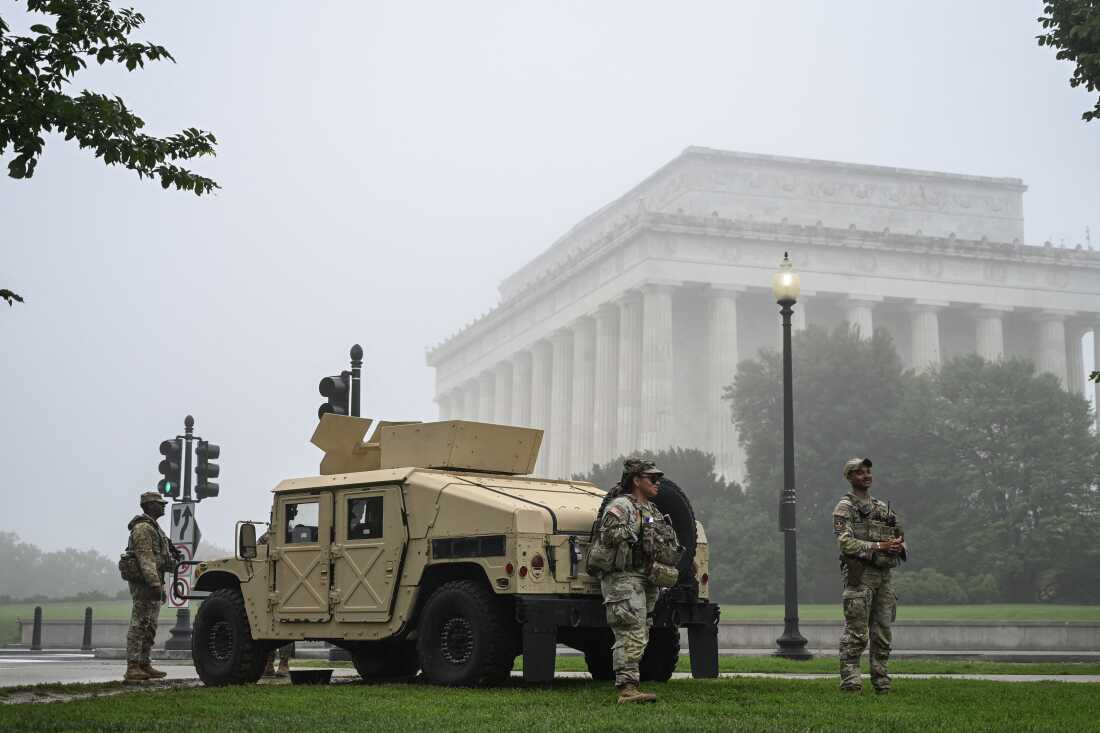
On Memorial Day morning in Washington, D.C., National Guard members watched near the Lincoln Memorial. The deployment, initiated by President Trump, aimed to reduce crime and enhance city aesthetics under the Safe and Beautiful Task Force.
According to the Niskanen Center, a nonpartisan think tank, while there was a decrease in petty property crimes, violent crimes remained largely unaffected by the deployment, despite its high financial cost.
Federal officials recently announced plans to increase the number of troops to 5,000 during a “summer surge” for security measures ahead of America’s 250th birthday celebrations. The decision builds on Trump’s previous deployments in cities like Memphis and New Orleans, though uniquely, he has direct control over the Guard in D.C.
Currently, around 2,800 Guard members from Republican-governed states are stationed in D.C. They focus on high-visibility patrols to allow local police to cover higher-crime areas. However, the report suggests this strategy hasn’t materialized as expected.
The analysis highlighted a 24% drop in opportunistic crimes, such as property crimes and vehicle thefts. Violent crimes, like robberies, showed no significant decline.
“What the Guard brought was a massive, sudden shock from the visible presence of uniformed military personnel on the streets,” researchers noted, describing the deployment as inefficient.
The Congressional Budget Office estimated the federal expenditure at $1.5 million per day for the troops currently in D.C.
Author of the study, Richard Hahn, commented that while there are successes, more thoughtful policing could yield better, cost-effective outcomes.
Despite NPR’s inquiry for a response to these findings, White House spokesperson Abigail Jackson dismissed the study’s credibility. She asserted that the presence of the National Guard has reduced crime and improved the city without providing evidence.
The timeline and end date of the “summer surge” remain uncertain, with Assistant Attorney General Colin M. McDonald expressing a continued commitment to eliminating threats in the capital.
Leave a Reply