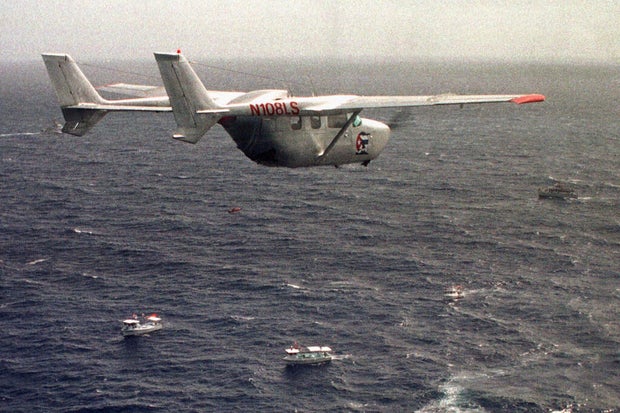
In February 1996, three civilian planes launched from a Miami-area airport. Operated by a Cuban exile group, these planes searched for those fleeing Cuba on rafts. Two of the planes were tragically shot down by a Cuban fighter jet, claiming four lives. This event is now the center of a U.S. federal criminal case involving Raúl Castro and others.
The U.S. has charged Raúl Castro, 94, the former leader of Cuba, for his alleged role in the shootdown. This indictment is part of a broader attempt by the Trump administration to apply pressure on Cuba. The charges include murder and conspiracy to kill U.S. nationals.
Brothers to the Rescue, the group behind the flights, was founded by José Basulto in the early 1990s. Basulto, a Cuban American, had participated in the Bay of Pigs invasion. The group conducted rescue missions to help Cubans fleeing their country, but was also accused by Cuba of violating its airspace and distributing anti-Castro leaflets.
Before the shootdown, U.S. officials expressed concerns about the group’s unauthorized incursions into Cuban airspace. Declassified records show warnings given to Basulto about potential risks his flights posed.
The group departed Opa Locka Airport on February 24, 1996, heading toward Cuba. Basulto informed Havana’s air traffic control about entering the airspace. Shortly after, two Cessnas were destroyed by a Cuban MiG-29, resulting in the deaths of one U.S. citizen and one green card holder. A second attack killed two additional Americans.
José Basulto’s plane escaped and returned safely to Florida. Basulto later recalled the tense moments before the attack, indicating they felt immediate danger.
An ICAO investigation confirmed the planes were shot down over international waters. Cuba claimed otherwise, insisting the planes were within its airspace. The ICAO found Cuba at fault for not using less severe measures before the shootdown.
Cuba defended its actions, citing repeated airspace violations by Brothers to the Rescue. U.S. and international law, however, forbid attacks on civilian planes. Fidel Castro later admitted giving the military orders to prevent future incursions, without explicitly ordering the 1996 attack.
In response to the incident, the U.S. imposed stricter sanctions on Cuba and halted charter flights. President Bill Clinton condemned the attacks and emphasized the lack of threat posed by the planes to Cuba.
Legal actions ensued, including a civil court case awarding significant damages to the victims’ families. One person was convicted of conspiracy related to spying for Cuba, while charges were also filed against Cuban military officials, though they were not tried.
Recently, calls for accountability have grown in Florida, with demands for charges against Raúl Castro. The indictment emerged amid strained U.S.-Cuba relations, exacerbated by economic sanctions and diplomatic pressures.
The charges against Castro came soon after the capture of former Venezuelan President Nicolás Maduro, aligning the U.S. stance against allies of the Cuban regime.
José Basulto expressed hope for justice, stating, “It’s time for them to pay,” reflecting the sentiments of those seeking accountability for the long-standing case.
Leave a Reply