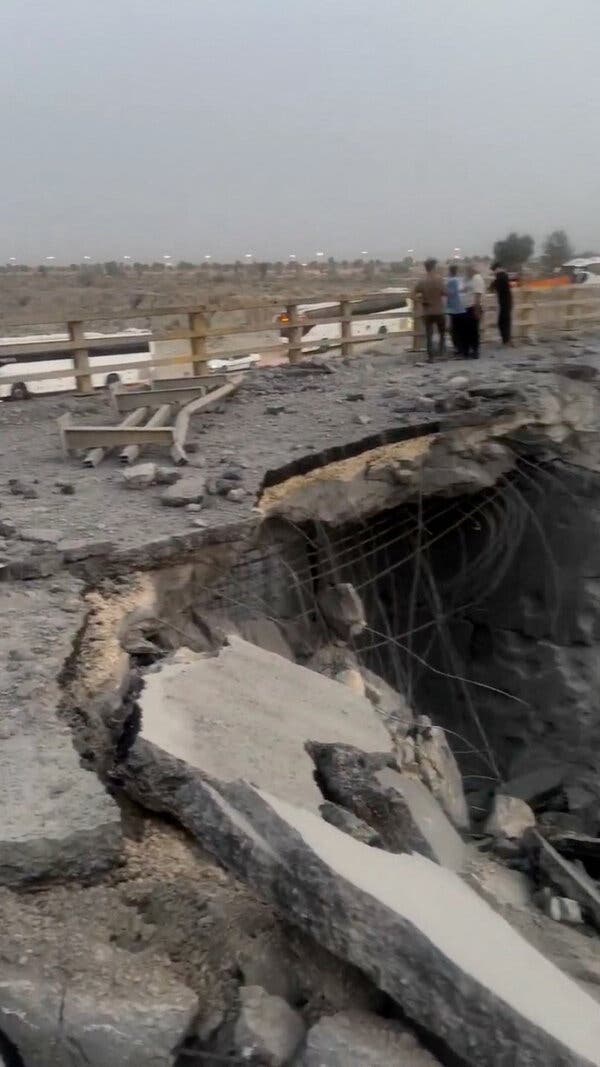
Videos and reports from Iranian state media have shown significant damage to bridges, railways, and other infrastructure. U.S. allies in the region have also reported retaliatory actions by Iran.
On July 17, 2026, the confrontation between Iran and the United States intensified. The U.S. military launched strikes against bridges, rail lines, and a maritime observation tower. Iranian state media confirmed these attacks, showing footage of their aftermath.
Iran responded by firing on countries hosting U.S. military bases. Kuwait reported that its power and water plants had been targeted. The escalation follows President Trump’s announcement of the cessation of a cease-fire agreement over a week ago. The conflict has seen daily exchanges between U.S. and Iranian forces. President Trump has threatened to destroy civilian infrastructure to pressure Iran into a permanent peace deal and halt its nuclear ambitions. In return, Iran’s officials warned they might target civilian infrastructure in neighboring nations.
Legal scholars note that civilian infrastructure, essential for survival like water treatment plants, should not be considered military targets. Attacking such facilities could be deemed a war crime. However, railroads and bridges may serve military purposes if they are used for transporting troops or weapons.
U.S. Central Command, responsible for American forces in the Middle East, confirmed that it had conducted strikes on Iran for seven consecutive nights. It refrained from detailing the targets. Explosions were heard in Sirik, a city hosting Iranian naval bases and a previous U.S. target.
In a Thursday night statement, Central Command highlighted that prior strikes focused on Iranian military targets like coastal surveillance and air defense sites, logistical infrastructure, and maritime capabilities. They did not specifically mention bridges and railroads. Additionally, Central Command disclosed the destruction of a port surveillance tower in Southern Iran, allegedly used by the Islamic Revolutionary Guards Corps for tracking commercial vessels traversing the Strait of Hormuz.
Leave a Reply