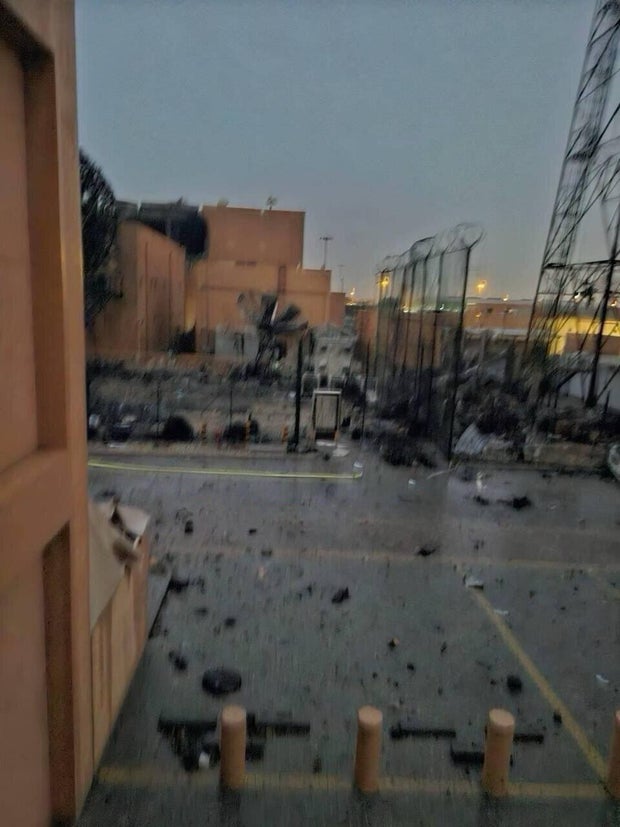
The beginning of the war brought unexpected challenges for U.S. military families in Bahrain. On the first day, Iran targeted the Navy’s Middle East headquarters in Bahrain before evacuations were completed. Some families waited over a week to reach safety.
Military spouses described the fear of living through continuous missile and drone attacks. One spouse recalled waking up and sleeping to the sound of ballistic missiles. Another noted how consistent attacks left many surprised, considering evacuation orders only came after hostilities started.
Official statements revealed the military anticipated some retaliation. However, the scale of the attacks was unexpected, even after evacuating headquarters’ buildings. Families living nearby could witness missile contrails and explosions from their locations.
No personnel losses occurred, yet social media images showed significant base damage. A notable image depicted an explosion targeting a radar system on the war’s first day. The Pentagon has not publicly estimated the damage cost, although Acting Navy Secretary Hung Cao commented on the severity.
Since the ’90s, Naval Support Activity Bahrain has been a logistics hub for Middle Eastern Navy operations, impacting sailors at sea. Food shortages on ships like the USS Abraham Lincoln arose as resupply routes were rerouted to Diego Garcia, 2,200 miles away. This extended resupply cycles from 5–7 days in Bahrain to 14–18 days.
Chief of Naval Operations Admiral Daryl Caudle recently addressed logistical restructuring to better supply ships, revealing no immediate plans to restore Bahrain’s base footprint. He assured evacuated sailors their belongings would be retrieved.
“We’re not getting back in there anytime soon, I just want to be completely honest with that.”
Service members in Bahrain can ship household goods in person, while others can appoint representatives or coordinate travel for relocation.
Evacuation led to financial strains for many, maintaining residences in Bahrain and the U.S. Despite Pentagon benefits for housing reimbursement, claims processing takes weeks to months.
The Navy provides communication, case management, and relocation support as families transition to designated residences by November to retain entitlements. Despite varying financial struggles, all families faced significant upheaval.
Evacuees relocated mainly to Norfolk, Virginia, and Tampa, Florida, with non-profits like Blue Star Families aiding supplies for transition. Executive Director Suzy Malloy highlighted efforts like school supplies and cooking equipment to help adjust.
“We gave these kids backpacks with school supplies… air fryers and crockpots.”
Though evacuees face uncertainty, many begin settling in Tampa. Malloy praised the readiness program for maintaining stability during the transition.
Military families interviewed expressed frustration with the prolonged situation but don’t place blame on the military. The unexpected duration of events left many in bewilderment.
Leave a Reply