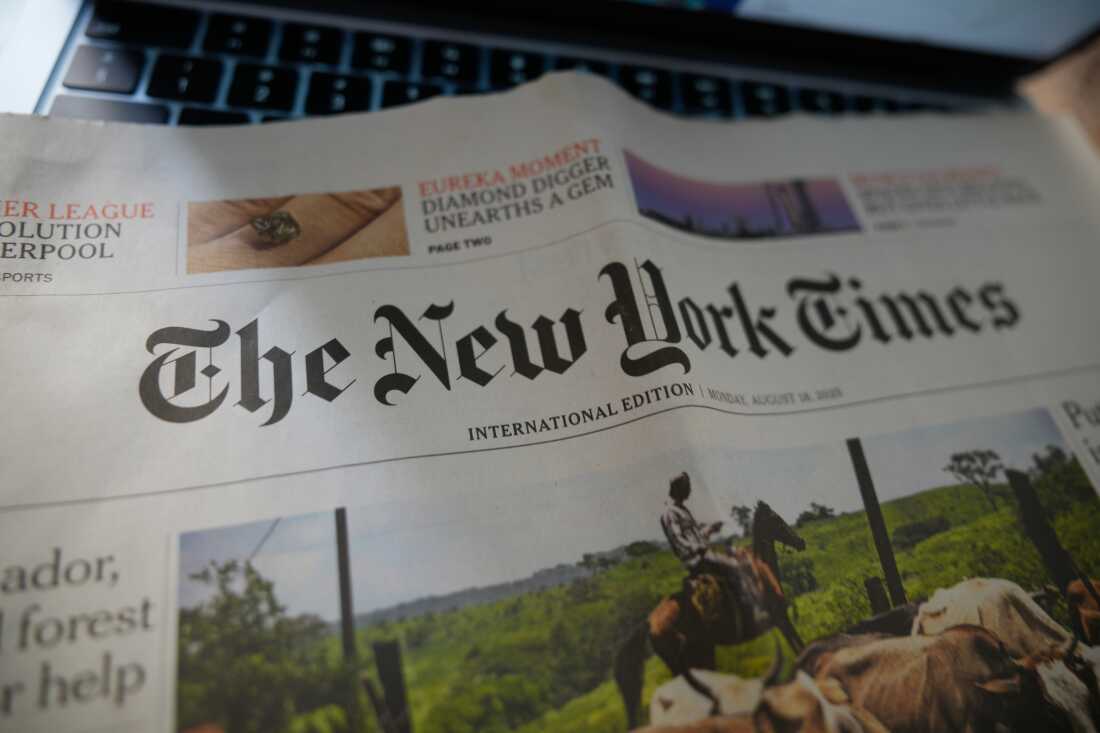
The Justice Department has decided to withdraw its subpoenas seeking grand jury testimony and phone records from New York Times journalists. This decision came after a federal judge questioned the approach of the government. The government had maintained that the subpoenas were necessary for national security reasons. They were issued shortly after the New York Times published stories on incidents that involved the U.S. Secret Service preventing President Trump from flying on the new Air Force One jet.
During the hearing, U.S. District Court Judge Arun Subramanian remarked that the Trump administration had breached journalistic protections. The judge noted several incidents of what he deemed inadequate legal work and warned of potential sanctions against federal attorneys for not adhering to the law. This case emphasized concerns over press rights under the Trump administration and the White House’s expansive view of executive authority.
Judge Critiques Subpoenas
At the hearing in Manhattan, the Justice Department conceded that the subpoenas would be withdrawn if not removed voluntarily. David McGraw, legal representative for the New York Times, praised the court’s decision as a victory for the First Amendment. Meanwhile, Sean Buckley, the deputy U.S. attorney for the Southern District of New York, refused to comment publicly after the hearing.
However, a Justice Department spokesperson criticized the judge’s decision, labeling it as contradictory to common sense and hindering a national security probe. The spokesperson promised that the investigation into security leaks, deemed a serious federal offense, would persist.
Throughout the hour-long court session, Judge Subramanian challenged the notion of the subpoenas being a last resort, especially since they were issued just two days after the news articles were published. Buckley claimed the subpoenas were justified based on what was known at that time, but the judge disagreed with this rationale.
Prosecutorial Mistakes
Buckley acknowledged that the subpoenas were approved by U.S. Attorney General Todd Blanche, but he did not specify on what grounds. Simultaneously, the judge criticized the prosecution for obtaining an order to forbid phone companies from notifying the journalists about the subpoenas, despite their public knowledge.
Buckley also apologized for mistakenly requesting phone records of journalists’ family members, citing errors from relying on public databases. Judge Subramanian noted these mistakes were accumulating, indicating procedural faults.
The New York Times had reported that FBI Director Kash Patel instructed the issuance of the subpoenas. The luxury of the aircraft involved was mentioned by Trump, and outside experts raised concerns about its security capabilities.
An interview with NPR revealed personal accounts from journalist families affected by the subpoenas. Katherine Marsh, wife of reporter Julian E. Barnes, described an unsettling visit from FBI officials, likening the situation to an un-American scenario. She expressed that issuing the subpoenas initially was erroneous.
Leave a Reply