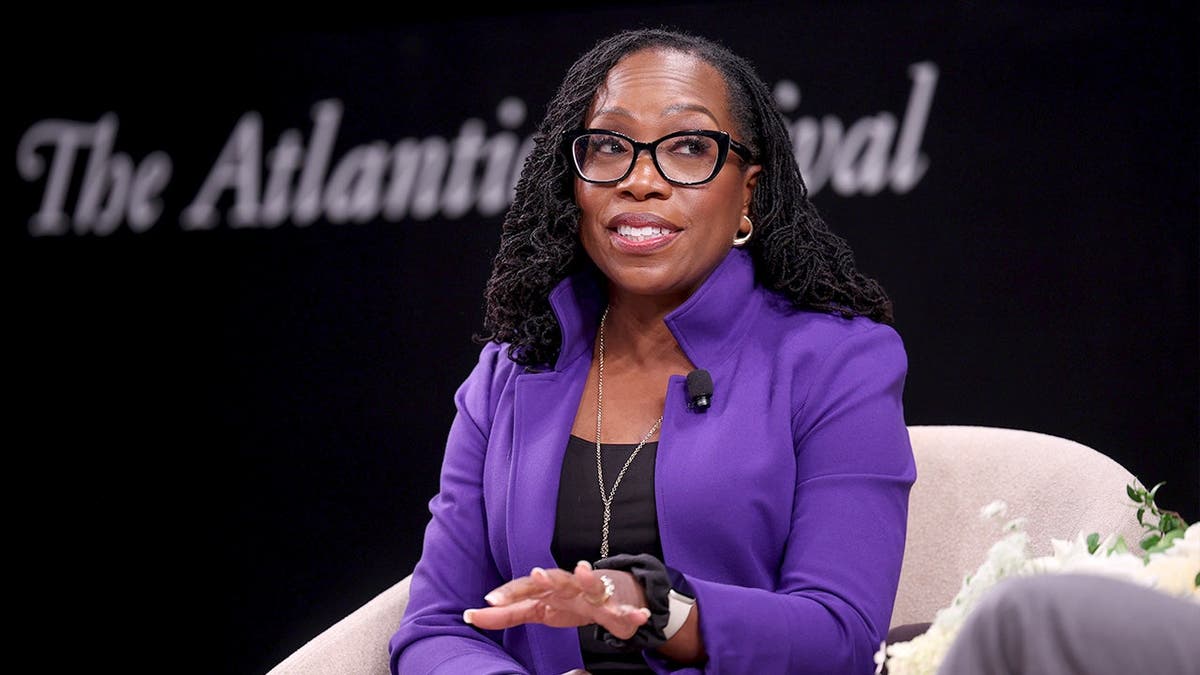
Supreme Court Justice Ketanji Brown Jackson expressed agreement with Michelle Obama on the topic of isolating students of color at elite colleges. During an episode of Obama’s podcast, they discussed how these institutions sometimes fail minority students by dispersing them across campuses.
Both Jackson and Obama have connections to Harvard University, where Jackson felt a sense of belonging due to a substantial Black community. She was an undergraduate and received her law degree there, while Obama earned her law degree at Harvard after attending Princeton as an undergraduate. Obama stated, “You don’t do kids of color service by plucking them out and making them one of a few, and then scattering them about the campus.” Jackson agreed, affirming, “I think that’s absolutely right.”
Reflecting on her experience, Jackson noted she felt isolated in high school. However, at Harvard, she discovered a welcoming community. “At the time that I went to Harvard, which, we’re contemporaries in terms of the timing of it, there was a sizable Black community on campus,” she mentioned. This community made her feel accepted. She lived with five other Black women, forming a close-knit group.
Despite her positive college experience, controversy surrounds Harvard’s admissions practices. Jackson, who graduated from Harvard in 1992, recused herself from the Supreme Court case on Harvard’s admissions because of her past role on its Board of Overseers. She participated in the related University of North Carolina case. The Supreme Court struck down the race-conscious admissions programs of both schools in 2023, which Jackson opposed in a dissenting opinion with Justice Sonia Sotomayor. Jackson warned this ruling could worsen racial disparities. “No one benefits from ignorance,” Jackson wrote. “Although formal race-linked legal barriers are gone, race still matters to the lived experiences of all Americans in innumerable ways, and today’s ruling makes things worse, not better.”
Following the ruling, Harvard faced federal scrutiny regarding compliance. Black enrollment declined in subsequent classes. For the Class of 2029, Black students made up 11.5%, a decrease from previous years. In contrast, Asian American enrollment reached 41%, and Hispanic enrollment fell to 11%.
The Justice Department filed a lawsuit seeking applicant-level records from Harvard to verify adherence to the ruling. Assistant Attorney General Harmeet Dhillon stated, “If Harvard has stopped discriminating, it should happily share the data necessary to prove it.” Harvard, in its defense, moved to dismiss the case, showing they changed procedures post-ruling.
Leave a Reply