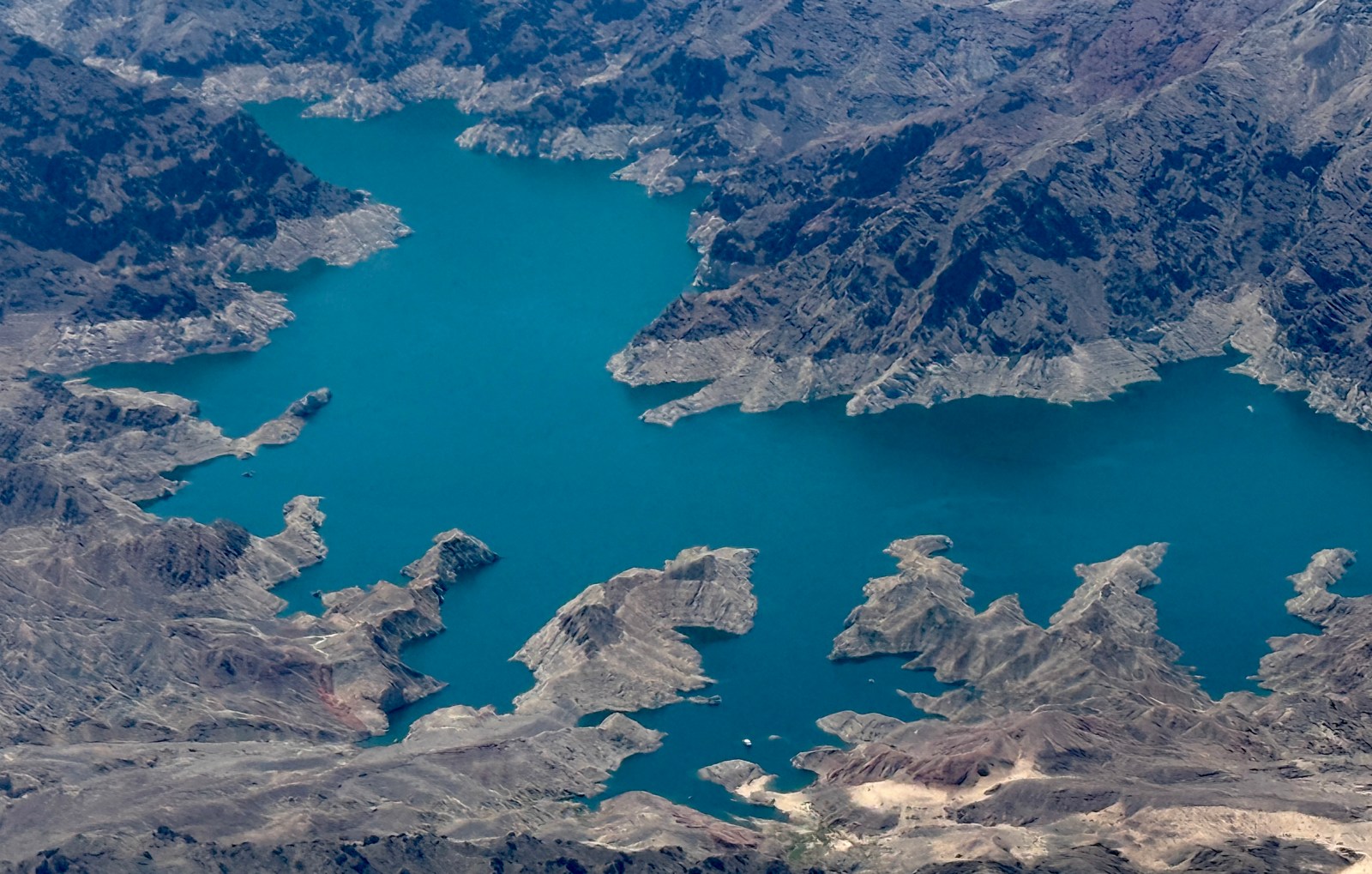
Federal projections reveal that Lake Mead’s water levels might be dropping faster than previously anticipated. A new study by the U.S. Bureau of Reclamation (USBR) predicts that the reservoir could decline to 1,015.77 feet above sea level by July 2027. This forecast presents a sharper decrease compared to last month’s report, which estimated a level of 1,020.76 feet for July of the following year.
The Colorado River network, crucial for delivering water to around 40 million people across the Western U.S. and supporting over 5 million acres of agriculture, is grappling with persistent and severe drought conditions. The ongoing dry spell is exacerbating concerns about water supply and electricity generation at key reservoirs.
In response to the data, a USBR spokesperson emphasized the need to create new guidelines and update procedures to manage the continuing challenges facing the Colorado River system.
Currently, Lake Mead is filled to 29 percent of its capacity, holding 7,454,257 acre-feet of water, which is 47 percent of the average for this time of year.
The recent USBR 24-month study delivers hydrological assessments and future operational plans for the Colorado River system’s reservoirs over the next two years. This study also projects Lake Mead’s level to possibly decline further to 1,011.74 feet by the end of May 2028.
The agency clarifies that these 24-month studies are projections, subject to adjustment as real hydrology, operations, and forecasts deviate from those used to make specific predictions.
Concerns about power generation are intensifying with these unfavorable projections. USBR indicated that Lake Powell, the second-largest reservoir in the country, might experience reductions to elevations that could threaten hydropower capabilities.
The study relies on soon-expiring operational guidelines, projecting Lake Powell could reach its minimum power pool by spring 2027. This scenario underscores the Colorado River system’s vulnerability, highlighting the necessity for updated operational tools for long-term management.
Scientists warn that without rebalancing water supply and demand, the Colorado River system could face a potential crash in the next few years.
States Dependent on the Colorado River
The states reliant on the river—Colorado, New Mexico, Utah, and Wyoming in the Upper Basin, and Arizona, California, and Nevada in the Lower Basin—are working to negotiate new water-sharing agreements as current guidelines are about to lapse. However, a consensus is yet to be reached.
Additionally, satellite images have vividly illustrated the decrease in Lake Mead’s water levels over a 25-year span. Visuals from 2024 show a significantly shrunken reservoir compared to images from 1999. This contrast has been captured by the Landsat 7 mission, a collaboration between the United States Geological Survey and NASA.
Leave a Reply