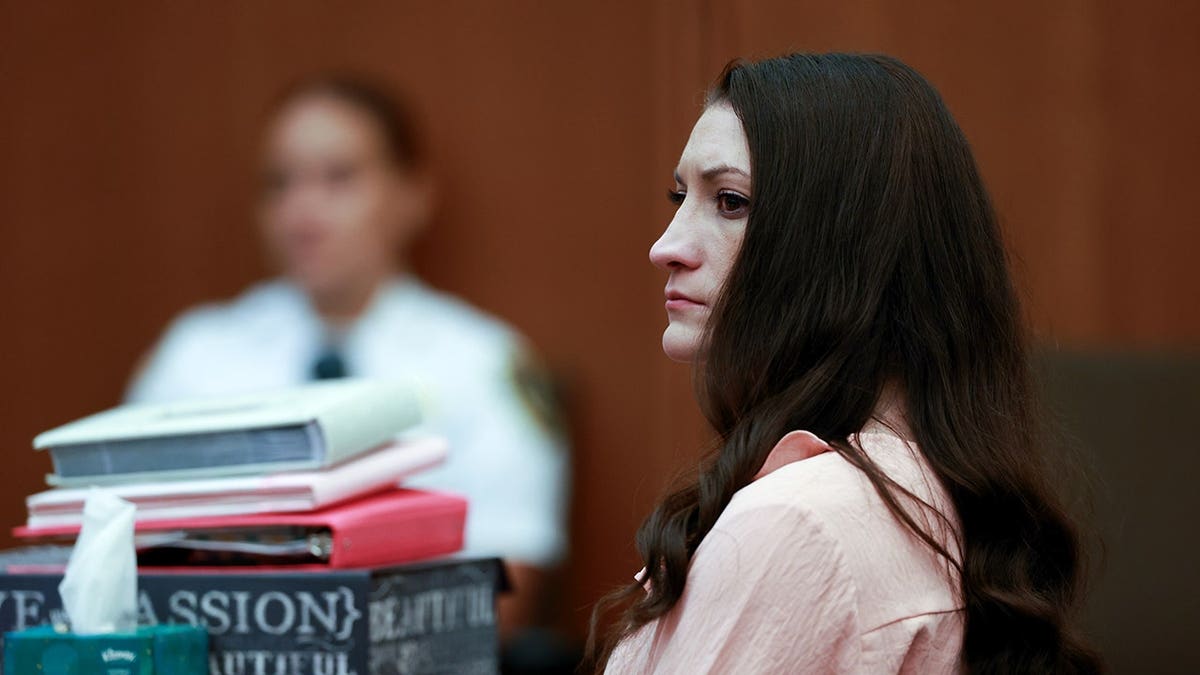
On Tuesday, a Massachusetts judge plans to hear arguments regarding Lindsay Clancy’s double jeopardy motion. The ongoing controversy surrounding the holdout juror from her mistrial might temporarily pause efforts to investigate. Lindsay Clancy will attend the court session in person, marking her first appearance since her trial ended in a deadlocked jury, leading to a mistrial declared on September 4.
Clancy’s case has garnered significant national attention. There is criticism directed towards the lone holdout juror by fellow jurors and Clancy’s defense attorney. Meanwhile, Plymouth County District Attorney Tim Cruz’s office remains silent about any plans for a potential retrial.
Defense Efforts to Probe the Holdout Juror
Clancy’s defense attorney, Kevin Reddington, has called for an investigation into the holdout juror, Michael Desronvil, naming him the ‘obstructionist juror.’ Desronvil was the sole juror opposing the majority, wanting to find Clancy guilty.
Desronvil’s attorney, Edward Paltzik, stated that both Reddington and Plymouth County prosecutors agreed to postpone the motion after the holdout’s counsel objected, highlighting the lack of access to impounded materials necessary to respond. ‘The DA and Reddington consented to adjourn the motion to investigate Michael,’ Paltzik told Fox News’ Kayleigh McEnany.
Legal Definitions: Continuance vs. Adjournment
Reddington clarified that while both parties agreed to continue the motion, it remains pending a ruling. The terms ‘adjourned’ and ‘continued’ imply different meanings. Retired Massachusetts Judge Carol Erskine explained that adjournment suggests a hearing is off indefinitely without a specified date. In contrast, continuance involves a request by one or both parties for a new date.
Should Reddington succeed, the court might conduct a Fidler hearing where a judge questions Desronvil. Erskine, following the case closely, indicated that the hearing comprises three phases, potentially leading to a manifest necessity claim, though outcomes are uncertain.
Potential for Defamation Lawsuit
Following the trial, observers speculate whether the holdout juror might sue Reddington for defamation. Reddington’s inquiry, based on reports from other jurors, accuses Desronvil of having reasonable doubt and ignoring it. The defense criticizes Desronvil’s alleged obstructionist behavior and commentary outside the courtroom. Legal analysts hypothesize about the likelihood of a defamation suit against Clancy’s team.
Reddington dismissed concerns, suggesting that any statements made during court proceedings are privileged. Statements made outside court might be deemed opinions. If someone claims an event occurred without firsthand knowledge, it’s likely an opinion, not a false statement of fact.
Looking Ahead
Mark Bederow, a New York-based criminal defense attorney, believes ongoing legal maneuvers might be ineffective. He criticized the prosecution’s approach in the first trial, arguing it failed to meet legal standards. Bederow suggested improvement in jury selection and credible expert witnesses for a potential retrial.
Despite extensive commentary, Reddington, described as a distinguished Massachusetts attorney, remains dedicated to his client’s benefit by strategically filing motions. Legal experts consider these motions non-frivolous, benefiting his case.
Leave a Reply