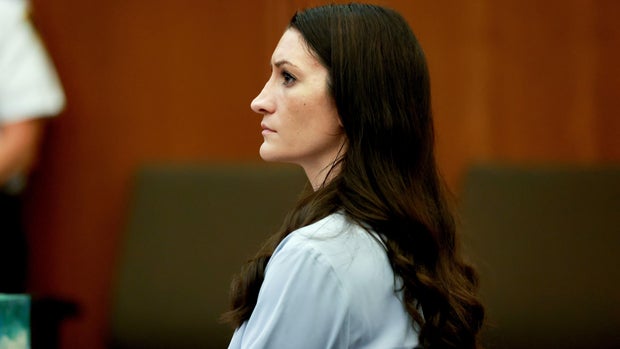
The trial of Lindsay Clancy continued on its 12th day, featuring testimony from Latiesha Dukes, a mental health counselor who had previously worked with Clancy. The proceedings can be followed live on CBS News Boston or on YouTube during court sessions.
Lindsay Clancy, aged 36, stands accused of first-degree murder for the deaths of her three children—Cora, Dawson, and Callan—at their home in Duxbury on January 24, 2023. She has pleaded not guilty to the charges.
Prosecution and Defense
Prosecutors Jennifer Sprague and Shanan Buckingham argue that Clancy planned the murders, pretending to attempt suicide as a cover. In contrast, defense attorney Kevin Reddington contends that while Clancy admits to the killings, she was influenced by overmedication and postpartum psychosis, challenging her criminal responsibility.
Counselor’s Testimony
Latiesha Dukes, formerly of South Shore Hospital, described her experiences with Clancy beginning in late November 2022. Dukes highlighted Clancy’s anxiety issues, insomnia, and suicidal ideation. Her professional recommendation was outpatient therapy, medication, and weekly sessions. Dukes later suggested partial hospitalization after Clancy reported severe intrusive thoughts in December 2022.
Dukes noted an improvement in Clancy’s mental state during a December 19, 2022 telehealth session. Clancy appeared more engaged and cheerful, according to Dukes’ observations.
Testimony from Law Enforcement
Sergeant Dan Lawlor of the Massachusetts State Police shared his experiences on the night of the children’s deaths. Arriving at South Shore Hospital, Lawlor found Clancy unable to communicate due to injuries from a fall. He later visited Boston Children’s Hospital to inquire about Callan.
The defense questioned Lawlor about restricted access to Clancy’s hospital room. Defense attorney Reddington secured a court order for psychologist Paul Zeizel to meet with Clancy in the hospital.
Investigative Challenges
Reddington’s cross-examination brought up a conversation suggesting that Zeizel influenced Clancy to report hearing voices. However, Lawlor confirmed under questioning that he did not hear any such conversation.
Assistant District Attorney Buckingham questioned Lawlor about typical investigative discussions, noting that these often evolve as new evidence emerges. Lawlor acknowledged that theories change during investigations.
Additional Witnesses
Earlier in the trial, a psychiatric nurse practitioner, Rebecca Jollotta, testified about her sessions with Clancy prior to the alleged murders. This testimony reinforced concerns about Clancy’s mental health status.
Potential Outcomes
If Lindsay Clancy is convicted of first-degree murder, she risks life imprisonment without parole. Alternatively, if deemed not criminally responsible, she could be committed to a state psychiatric institution in Massachusetts.
For those affected by emotional distress or a suicidal crisis, the 988 Suicide & Crisis Lifeline offers support via phone or text at 988. Additional resources and support are available through the National Alliance on Mental Illness at 1-800-950-NAMI (6264).
Leave a Reply