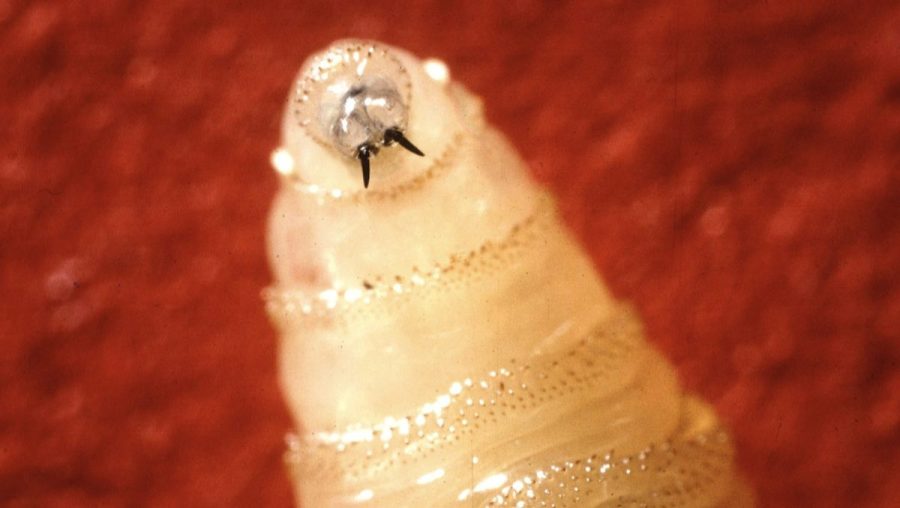
The United States Department of Agriculture has reported an increase in confirmed New World screwworm infestations, reaching 45 cases as of August. The most recent case surfaced in Terrell County, Texas, involving domesticated sheep. This parasite only affects animals such as cattle, sheep, and dogs but poses a risk to humans as well.
Screwworm flies lay eggs on warm-blooded animals, including humans. These eggs evolve into larvae that consume flesh, burrowing deeper into the host. Untreated infestations can be fatal. Unlike cyclospora, which spreads through food, the screwworm’s eggs infiltrate live tissue through wounds or openings like noses, mouths, eyes, or ears.
“Wounds as small as a tick bite may attract a female fly to lay her eggs,” notes the Centers for Disease Control and Prevention (CDC). “A single female can lay between 200 and 300 eggs at one time and up to 3,000 eggs during her lifespan.”
Individuals are most at risk through outdoor activities and contact with animals, especially if they have open wounds. To treat infestations, the CDC recommends removing all eggs and larvae from the infected area, potentially requiring surgery for deep-seated larvae.
Agricultural authorities are actively combating the spread of screwworms, posing a danger to the cattle industry. Occurrences remain mainly within Texas, with one case in New Mexico. Efforts include releasing sterile flies to hinder reproduction and the Food and Drug Administration has authorized emergency use of preventive medication.
Leave a Reply