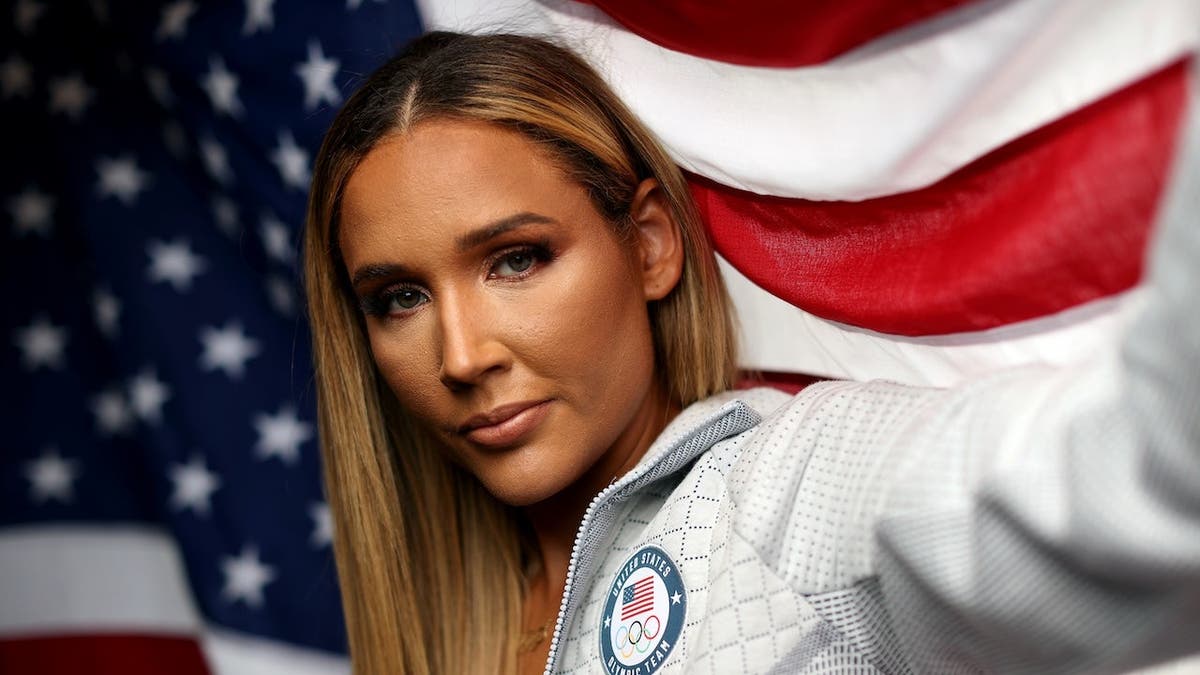
Lolo Jones has faced significant challenges following a severe experience with Team USA. In February 2025, Jones joined her team in a bobsled at the Olympic training center in Lake Placid, New York. The U.S. team was testing their equipment before the World Championships. As the sled gained speed, reaching nearly 90 mph, something went wrong.
Jones felt an intense burning sensation in her lower back, found bending over impossible, and surprisingly, lost control of her bladder. “I’ve never experienced that in my life,” Jones remarked. She immediately informed an athletic trainer about her condition.
Jones, not new to understanding her physical limits, had previously competed in the 2008 and 2012 Summer Olympics as a hurdler and in the 2014 Winter Olympics as a bobsled brakewoman. Her accomplishments included world championships in both sports, illustrating her familiarity with enduring pain. However, this felt drastically different.
“I voiced my frustration that athletes should have medical access,” Jones said. “It just continued to escalate.”
A trainer arranged a treatment session for her, yet Jones said that the head of sports medicine at the training center canceled it because she had already undergone treatment that week. She was unaware of the cancellation.
With persistent pain and a major race approaching, Jones’ situation worsened when officials revoked her access to necessary sports medicine. They also imposed broader restrictions, barring her from the facility and vital resources. Despite being told she violated a code of conduct, officials never specified the infraction.
According to reporting by the Southern California News Group, officials eventually acknowledged that Jones should not have been denied treatment. However, the restrictions stayed in place. Severe back pain with bladder issues can indicate cauda equina syndrome, a serious condition needing immediate attention, but no one at the facility offered a thorough examination.
Without a diagnosis, Jones continued her training. She got pain medication from her doctor in Louisiana and competed at the World Championships in Lake Placid, finishing sixth with pilot Elana Meyers Taylor.
“If someone would have informed me about the severity, I would never have risked paralyzation,” Jones said. Post-championships, she funded her own MRI, discovering a herniated disc and other injuries. She then had spinal surgery and paid for further rehabilitation herself, estimating costs at $100,000.
Jones’ ordeal exposes deeper issues in Olympic sports concerning financial strains on athletes. Many, like bobsled competitors, depend on limited stipends while shouldering substantial expenses. Although Jones earned an income outside the sport, the medical bills were overwhelming.
“I make good money, but it’s not comparable to what top athletes earn,” she stated.
Jones now advocates for better due-process protections and an affordable grievance system for athletes. She feels existing systems do not allow athletes to effectively challenge those in control of their medical care and competitive prospects.
The experience has reshaped Jones’ outlook on the Olympic journey. Though she once envisioned a future daughter following her path in elite sports, she no longer sees it as an aspiration.
Jones reflected on over two decades of dedication to Team USA, feeling abandoned when she needed their support most. “I’ve given so much to Team USA,” she expressed. “When I needed them back, they absolutely abandoned me.”
Leave a Reply