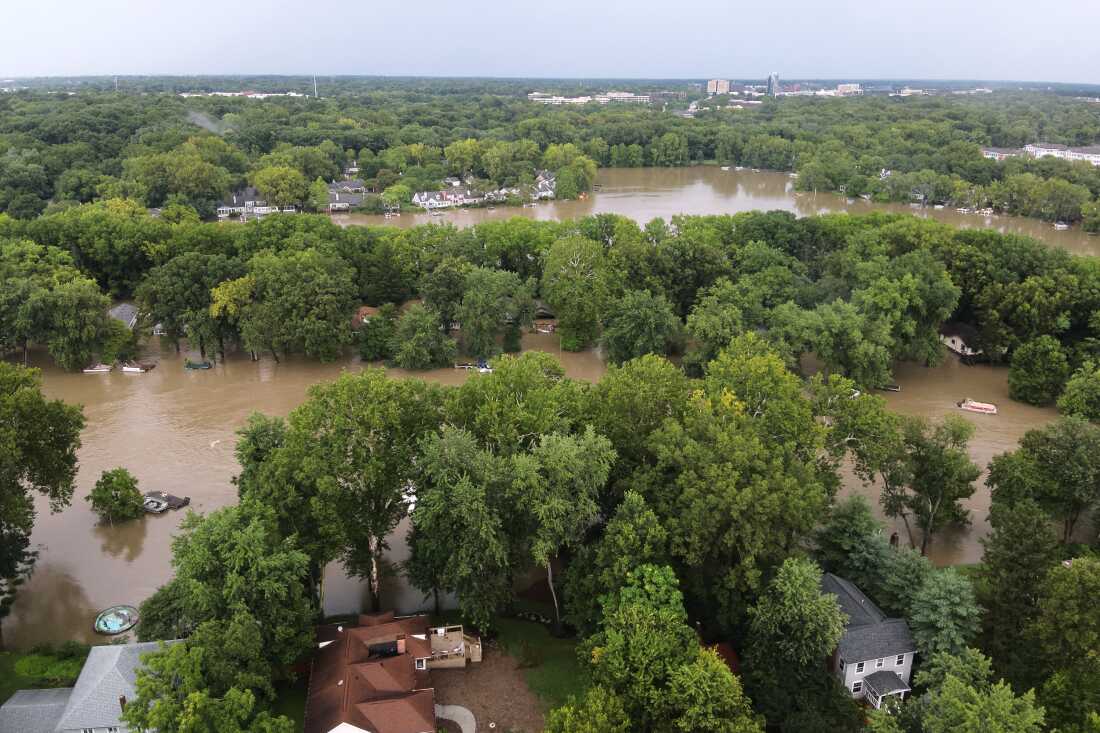
An unyielding series of thunderstorms has caused severe flooding across the Midwest. The National Weather Service (NWS) reports that heavy rainfall is expected to continue through at least Sunday. Areas in the Ohio Valley, Midwest, and central Appalachians are particularly at risk, with more precipitation affecting regions that had only begun to recover from previous floodwaters.
At least three fatalities have been reported, and over 150,000 individuals were without electricity as of Saturday afternoon. Indiana and Ohio are among the most severely impacted states, with some regions experiencing over 11 inches of rainfall in the past week. In Anderson, Indiana, the White River surged to a record height of 24.9 feet, eclipsing a flood level that has stood since 1913.
According to the NWS, flash flood and flood warnings have been issued for central Illinois and Indiana, while flood watches extend from Iowa and Missouri to central West Virginia.
“I will do everything in my power to protect Hoosier lives and livelihoods as we respond to this historic severe weather,” stated Indiana Governor Mike Braun. He has sought a presidential emergency declaration through FEMA to secure federal aid and resources. “I have mobilized state and local resources, declared a Statewide Disaster Emergency, and deployed the Indiana National Guard.”
Apart from the relentless rainfall, Indiana has faced tornadoes and a derecho in recent days. Cyndee Gillmore, who oversees the Cornerstone Campground and Retreat Center in New Castle, described how 5 feet of water inundated the property, affecting the kitchen, banquet hall, youth center, and mobile campers.
“I’m standing in my house right now and it smells to high heaven, but it’s just stuff,” Gillmore remarked. “Everybody is pitching in and the community is supporting one another, and it’s beautiful to see. We’re going to keep our focus on God.” Despite her optimism, she expressed concerns about recovery efforts, noting that neither she nor her neighbors have flood insurance, as property insurance does not cover flooding.
Gillmore added, “My heart breaks. Nobody has the money to fix all of this. I don’t know how people will make it.” The financial impact could be severe for Gillmore and others affected, especially without insurance. Flood insurance is primarily managed by the federal government through FEMA, which mandates coverage for homeowners at risk if they have a federally backed mortgage.
However, an NPR investigation revealed that FEMA’s maps often overlook the risks of rainfall and flash flooding, relying more on coastal storm surges and large river flooding data. Consequently, many properties outside FEMA-designated floodplains suffer unintended damages. For example, when Hurricane Helene hit western North Carolina in 2024, 98% of damaged homes were not included in FEMA’s maps, leaving most homeowners without claims to file.
The National Oceanic and Atmospheric Administration forecasts mild to major flooding in certain areas. Meanwhile, NWS monitoring stations observed nearly 10 inches of rainfall at Washington Municipal Airport in Iowa, almost 8 inches in Glouster, Ohio, and over 6 inches in Elkhorn Creek, Kentucky.
As rainfall continues to spill into creeks and rivers, the flooding risk increases for downstream areas, particularly with storms predicted in the coming days.
Leave a Reply