Each spring, tens of millions of monarch butterflies embark on an astonishing migration from Mexico to the United States. These butterflies, having spent winter in the forests of a remote mountain in Mexico, begin their northward journey. Once born in Canada and the northern U.S., they have been undertaking this journey for thousands of years. However, their numbers are dwindling, with a 70% population decline in Mexico over the last 30 years.
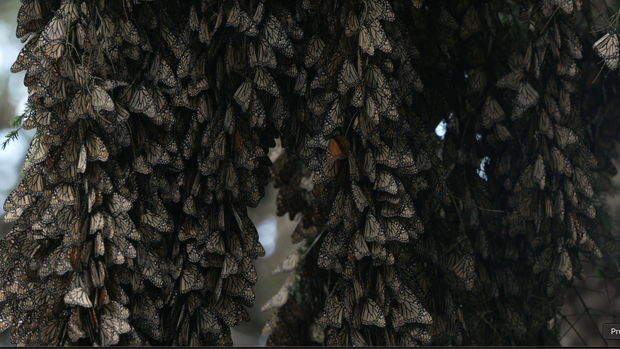
In February, the monarchs start awakening from their hibernation that began in late October. Jorge Rickards, director of the World Wildlife Fund in Mexico, guides visitors to the monarchs’ roosting spots in Michoacan. The butterflies roost at 11,000 feet, clustering in fir and pine trees, which sometimes bend under their weight. These butterflies enter a state resembling hibernation, surviving on nectar reserves. The mountain’s climate provides protection, keeping them cool and hydrated.
“They’re sensitive to sound and CO2, which they associate with predators,” says Rickards, emphasizing the need to maintain silence during visits.
Fallen monarchs often lie on the forest floor in the morning. Visitors can help them regain their strength by warming them with their breath. When the sun warms the trees, the butterflies begin to open their wings, revealing flashes of vibrant orange. Court Whelan, a photographer, explains this as a signal for increased activity.
The transformation of these butterflies into a ‘super generation’ enables them to live up to nine months, surviving through the winter and suppressing their reproductive hormones in a process called diapause. This super generation, originating in Canada and the northern U.S., travels to Mexico, navigating using internal compasses responsive to the sun and Earth’s magnetic field.
The monarchs’ arrival in Mexico remains a mystery. Journeys are thought to be influenced by prehistoric routes or geographical and climatic factors. Despite being discovered by researchers in 1975, illegal logging has reduced roosting areas significantly. The World Wildlife Fund has been active in protecting these areas, combating forest destruction, monitoring butterfly populations, and collaborating with local communities to foster ecotourism.
The monarchs rely on mud puddling for hydration and nutrient absorption, particularly before returning north to lay eggs. However, their existence faces challenges. Milkweed, crucial for their larvae, has become scarce due to agricultural practices. Monarch Watch, an initiative at the University of Kansas, encourages planting milkweed on public land.
The Monarch Watch program tags butterflies, allowing tracking of their migration. Recent efforts show promise; monarch populations during hibernation covered more than seven acres this year, doubling from previous counts. This increase aligns with Mexico’s Day of the Dead, when locals believe monarchs are returning spirits of their ancestors.
The conservation measures are proving effective. For the monarchs, this signifies a hopeful direction, supporting their spectacular yet arduous journey.
Leave a Reply