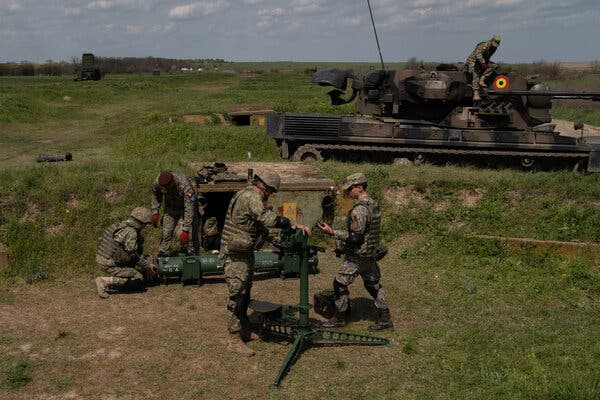
As Russian strikes against Ukraine intensified, European nations were reminded of their vulnerability if the conflict spills into NATO territory. Governments across Europe have increased military spending, yet the possibility of conflict crossing into NATO borders remains a concern.
The situation is compounded by President Trump’s decision to withdraw some U.S. military assets from Europe, sparking a scramble among NATO allies to bridge the gap. Despite increased investments, officials acknowledge Europe’s defense capabilities still heavily depend on U.S. support.
“If anyone thinks here again that the European Union, or Europe as a whole, can defend itself without the U.S., keep on dreaming,” said Mark Rutte, NATO Secretary General.
Russian provocations, such as fighter jets entering NATO airspace and drones crossing into European territories bordering western Ukraine, test the alliance’s readiness. Additionally, Russia’s use of ballistic missiles capable of striking European capitals within minutes heightens the urgency for preparedness.
In response to the Russian assaults, Polish Defense Minister Wladyslaw Kosiniak-Kamysz asserted the safety of Poland’s borders, crediting French and Dutch support for securing the airspace. He emphasized the importance of a modern army and strong alliances for national security.
Next week, NATO leaders will convene in Ankara, Turkey, to evaluate whether European nations are adequately contributing to their security expenses. While European countries raised their collective military spending by $90 billion last year, balancing military investments with domestic priorities like healthcare and pensions remains challenging.
As U.S. contributions diminish, Europe’s financial support to Ukraine has increased significantly. The European Union recently transferred six billion euros as part of a broader loan to bolster Ukraine’s defense capabilities.
“We keep raising the cost until Russia understands it cannot win,” said Kaja Kallas, the E.U.’s top diplomat.
The financial commitments to Ukraine signal Europe’s recognition of its role as a frontline defense against Russian aggression.
Lara Jakes, a journalist with extensive experience in conflict and diplomacy, provides insights into the ongoing challenges faced by Europe amid Russian aggressions.
Leave a Reply