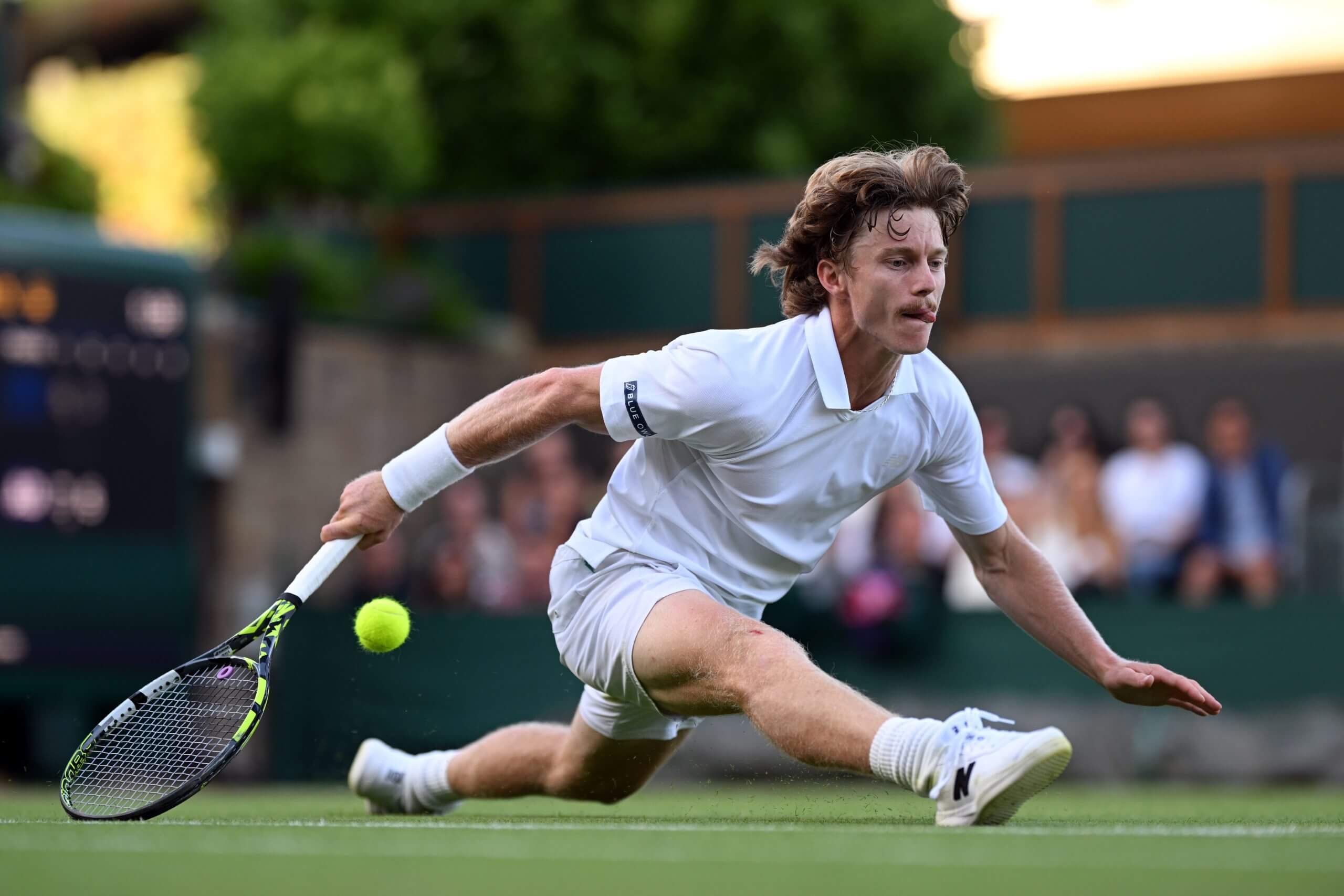
The 2026 Wimbledon Championships are underway at the All England Club in London, and the discussion is as lively as the matches. Tommy Paul, the American ranked No. 25 in the world, emphasized an unusual yet critical tennis skill: the ability to fall well. During a news conference at Queen’s, a respected grass-court event, Paul highlighted the inevitability of falling on grass and the importance of understanding how to do it safely.
Players at Wimbledon experience frequent slips on the grass, leading to some injuries. Grass is known for its slipperiness, especially in the first few days of the tournament when it is lush. On the opening day, defending champion Jannik Sinner experienced several falls during his match against Miomir Kecmanović. Fortunately, he avoided serious injury despite one fall that looked concerning.
Sinner mentioned in a news conference that slipping is a normal occurrence on grass, particularly in the early matches when the grass is new. He shared that his team worked on preventive measures to minimize the risk of falls. However, staying calm and avoiding fear is vital to maintaining performance.
Argentine Maja Chwalińska, a finalist at this year’s French Open, faced a worse fate, injuring her ankle during her match against Mananchaya Sawangkaew. Despite leading, she eventually lost the match due to the injury.
Other players, like Argentina’s Camilo Ugo Carabelli and Canada’s Denis Shapovalov, had to retire from their matches after slipping. Additionally, Alexander Zverev experienced a slip on the baseline but managed to recover quickly. Coco Gauff also had a slip during a critical moment in her match against Solana Sierra, yet emerged victorious.
Falling on grass is commonplace, and staying uninjured often depends on luck. However, understanding how to mitigate the impact and developing a mindset that isn’t fearful can help players progress further in the Slam. Tommy Paul, a successful grass-court player himself, highlighted the danger of falling with knees inward and suggested allowing feet to slide out to absorb impact more safely.
Taylor Fritz, another key player, attributed his success in avoiding injuries to exceptional flexibility. He shared his strategy of avoiding locations where slips are frequent. When switching from Queen’s to Halle, he felt more secure in his movement and performance.
Ben Shelton emphasized the significance of body control and the need to decelerate on grass. Although he admitted to slipping often, Shelton avoids the risky technique of sliding, opting for more controlled movement instead.
The adaptation of movement techniques from clay and hard courts to grass has become essential. Players like Novak Djokovic and Sinner exemplify this adaptation, though the method can make other players uneasy. Even champions like Iga Świątek prefer traditional movement techniques to sliding.
Aryna Sabalenka expressed her caution on grass, emphasizing the danger of sliding and focusing on fast, controlled movements to avoid disastrous falls. Similarly, Frances Tiafoe and Madison Keys discussed the significance of embracing falls rather than fearing them, as resisting can lead to further injuries.
To conclude, the art of falling on grass at Wimbledon requires both physical preparedness and mental resilience. Understanding how to fall safely can mean the difference between progressing in the tournament or facing an untimely exit due to injury.
Leave a Reply