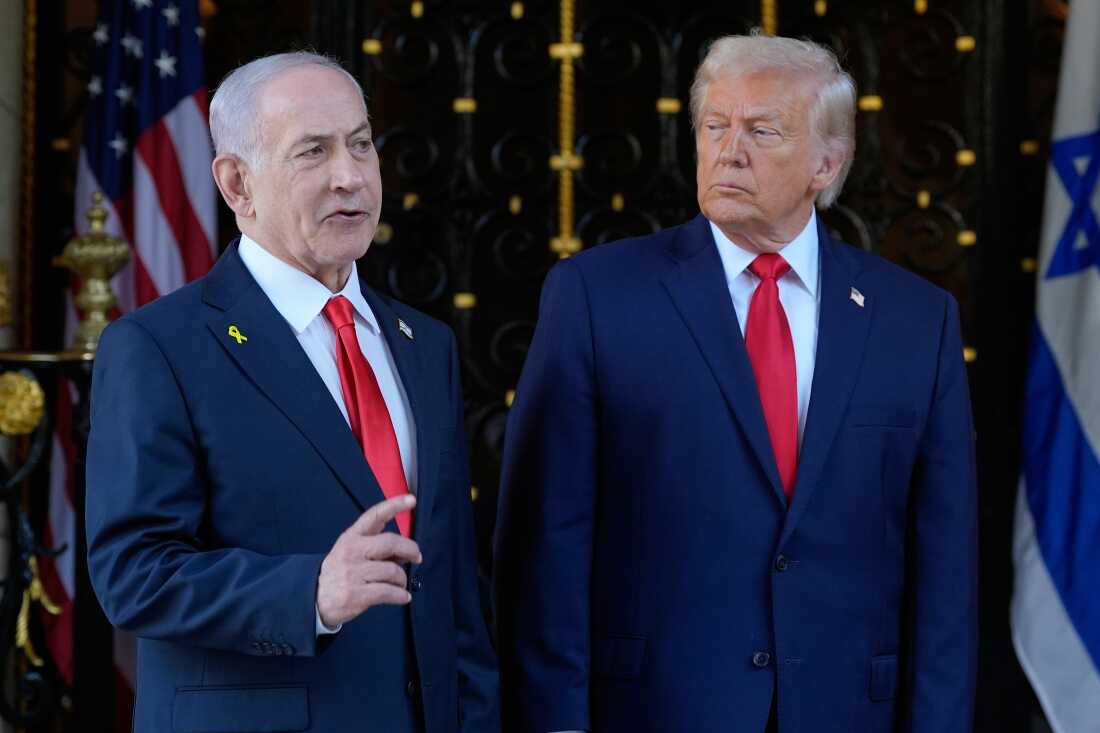
Israeli Prime Minister Benjamin Netanyahu met with U.S. President Donald Trump at Mar-a-Lago in Palm Beach, Florida. This meeting marks their first since collaborating on a military initiative against Iran. Netanyahu seeks to mend perceived strains in their relationship as both leaders face mounting pressures domestically.
Netanyahu is navigating election challenges partly due to his less favorable connection with Trump. Trump is contending with calls to end an unpopular war that negatively impacts the economy and increases prices ahead of the upcoming midterm elections in November.
The discussion includes the U.S.-Israel-Lebanon framework agreement on the Israel-Hezbollah conflict and the extension of the Abraham Accords. Some differences relating to Iran persist, acknowledged Trump, but the two leaders maintain a close alliance.
Although previous tensions existed between Trump and Netanyahu, their collaboration against Iran earlier this year had been strong. They united military efforts to challenge Iran’s leadership, aligning their objectives toward a West-friendly government in Iran. However, with Iran’s retaliation, the conflict intensified. Iran struck U.S. bases and disrupted the Strait of Hormuz, leading to increased pressure on Trump to resolve the conflict.
Netanyahu favored continued warfare against Iran and Hezbollah in Lebanon but has been side-lined as Trump engaged in negotiations with Tehran. The Israeli Prime Minister’s visit to Washington aims to present Israeli intelligence on Iran’s nuclear program. Netanyahu’s priority is to ensure the nuclear disarmament of Iran, stating that any military detente should prevent Iran from continuing its nuclear advancements. He has warned Iran against military aggression towards Israel, promising definitive retaliation.
Netanyahu also seeks to reassure Trump that Israel’s military actions will not obstruct U.S. diplomatic and reconstruction initiatives in Gaza and Lebanon. Israel has recently taken steps to facilitate peace and security efforts in these regions. In Lebanon, an experimental program allows the Lebanese army to secure some territory previously held by Hezbollah.
Further discussions on this initiative are scheduled in Rome. Meanwhile, Israel has approved a measure enabling international stabilization forces to enter Gaza. This initiative, agreed upon in a U.S.-supported ceasefire with Hamas, faces challenges, as few nations have committed troops. Entry into Gaza will be meticulously regulated.
Support for Israel among U.S. political factions has diminished, particularly concerning its actions in Gaza. Vice President JD Vance cautioned Israeli leaders that Trump might be their sole ally among international figures. A recent AP-NORC poll indicated a substantial decline in U.S. public support for Israel, leading to criticisms from Israeli commentators about Netanyahu’s diplomatic strategies.
Leave a Reply