Netherlands Dominate Sweden in World Cup Clash
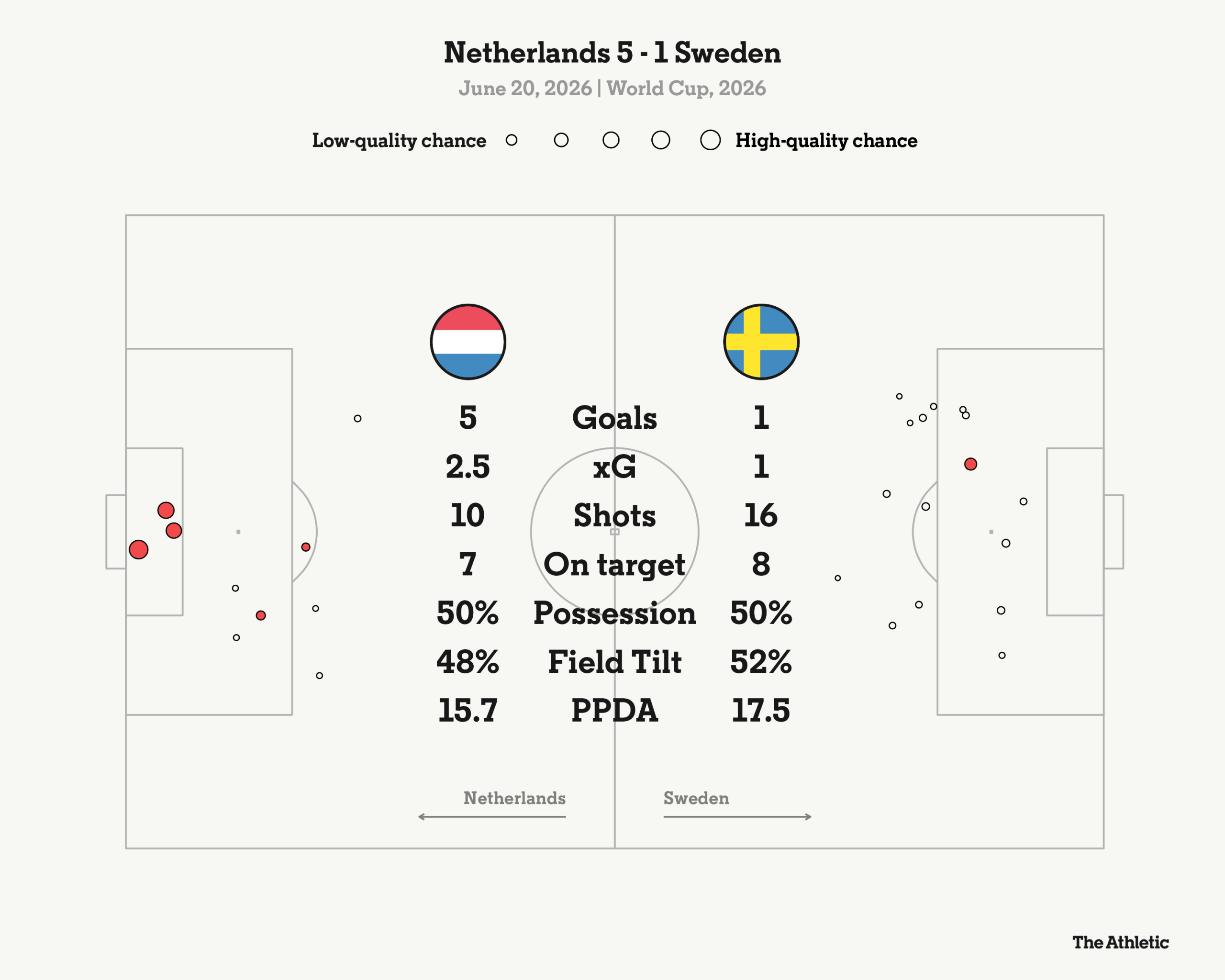
The Netherlands showcased their football prowess by overpowering Sweden in Houston with an emphatic 5-1 victory. Cody Gakpo inspired Ronald Koeman’s side, showcasing a lethal attacking performance. Liverpool’s forward, alongside Sunderland’s Bryan Brobbey, contributed with two goals each, while Crysencio Summerville added the fifth, marking a remarkable World Cup victory.
Sweden earlier defeated Tunisia 5-1 but faced the same fate against the Netherlands at the NRG Stadium. Regardless of Anthony Elanga pulling a goal back for Graham Potter’s team in the second half, Sweden struggled against the Netherlands’ relentless front line.
The Netherlands’ Potential for World Cup Glory
The Netherlands opened the tournament with a setback, failing to win against Japan. This raised questions about their capability to clinch the World Cup title. However, their performance against Sweden highlighted their potential. If Koeman’s team maintains this level, they could be strong contenders.
Koeman focuses on Bryan Brobbey as the pivotal No 9, who integrates well with the team. The side’s performance was robust, featuring aggressive gameplay and varied attacking strategies. The team leveraged direct plays, midfield passes, and wide spaces effectively. Cody Gakpo’s confidence and certainty as a winger were instrumental to their success.
Nevertheless, the Netherlands must enhance their defensive strategies. After a hydration break, Sweden made adjustments exploiting transitional spaces left by the Dutch. Despite being stretched in a few instances in the second half, the performance marked a significant stride forward for the team.
Tactical Switch Boosts Dutch Performance
Ronald Koeman made a bold tactical decision by repositioning Donyell Malen from the center to the right in the three-man attack. Malen was in top form, scoring 14 goals in 18 Serie A games last season. His repositioning allowed Brobbey to emerge as No 9, which was effective.
This move paid dividends with Brobbey scoring twice in the first 17 minutes, converting low crosses from Cody Gakpo and Denzel Dumfries. Brobbey’s physical prowess dominated the Swedish defense, particularly Isak Hien, who faced challenges stopping him.
Potter countered by switching to a back four to eliminate the space exploited by the Dutch. Despite the strategic shift, the initial damage was irreversible.
Effective Attacking Strategies
Attacks funneled through wide areas characterized the Dutch strategy in this World Cup. Stimulating attacks expanded into the six-yard box with low crosses, leading to three out of their four goals. Players like Cody Gakpo and Dumfries stretched the Swedish defense, creating openings.
Gakpo’s assist highlighted his role as an orthodox winger, which was a deviation from his usual inside cuts for goal attempts. The team’s strategic addition in Tijjani Reijnders enabled quick positional changes, enhancing goal-scoring opportunities.
Insights on Bryan Brobbey
The strategy focused on maximizing Bryan Brobbey’s impact, who delivered by bagging two goals swiftly. Despite being slightly undersized at 180cm, Brobbey’s strong frame and leg power are advantageous against taller defenders.
His journey to football prominence was gradual as he rose from being a promising talent at Ajax to overcoming challenges at RB Leipzig. Linked with Manchester United and overcoming personal adversities, Brobbey plants his skills firmly in the Premier League with Sunderland.
Brobbey’s distinct style of bustling agility could grant him a cult status among Dutch supporters.
Sweden’s Performance Analysis
Traditionally, Swedish football has showcased defensive solidity backed by star strikers. This year, Sweden boasts formidable strikers in Viktor Gyokeres and Alexander Isak, but their defensive strength faltered against the Netherlands.
Challenges arose as the defense struggled against Brobbey’s strength and rapid movements around the box, coupled with communication gaps in marking runners. Although Sweden showed promise during the game, initial weaknesses led to a 4-goal deficit within the first 15 minutes of each half.
A strategic shift allowed Yasin Ayari and Anthony Elanga to exhibit their capabilities, offering an offensive edge.
To progress in the tournament, Sweden needs to beat Japan, potentially advancing irrespective of their defeat against the Netherlands. While improvements are necessary, it’s plausible Sweden might progress owing to Japan’s midfield challenges.
Leave a Reply