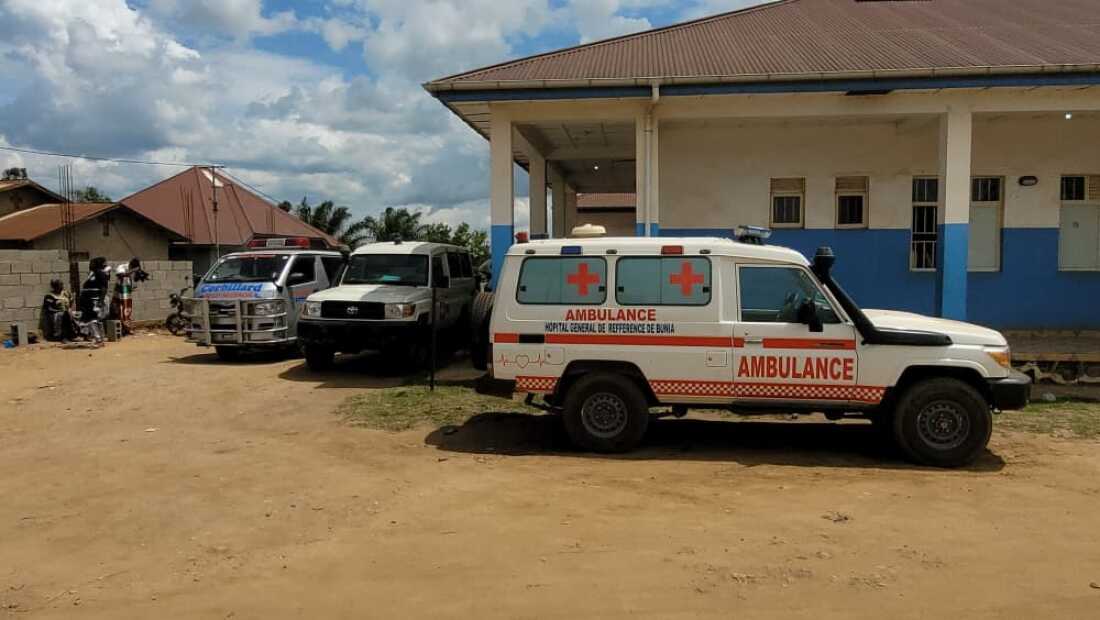
Ambulances are stationed outside a hospital in Bunia, Congo, highlighting the urgency of the situation as a new Ebola outbreak emerges. The World Health Organization (WHO) declared it a ‘public health emergency of international concern,’ but clarified it doesn’t meet the criteria for a pandemic declaration. WHO Director-General Tedros Adhanom Ghebreyesus advised against border closures, emphasizing controlled management.
Outbreak Details
Reported in the Democratic Republic of Congo’s (DRC) Ituri province, the outbreak has spread across the border into Uganda. Hundreds of suspected cases have been identified, yet no vaccine is available for this Ebola strain, as confirmed by the Africa Centres for Disease Control and Prevention (Africa CDC).
Ebola transmission occurs through contact with bodily fluids or contaminated surfaces, with symptoms including fever, pain, weakness, vomiting, and sometimes bleeding. Health officials believe it originated in late April. So far, confirmed cases primarily occur in the DRC mining towns of Mongbwalu and Rwampara, areas prone to high population movement.
Current Situation
Currently, 10 confirmed Ebola cases in the DRC and 2 in Uganda have been recorded, alongside numerous suspected cases and a significant death toll. The U.S. Centers for Disease Control and Prevention (CDC) assures low risk to the American public, emphasizing joint interagency efforts to curtail the Ebola spread.
Dr. Satish K. Pillai of the CDC ensures coordinated outbreak management with over 30 CDC staff deployed in DRC, planning further workforce expansion. To ensure safety, CDC collaborates on plans for withdrawing Americans impacted by the outbreak.
Protective Measures and Challenges
Africa CDC spearheads regional efforts, mitigating the risk of broader Ebola dissemination. During a press conference, Africa CDC’s Director Dr. Jean Kaseya highlighted the fragile nature of affected regions, describing a case involving a 59-year-old Congolese man’s cross-border exposure in Uganda.
Healthcare professionals must utilize full protective gear—goggles, masks, gloves, gowns—and maintain vigilance due to Ebola’s transmissibility. Dr. Kaseya admits challenges in PPE production, stressing the need for resources.
Virus Transmission and Response
Experts caution the virus has likely been spreading before recognition, making response efforts challenging. The Bundibugyo strain has surfaced in two prior outbreaks but remains poorly understood, complicating diagnosis with standard tests.
Though there is no approved vaccine for this Ebola strain, a candidate vaccine shows promise in animal studies. Dr. Kaseya mentioned ongoing assessments and a 50% efficacy rate observed in monkeys, although human trials are pending.
Past Outbreaks and Current Situation
Historical Ebola outbreaks underscore the current situation’s gravity. Between 2014 and 2016, Ebola infected over 28,600 people, resulting in over 11,300 deaths, originating from Guinea and spreading across West Africa.
Experts and health organizations, including Dr. Craig Spencer, highlight the outbreak’s belated discovery, complicating identification and management efforts. Collaborative regional strategies aim to reinforce surveillance and response.
NPR’s Jon Lambert and Carmel Wroth contributed to reporting on this developing story.
Leave a Reply