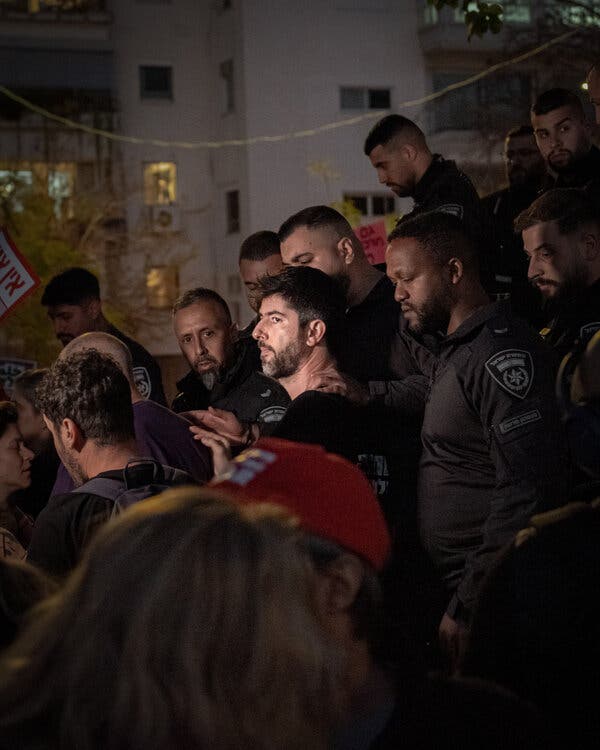
On April 4, hundreds of Israelis protested the war with Iran in Tel Aviv. A defining moment was when a Jewish Israeli activist, Alon-Lee Green, vocally opposed the war while police removed him. Green works with Standing Together, a group he leads with Palestinian counterparts Rula Daoud and Sally Abed. This grassroots movement of young Jewish and Palestinian Israeli citizens began in 2015, focusing on anti-occupation, antiracism, and social justice.
The voices of Green, Abed, and Daoud, who advocate for peace and reconciliation, are rare in Israeli society. Most Jewish Israelis support the wars in Iran and Lebanon, and many doubt the possibility of a two-state solution.
Into this context, a new joint Israeli-Palestinian political party is emerging before pivotal elections in Israel this fall. Named A Place for Us All, led partly by the leaders of Standing Together, the party may not gather enough votes to participate in the election. However, its presence marks a significant and bold entry into politics.
Arab-Jewish parties have historically struggled in Israeli politics. Some Arab parties included Jewish members, and vice versa, but these are exceptions. For nearly five decades, Hadash, founded in 1977, has been the only effective Arab-Jewish party, advocating an end to occupation and a two-state solution. Most of its supporters are Palestinian citizens of Israel. Another party, Da’am, formed in 1995 as a worker-focused Arab-Jewish party, couldn’t secure a Knesset seat.
A Place for Us All arises from joint Jewish-Palestinian activism centered on everyday realities rather than broad policies. These young Palestinian and Jewish Israelis are friends who understand each other’s struggles and aspirations. Their existence challenges the notion that voting along ethnic lines is logical, irrespective of the issues at hand.
Leave a Reply