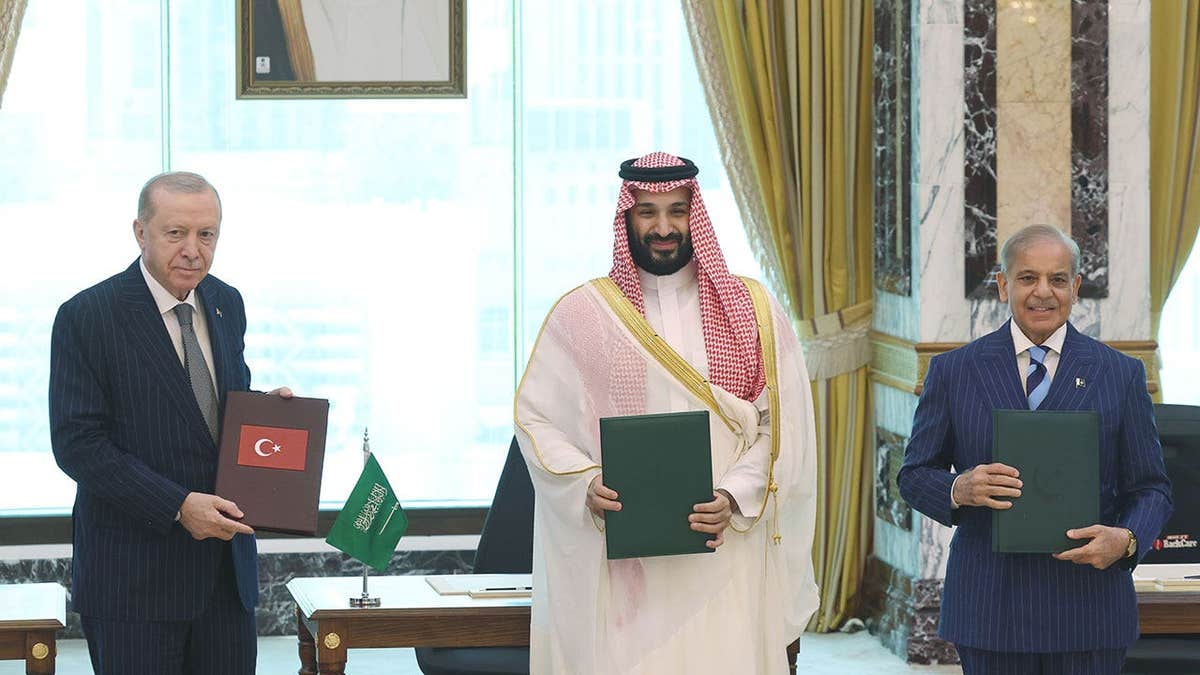
A recently formed defense pact between Saudi Arabia, Turkey, and Pakistan is stirring discussions about its implications for regional power dynamics. The agreement raises questions about whether it’s intended to challenge the U.S.-backed alliances or to establish a new model for shared security responsibilities.
Details of the Pact
The three countries involved have distinct motivations but share a goal of potentially shifting the regional balance of power. In November 2025, Saudi Arabia entered a Strategic Defense Agreement with the U.S., gaining status as a major non-NATO ally without receiving a treaty-level defense guarantee. This new alliance may act as a hedge against uncertainties in U.S. commitments.
Pakistan, possessing nuclear capabilities, secures enhanced energy security, Saudi investment, and greater regional presence. Turkey, a NATO member, finds a larger market for its defense industry while balancing tensions with Israel.
Signing of the Agreement
On August 7, 2026, leaders from the three nations signed the Mecca Joint Defence Agreement. The pact aims to “strengthen collective deterrence against any act of aggression,” treating an attack on one as an attack on all.
Turkey’s Foreign Minister, Hakan Fidan, indicated the agreement parallels NATO’s Article 5, although assistance details remain under discussion. A general secretariat will be established in Saudi Arabia to support the alliance.
Potential Expansion
Fidan mentioned the possibility of expanding the alliance to include other countries like Egypt. The pact’s discussions have been ongoing for nearly three years. Despite concerns, Saudi officials claim the agreement does not create a sectarian or military bloc, and it’s not aimed at Iran or any specific nation.
Reactions and Opinions
Iran minimized concerns about the pact. Foreign Ministry spokesman Esmaeil Baghaei stated the pact reflects a local shift towards enhanced security independence, focusing less on external powers.
An expert, Sinan Ciddi, believes the pact currently lacks NATO-like strength. Ciddi sees different motivations for the countries involved, such as Saudi Arabia hedging against doubts over U.S. guarantees, Pakistan gaining regional influence, and Turkey accessing defense markets.
Saudi Arabia insists the new relationship does not undermine ties with Washington, still viewing the U.S. as a strategic partner.
From Pakistan’s standpoint, Raza Rumi suggests the pact promises military and political advantages like strategic depth, influence in the Gulf, and a recognized role in the regional security framework. He advises caution in interpreting the pact’s defense language too strictly.
Rumi emphasized that the Middle East is not fixed into camps, while India monitors the situation for potential impacts on its security.
Ciddi voiced concerns that even a modest pact may provoke rival alignments, leading to increased tension. He warned, “Security pacts beget more security pacts,” implying possible regional tensions.
Efforts by Saudi Arabia, Turkey, and Pakistan to increase strategic autonomy reflect broader regional competition.
Leave a Reply