Perseid Meteor Shower Peaks
The Perseid meteor shower, known for its spectacular display, is at its peak. This annual event began in mid-July and is best viewed overnight from Wednesday to Thursday. In areas where the solar eclipse coincides with sunset, viewers may see meteors during totality.
Under clear, dark skies away from city lights, spectators could observe up to 100 meteors per hour. The Perseids are famous for producing bright fireballs, which leave trails as they burn in the Earth’s atmosphere.
How to Watch the Solar Eclipse Online
If you’re not in the path of today’s total solar eclipse or facing poor weather conditions, you can watch it online. NASA offers a livestream starting at 1:15 p.m. ET, while the European Space Agency will stream it on YouTube at 1:30 p.m. ET (7:30 p.m. CEST).
Understanding Solar Eclipses
A solar eclipse occurs when the sun, moon, and Earth align, with the moon blocking sunlight. In a total solar eclipse, the moon completely covers the sun, darkening the sky like dawn or dusk. The sun’s outer atmosphere becomes visible during totality.
In a partial solar eclipse, the moon only covers part of the sun, creating a bite-like appearance. An annular solar eclipse occurs when the moon is far from Earth and doesn’t fully cover the sun, forming a ring of light.
Preparations in Villalibado, Spain
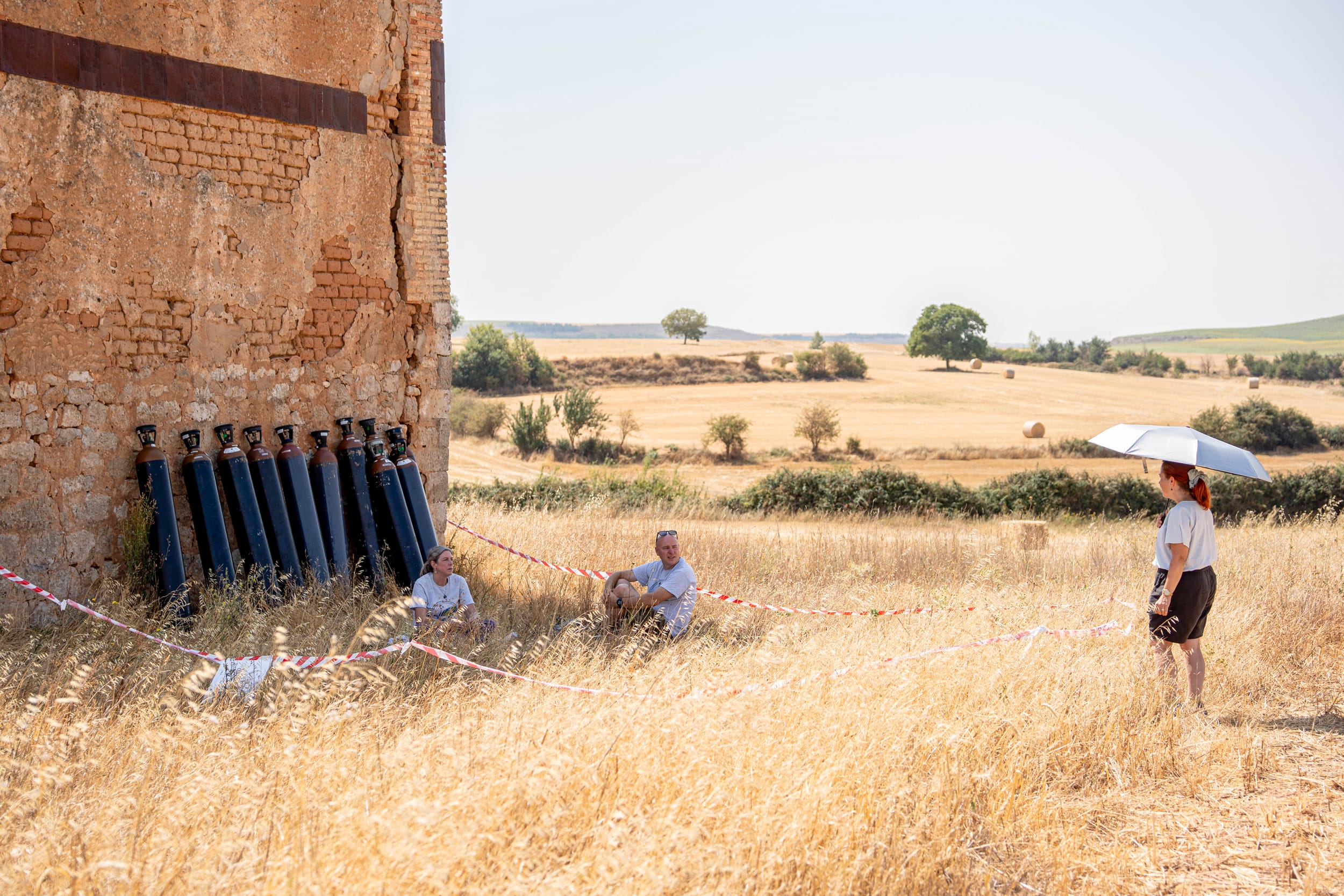
Nasa is broadcasting the event worldwide from Villalibado, Spain. Images from the location show NASA staff preparing helium cylinders and visitors setting up telescopes.
Total Eclipse Craze in Europe
About 450,000 tourists arrived in Spain this week for prime eclipse viewing. This is the first total solar eclipse visible from mainland Europe since 1999. The path of totality begins in Greenland, proceeds through Iceland, and culminates in northern Spain.
Spain anticipates significant economic benefits, estimating tourism revenue of €347 million, approximately $400 million in U.S. dollars.
Anticipation for the Eclipse
This event is eagerly awaited in parts of Spain, Portugal, Greenland, Iceland, and northern Russia. The eclipse’s trajectory goes through the Arctic and southern Europe, marking the first total eclipse for mainland Europe since 1999.
If conditions allow, most of Europe, parts of Canada, and over 20 northern U.S. states will experience a partial eclipse.
Leave a Reply