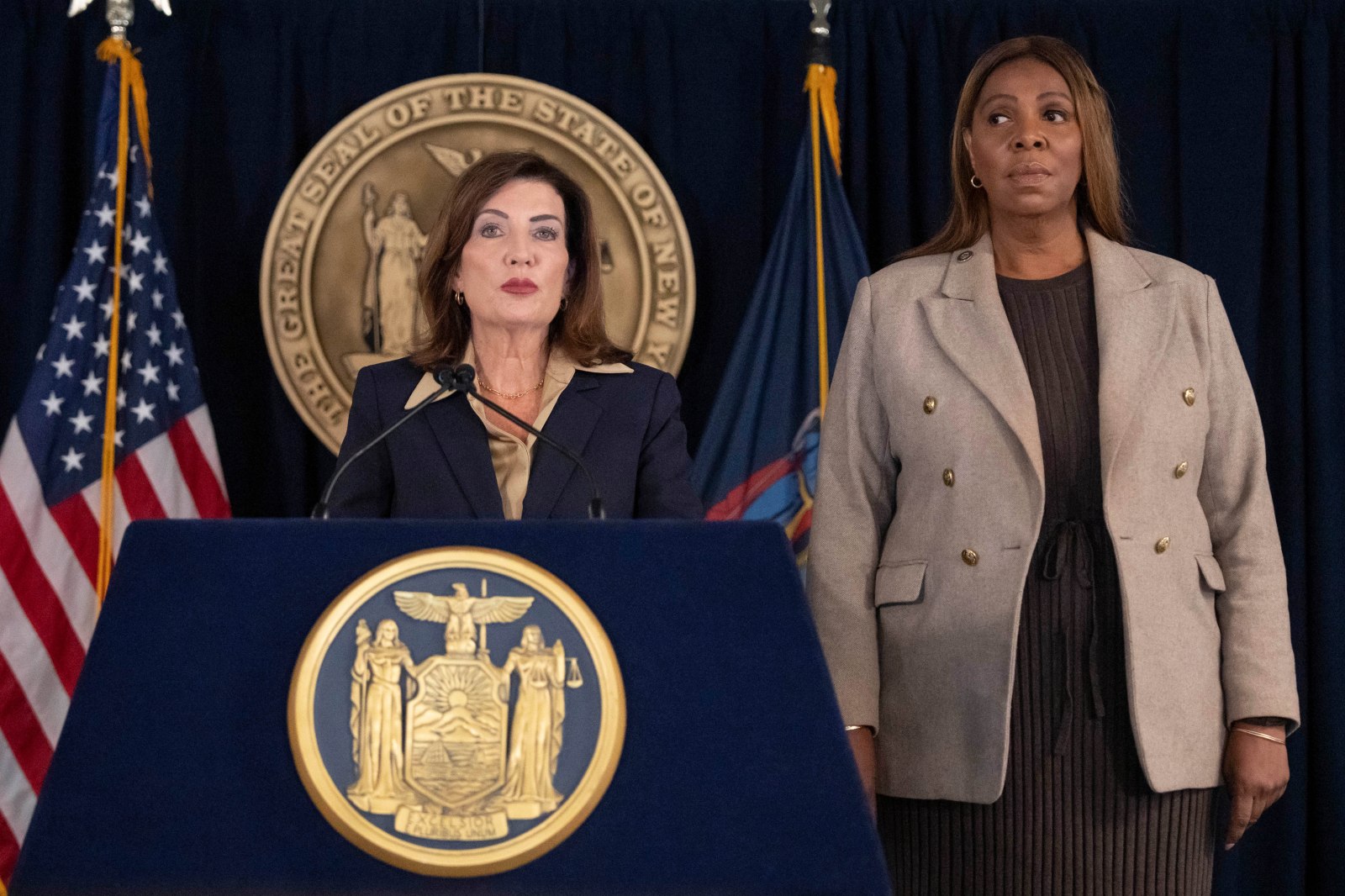
New York Governor Kathy Hochul announced plans to collaborate with legislators to close the “voluntary intoxication loophole” in state law. This decision follows an investigation into an alleged gang rape at Cornell University in 2024.
Hochul appointed state Attorney General Letitia James as a special prosecutor for the investigation. Highlighting a gap in state law, Hochul emphasized the need for legal change. She stated, “If someone is too intoxicated to consent, it should not matter whether they chose to use drugs or alcohol.”
The Governor expressed her loss of confidence in Tompkins County Attorney Matthew Van Houten, who initially decided against pressing charges. Hochul stressed the importance of safety for college students: “Every parent who sends their child off to college expects them to be safe.”
Hochul committed to “doing everything possible” to close this loophole. She urged legislation by January. The state Senate had previously approved similar measures, yet they stalled in the Assembly.
Manhattan District Attorney Alvin Bragg supported Hochul’s initiative. “Drugging someone to rape them is clearly wrong. So is raping someone who became intoxicated by voluntarily drinking,” he remarked, asserting that laws should reflect this.
The Associated Press noted that New York is among 19 states with laws defining intoxicated victims as mentally incapacitated only if drugged without knowledge. Assemblyman Jeffery Dinowitz has pushed for legal changes since 2019, citing recent assault allegations as a call for urgency.
Other states like Minnesota, Michigan, and Texas have revised similar laws. Minnesota, for example, allowed charges regardless of whether intoxication was voluntary.
Matthew Van Houten acknowledged that proposed legislation, Bill A101, would have necessitated further investigation of the reported assault. Attorney General James emphasized the promise of a fair justice system, ready to lead an investigation based on facts.
The allegations have fueled a national dialogue on campus violence against women. Public figures, including Alexandria Ocasio-Cortez, have condemned the culture that allegedly normalized such behavior among accused individuals.
Leave a Reply